





- Ronny Mor
- •
- 7 Min Read
- •
- 2 hours ago
Key Points
- The South Korean flagship KOSPI Composite Index (^KS11) ended the week lower at 8,088.34, locking in a 3.65% percentage change over the trailing five-day window.
- A spectacular intraday turnaround on Friday saw the benchmark rocket 5.76% (440.25 points) from an intraday low of 7,378.10, erasing a massive portion of the week's earlier losses.
- Global asset allocators are closely re-evaluating tech-heavy East Asian equity exposure against shifting global semiconductor demand cycles and cooling international interest-rate pressures.
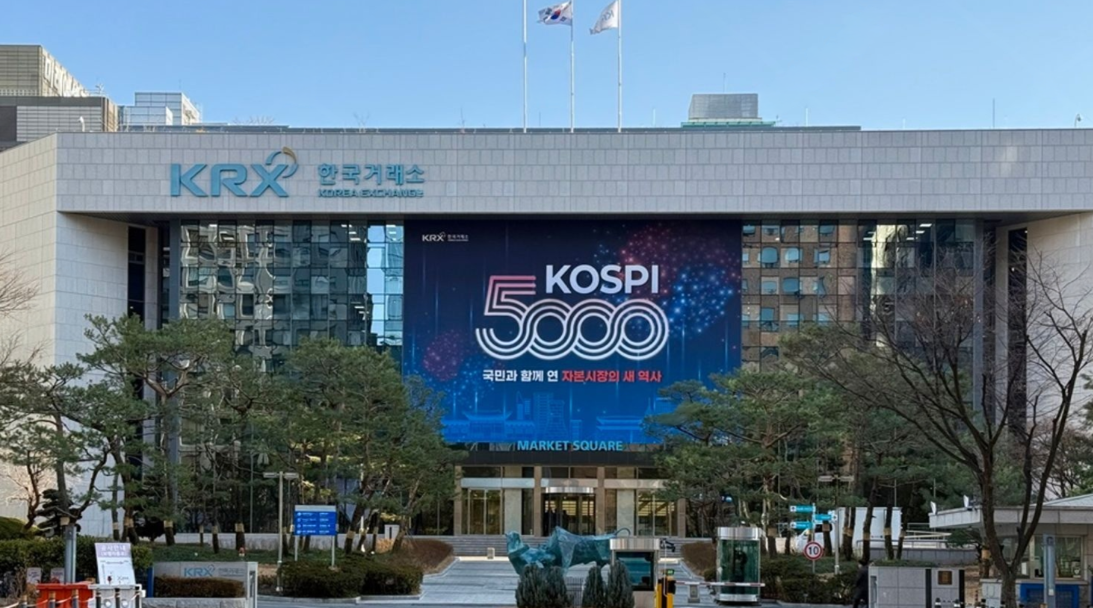
The South Korean flagship KOSPI Composite Index (^KS11) finished the trading week lower at 8,088.34, registering a negative percent return of 3.65% over the selected five-day trailing period. Although South Korean equities staged a stunning, near-vertical short-covering rally during Friday’s final session, intense institutional distribution during the first half of the week left the benchmark in a net contractive posture. This volatile consolidation highlights a complex balancing act among market participants as they evaluate global technology valuations alongside shifting macroeconomic updates.
Index Stages Dramatic Rescue Rally After Testing Deep Support Floors
The five-day trading architecture revealed an exceptionally volatile pattern that pushed the index across a wide multi-day band. Opening the weekly tracking window at 7,739.75 compared to its previous close of 7,648.09, the KOSPI faced heavy, systematic selling pressure that culminated in a sharp mid-week drop. This downward momentum accelerated into the morning of July 3, dragging the benchmark to a multi-month intraday low of 7,378.10. However, an aggressive wave of buy-side liquidity transformed the session, triggering an explosive 5.76% single-day surge that lifted the index to an intraday high of 8,136.28 before settling the week. Floating well within its broader 52-week parameters of 3,032.99 to 9,385.59, this dramatic rebound demonstrates strong structural accumulation near long-term valuation baselines.
Global Interest-Rate Outlook and Tech Export Cycles Drive Momentum
The primary fundamental engine fueling the KOSPI’s late-week rescue centers on changing monetary expectations across the Atlantic and its direct impact on global risk appetite. Recent cooling labor and manufacturing indicators out of the United States have reinforced expectations for upcoming interest-rate reductions by the Federal Reserve, sparking a broad relief rally across emerging market equity complexes.
For the technology, automotive, and heavy manufacturing giants that dominate the KOSPI baseline, lower international borrowing costs and stabilizing global consumption models offer crucial support. Furthermore, institutional investors are analyzing localized production metrics to determine if the high-growth memory chip and artificial intelligence export pipelines can successfully maintain their long-term structural expansion.
Cross-Border Capital Flows and Exchange Dynamics
For internationally diversified portfolio managers and multi-asset allocators, the KOSPI’s heightened beta underscores the vital importance of actively managing currency volatility and shifting geopolitical premiums. Fluctuations in the South Korean Won relative to the U.S. Dollar directly impact real net total returns for foreign holders, making robust currency-hedging structures a key operational necessity during periods of high market stress. Concurrently, regional trade realignments and changing sovereign technology supply-chain policies introduce variable risk premiums, forcing global investment funds to balance aggressive tactical growth positioning with disciplined capital preservation strategies.
Outlook
Looking ahead, the near-term outlook for the KOSPI Composite Index remains constructively balanced, though the market will likely undergo a consolidation phase as it digests its massive single-day upward move. Investors will intensely focus on the upcoming corporate earnings season to verify whether core technology and manufacturing pioneers can deliver resilient corporate guidance that justifies current market multiples. While extended geopolitical risks and localized supply-chain frictions present prominent downside risks, evidence of sustained global macroeconomic stabilization and a weaker greenback could provide the necessary catalyst to catalyze a steady, non-linear push back toward intermediate technical resistance zones near 8,300, though future gains are highly anticipated to materialize in a gradual rather than linear fashion.
Comparison, examination, and analysis between investment houses
Leave your details, and an expert from our team will get back to you as soon as possible
* This article, in whole or in part, does not contain any promise of investment returns, nor does it constitute professional advice to make investments in any particular field.
To read more about the full disclaimer, click here
- sagi habasov
- •
- 7 Min Read
- •
- ago 53 minutes
SKN | Hang Seng Index Snaps Back to Erase Early-Week Dips as Easing US Rate Fears and Tech Bargain Hunting Uplift Hong Kong Equities
The benchmark Hang Seng Index (^HSI) concluded the trading week higher at 23,350.03, registering a positive percent return of
- ago 53 minutes
- •
- 7 Min Read

The benchmark Hang Seng Index (^HSI) concluded the trading week higher at 23,350.03, registering a positive percent return of

- orshu
- •
- 6 Min Read
- •
- ago 2 hours
SKN | Nikkei 225 Edges Higher Over Volatile Five-Day Window as Powerful Friday Recovery Erases Mid-Week Losses
The Japanese flagship Nikkei 225 Index (^N225) finished the trading week slightly higher at 69,744.07, securing a positive percent
- ago 2 hours
- •
- 6 Min Read
The Japanese flagship Nikkei 225 Index (^N225) finished the trading week slightly higher at 69,744.07, securing a positive percent

- omer bar
- •
- 7 Min Read
- •
- ago 3 hours
SKN | Euro Currency Index Advances as Soft US Macro Data and Narrowing Yield Differentials Boost the Common Currency
The Euro Currency Index (^XDE) finished the holiday-shortened trading week higher at 114.32, registering a positive percent return of
- ago 3 hours
- •
- 7 Min Read
The Euro Currency Index (^XDE) finished the holiday-shortened trading week higher at 114.32, registering a positive percent return of

- Lior mor
- •
- 7 Min Read
- •
- ago 4 hours
SKN | British Pound Currency Index Gains Over Selected Window as Easing Global Rate Pressures Support Sterling
The British Pound Currency Index (^XDB) finished the abbreviated trading week higher at 133.48, registering a positive percent return
- ago 4 hours
- •
- 7 Min Read
The British Pound Currency Index (^XDB) finished the abbreviated trading week higher at 133.48, registering a positive percent return


