


- sagi habasov
- •
- 7 Min Read
- •
- 7 seconds ago
Key Points
- The KOSPI Composite Index (^KS11) concluded the trading week at 7,847.71, securing a robust 5-day net expansion of 4.41% following a sharp mid-week technical inflection.
- This upward trajectory may reflect a strategic institutional rotation into Asian technology and heavy industry components, though muted trading volumes suggest this momentum remains highly conditional.
- For global and Israeli asset allocators, this price action offers potential cross-border diversification, provided allocations are actively probability-tested against South Korean fiscal headwinds, geopolitical risk premiums, and persistent currency volatility.

The KOSPI Composite Index (^KS11) navigated a highly dynamic trading week, ultimately settling at 7,847.71 to record a structural 5-day net gain of 4.41%. This definitive price action within the primary South Korean capital market suggests a potential consolidation phase, as institutional capital actively weighs resilient semiconductor and export earnings against a complex backdrop of shifting global monetary policies and localized fiscal vulnerabilities.
Deciphering the Mid-Week Surge and Technical Breadth
Trading activity across the South Korean large-cap sector was characterized by early-week distribution that violently transitioned into a sustained accumulation phase by May 21st. Chart data illustrates a notable upward surge, propelling valuations from near the 7,250 support level to an intraday peak of 7,886.64 before a mild pre-close consolidation on Friday. Closing the final session with a daily gain of 32.12 points (0.41%), the index demonstrated positive market participation within the upper bandwidth of its expansive 52-week range (2,595.96 to 8,046.78). However, from a technical perspective, this multi-day advance occurred on notably muted trading volume of 435,533 shares—well below the moving average of 979,131. This low-volume ascent indicates that market participants may be cautiously probability-testing near-term resistance levels, rather than committing to a definitive, broad-based structural breakout.
South Korean Macroeconomic Dynamics and Downside Risks
As a highly sensitive barometer for the global technology and manufacturing supply chains, the performance of the KOSPI is intrinsically linked to global export demand, localized borrowing costs, and East Asian geopolitical stability. While the recent 4.41% expansion may indicate institutional confidence in a macroeconomic stabilization, this sentiment must be continually weighed against persistent structural headwinds. Major South Korean equities remain vulnerable to valuation compression risks if the Bank of Korea (BoK) is compelled to maintain restrictive monetary policies longer than the market currently anticipates to combat imported inflation. Furthermore, fluctuating sovereign debt metrics, elevated household leverage, and the potential for industrial margin degradation represent significant downside risks that could catalyze a sudden mean-reversion.
Strategic Portfolio Implications and Regional Sensitivities
For globally diversified investors and the interconnected Tel Aviv financial ecosystem, navigating this mature East Asian equity landscape offers a distinct lever for strategic asset allocation. Historically, large-cap South Korean equities have served as a non-correlated macro diversifier against highly localized emerging market volatility. However, Israeli institutional allocators must balance these potential diversification benefits against elevated regional security risk premiums and persistent cross-border currency volatility. Strategic exposure requires disciplined hedging, as fluctuations in foreign capital flows, won depreciation, and shifting sovereign yield differentials can heavily influence net portfolio returns and broader financial stability.
Looking forward, the immediate structural trajectory centers on whether the KOSPI can successfully consolidate above the 7,800 technical support floor to establish a durable new baseline, or if it will face distribution as it tests the 8,000 psychological resistance tier. Market participants must remain highly attentive to upcoming South Korean export metrics, central bank forward guidance, and shifting geopolitical developments, which are likely to serve as the primary catalysts for the index’s next major directional move. The broader macroeconomic landscape presents a highly conditional economic outlook; while current momentum leans positive, asset allocators must maintain a probability-based approach, actively managing downside-risk exposure and monitoring fiscal vulnerabilities to optimize long-term portfolio stability in the upcoming financial quarters.
Comparison, examination, and analysis between investment houses
Leave your details, and an expert from our team will get back to you as soon as possible
* This article, in whole or in part, does not contain any promise of investment returns, nor does it constitute professional advice to make investments in any particular field.
To read more about the full disclaimer, click here
- orshu
- •
- 6 Min Read
- •
- ago 30 minutes
SKN | Hang Seng Index Retraces 1.37% Weekly: Is the Hong Kong Benchmark Consolidating Amid Persistent Macroeconomic Friction?
The Hang Seng Index (^HSI) navigated a highly volatile trading week, ultimately settling at 25,606.03 to record a structural
- ago 30 minutes
- •
- 6 Min Read

The Hang Seng Index (^HSI) navigated a highly volatile trading week, ultimately settling at 25,606.03 to record a structural

- Ronny Mor
- •
- 6 Min Read
- •
- ago 1 hour
SKN | SSE Composite Edges Down 0.54% Weekly: Is the Chinese Benchmark Consolidating Amid Persistent Macroeconomic Headwinds?
The SSE Composite Index navigated a highly erratic trading week, ultimately settling at 4,112.90 to record a slight 5-day
- ago 1 hour
- •
- 6 Min Read

The SSE Composite Index navigated a highly erratic trading week, ultimately settling at 4,112.90 to record a slight 5-day

- omer bar
- •
- 7 Min Read
- •
- ago 2 hours
SKN | Nikkei 225 Advances 4.15% Weekly: Are Japanese Equities Pricing in a Durable Macroeconomic Shift Amid Currency Volatility?
The Nikkei 225 Index (^N225) navigated a highly dynamic trading week, ultimately settling at 63,339.07 to record a structural
- ago 2 hours
- •
- 7 Min Read
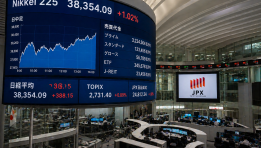
The Nikkei 225 Index (^N225) navigated a highly dynamic trading week, ultimately settling at 63,339.07 to record a structural

- Lior mor
- •
- 6 Min Read
- •
- ago 2 hours
SKN | Euro Currency Index Slips 0.20% Weekly: Is the Eurozone Entering a Phase of Monetary Divergence Consolidation?
The Euro Currency Index (^XDE) navigated a highly erratic trading week, ultimately settling at 116.02 to record a slight
- ago 2 hours
- •
- 6 Min Read

The Euro Currency Index (^XDE) navigated a highly erratic trading week, ultimately settling at 116.02 to record a slight


