





- sagi habasov
- •
- 7 Min Read
- •
- 59 minutes ago
Key Points
- Kioxia shares fell 12% after reports that OpenAI may delay its highly anticipated initial public offering until next year.
- The Japanese memory-chip manufacturer was caught in a broader selloff across AI-related stocks despite maintaining strong long-term growth prospects.
- Kioxia continues to pursue a stock split and plans to list American Depositary Shares (ADS) on a U.S. exchange as it expands its global investor base.
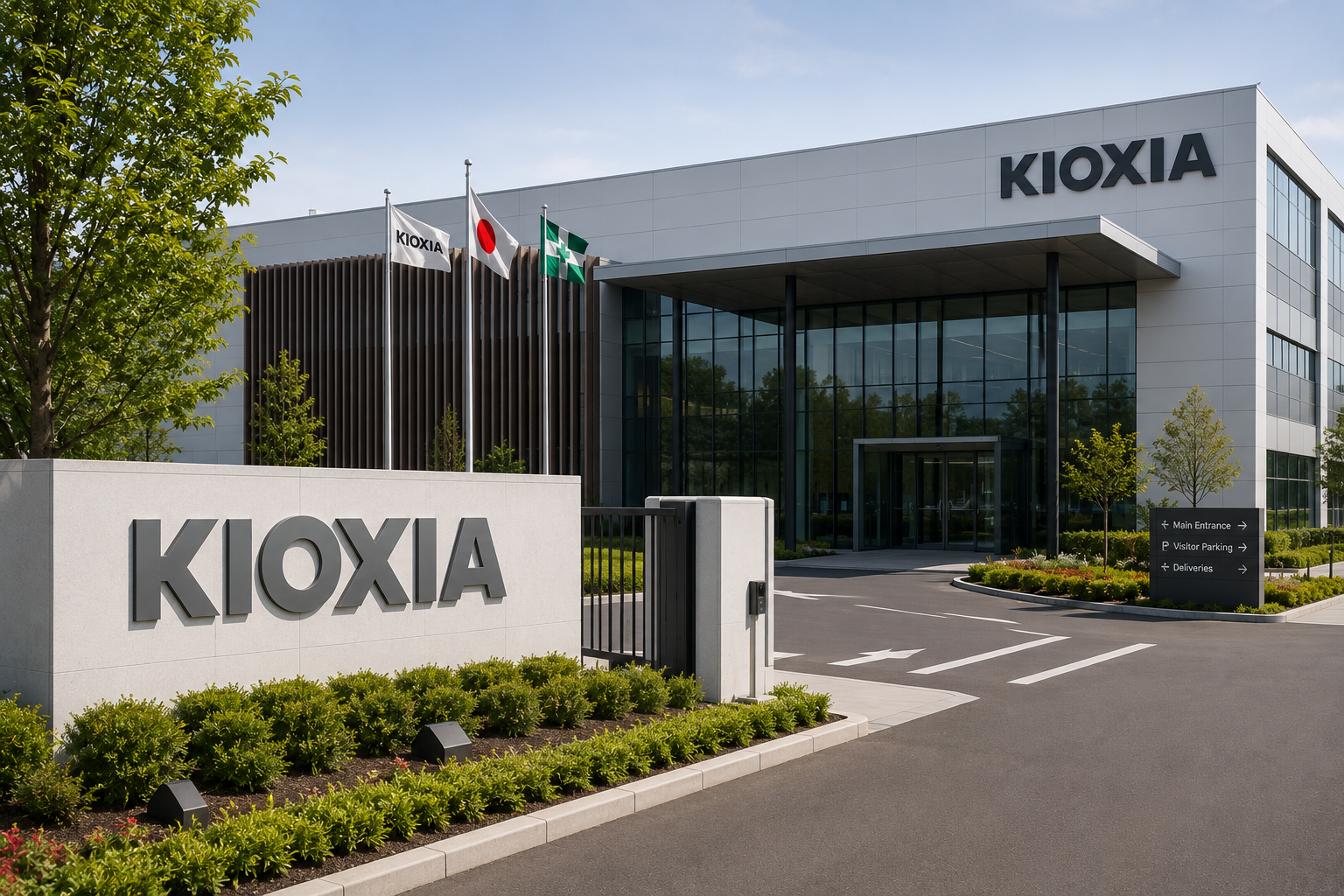
Shares of Japanese memory-chip manufacturer Kioxia declined 12% on Friday as investors broadly sold artificial intelligence-related stocks following reports that OpenAI may postpone its planned initial public offering.
The selloff was triggered after reports indicated that OpenAI Chief Executive Officer Sam Altman is considering delaying the company’s IPO until next year while pursuing a potential $1 trillion valuation. The news prompted investors to reassess valuations across companies closely tied to the artificial intelligence ecosystem, particularly semiconductor manufacturers that have benefited from the industry’s rapid expansion.
Although Kioxia’s business fundamentals remain unchanged, the company became one of the largest casualties of the broader shift in market sentiment as investors rotated away from high-growth AI-related equities.
Memory Chip Leader Benefits From AI Boom
Formerly known as Toshiba Memory, Kioxia has emerged as one of the world’s leading producers of NAND flash memory used in data centers, enterprise storage, smartphones, and artificial intelligence infrastructure.
The explosive growth in AI computing has significantly increased demand for high-performance memory solutions, helping drive Kioxia’s strong share-price appreciation over the past year. The company has become one of the largest constituents of Japan’s Nikkei 225 Index as investors increasingly recognize memory as a critical component of next-generation AI systems.
Unlike graphics processors alone, modern AI platforms require enormous amounts of high-speed memory to process increasingly complex workloads, positioning companies such as Kioxia at the center of long-term infrastructure investment.
U.S. Listing Plans Signal Global Expansion
Despite Friday’s market weakness, Kioxia continues advancing plans to broaden its international investor base.
Company executives confirmed they are evaluating a stock split while preparing to list American Depositary Shares (ADS) on a U.S. exchange during the next financial year, which extends through March 2028.
Management indicated the listing could occur sometime during the early part of that fiscal year, although a specific timetable has not yet been finalized.
The strategy reflects a broader trend among leading Asian semiconductor companies seeking greater access to U.S. capital markets, where investor demand for artificial intelligence exposure remains strong. Earlier this week, South Korean memory-chip leader SK Hynix also announced plans to pursue a major U.S. listing, underscoring growing international interest in AI-related semiconductor companies.
Long-Term Outlook Remains Tied to AI Demand
While short-term volatility continues affecting technology stocks, many analysts remain constructive on Kioxia’s longer-term prospects.
Industry observers note that management’s confidence in pursuing a U.S. listing suggests expectations for continued operational strength over the coming year. Artificial intelligence infrastructure spending remains a primary driver of global memory demand, particularly as hyperscale cloud providers, enterprise customers, and AI developers continue expanding data center capacity.
Although investor sentiment can shift rapidly based on macroeconomic developments or valuation concerns, underlying demand for advanced memory solutions continues to support favorable industry fundamentals.
Looking Ahead
Kioxia’s sharp share-price decline illustrates how quickly investor sentiment can influence AI-related stocks, even when company-specific fundamentals remain intact. As markets digest evolving expectations surrounding OpenAI, semiconductor valuations, and artificial intelligence investment cycles, volatility is likely to remain elevated across the sector.
For Kioxia, upcoming progress on its planned U.S. listing, continued growth in enterprise memory demand, and expanding AI infrastructure investments will remain key factors shaping investor confidence. If global AI spending continues accelerating, the company remains well positioned to benefit from one of the semiconductor industry’s fastest-growing markets.
Comparison, examination, and analysis between investment houses
Leave your details, and an expert from our team will get back to you as soon as possible
* This article, in whole or in part, does not contain any promise of investment returns, nor does it constitute professional advice to make investments in any particular field.
To read more about the full disclaimer, click here
- Lior mor
- •
- 8 Min Read
- •
- ago 40 minutes
SKN | Why Netflix and Shopify Could Be Two of the Strongest Buy-the-Dip Opportunities in AI-Driven Markets
Artificial intelligence has dominated investor attention throughout the year, pushing many AI infrastructure companies to record valuations. At the same
- ago 40 minutes
- •
- 8 Min Read
Artificial intelligence has dominated investor attention throughout the year, pushing many AI infrastructure companies to record valuations. At the same

- Ronny Mor
- •
- 7 Min Read
- •
- ago 2 hours
SKN | Is SpaceX Overvalued? Wall Street Questions a $2 Trillion Valuation Despite Massive AI Ambitions
SpaceX has rapidly become one of the world's most valuable publicly traded companies following its blockbuster initial public offering, but
- ago 2 hours
- •
- 7 Min Read
SpaceX has rapidly become one of the world's most valuable publicly traded companies following its blockbuster initial public offering, but

- omer bar
- •
- 8 Min Read
- •
- ago 2 hours
SKN | Nvidia’s $20 Billion CPU Strategy Aims to Offset China Revenue Collapse
Nvidia is confronting one of the biggest strategic challenges in its history after Chief Executive Officer Jensen Huang acknowledged that
- ago 2 hours
- •
- 8 Min Read
Nvidia is confronting one of the biggest strategic challenges in its history after Chief Executive Officer Jensen Huang acknowledged that
- Lior mor
- •
- 9 Min Read
- •
- ago 2 hours
SKN | Amazon Doubles Down on AI Despite Investor Skepticism Over Massive Spending
Amazon is reinforcing its position as one of the world's largest artificial intelligence infrastructure providers, even as investors question whether
- ago 2 hours
- •
- 9 Min Read
Amazon is reinforcing its position as one of the world's largest artificial intelligence infrastructure providers, even as investors question whether


