Key Points

  • Amazon continues expanding its AI strategy through Amazon Web Services (AWS), satellite connectivity, and large-scale cloud infrastructure investments.
  • The company plans approximately $200 billion in capital expenditures this year as it accelerates AI data center expansion.
  • While investors remain cautious about the size of Amazon's AI investments, management believes long-term demand will justify the spending.
hero

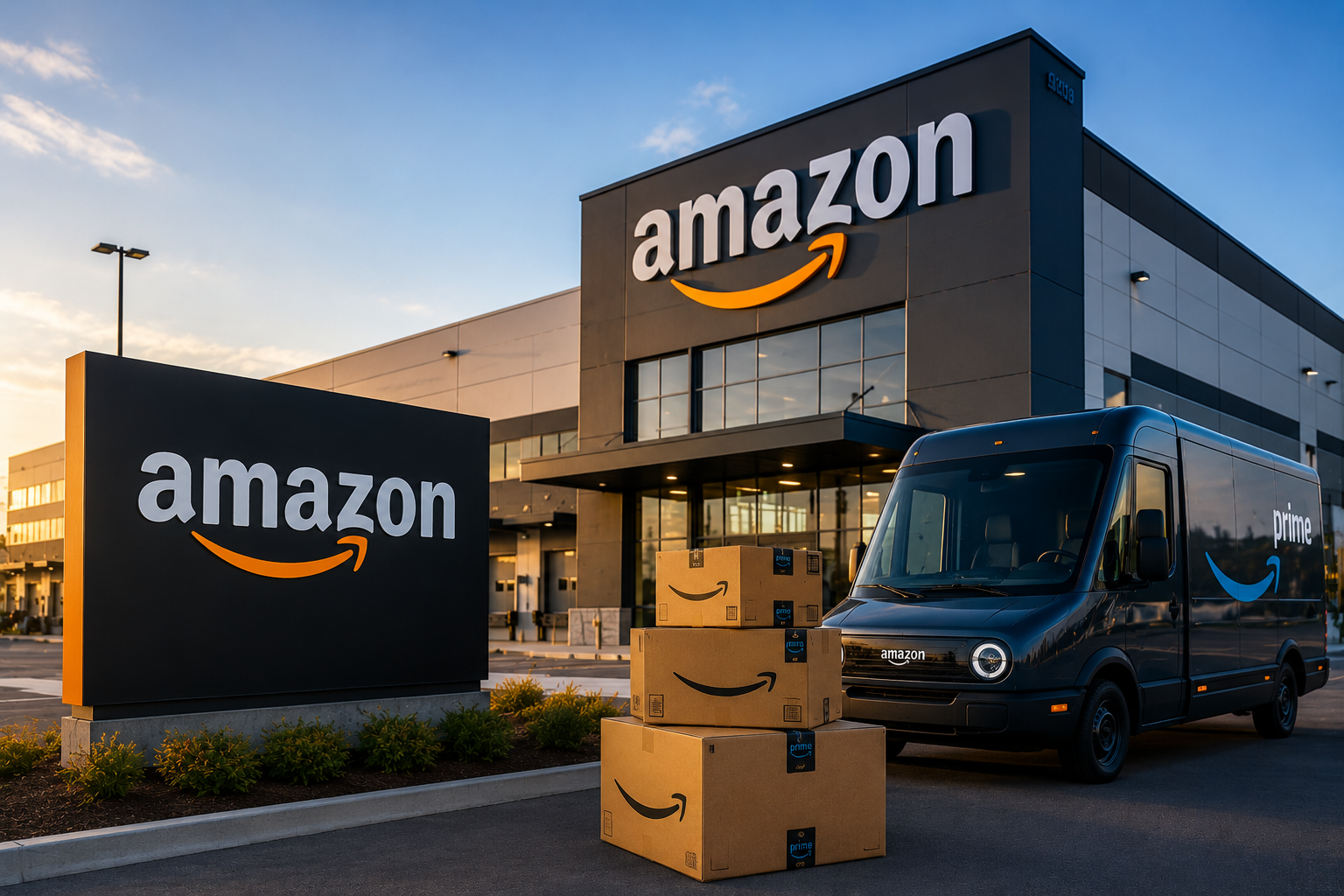
Amazon is reinforcing its position as one of the world’s largest artificial intelligence infrastructure providers, even as investors question whether the company’s unprecedented spending can generate sufficient long-term returns.

Although Amazon remains the global leader in cloud computing through Amazon Web Services (AWS) and continues expanding its e-commerce and satellite internet businesses, its stock has underperformed many of its largest technology peers over the past several years.

Rather than slowing investment, Amazon is significantly increasing capital expenditures to expand AI computing capacity, reflecting management’s confidence that artificial intelligence will become one of the company’s largest long-term growth drivers.

AWS Remains Amazon’s Primary Profit Engine

While Amazon’s global retail business continues generating enormous revenue, the company’s cloud division remains its most profitable business segment.

AWS continues to lead the global cloud infrastructure market with approximately 30% market share and has become the financial engine supporting Amazon’s aggressive investment strategy.

The cloud platform continues benefiting from rapid enterprise adoption of artificial intelligence, machine learning, and high-performance computing services. As businesses increasingly deploy generative AI applications, demand for cloud infrastructure has accelerated significantly.

Management believes this trend remains in its early stages and expects AI workloads to become one of the largest sources of future cloud demand.

Massive AI Investments Raise Investor Questions

Amazon expects to invest approximately $200 billion in capital expenditures this year as it expands its global AI infrastructure.

The spending is directed primarily toward new data centers, graphics processing units (GPUs), networking infrastructure, and cloud capacity required to support rapidly growing artificial intelligence workloads.

While these investments position Amazon to capitalize on long-term AI demand, they have also fueled investor concerns regarding returns on capital.

Advanced AI chips become obsolete relatively quickly as semiconductor companies continue releasing increasingly powerful hardware. This rapid innovation cycle has led some investors to question whether hyperscalers can generate sufficient returns before infrastructure requires further upgrades.

The scale of Amazon’s investment has therefore become one of the primary reasons some investors remain cautious despite the company’s strong competitive position.

AI Growth Expectations Continue to Expand

Amazon’s leadership remains confident that artificial intelligence demand will continue growing for many years.

Chief Executive Officer Andy Jassy recently projected that AWS could generate approximately $600 billion in annual revenue within the next decade, representing a dramatic increase from current levels.

Management argues that AI infrastructure spending is being driven by existing customer demand rather than speculative expectations. Enterprises across multiple industries continue expanding AI deployments, increasing cloud consumption, and requiring larger computing resources to support increasingly sophisticated models.

This sustained demand provides Amazon with greater confidence to continue expanding capacity despite elevated capital requirements.

Beyond Cloud: Expanding Into Satellite Connectivity

In addition to cloud computing, Amazon is also expanding its presence in satellite communications.

The company’s low-Earth-orbit satellite initiative aims to provide broadband internet connectivity to underserved and rural regions while competing with other satellite network providers.

Although the satellite business remains in its early stages, it represents another long-term growth opportunity that complements Amazon’s broader cloud and digital infrastructure ecosystem.

The combination of cloud computing, artificial intelligence, e-commerce, and satellite communications gives Amazon exposure to multiple high-growth technology markets simultaneously.

Looking Ahead

Amazon’s aggressive AI investment strategy reflects management’s belief that artificial intelligence will reshape enterprise computing over the coming decade. While concerns surrounding capital expenditures and infrastructure returns continue to weigh on investor sentiment, AWS remains one of the world’s most profitable cloud businesses and is positioned to benefit from expanding AI adoption.

If enterprise demand continues to grow as expected, Amazon’s current investments could strengthen its leadership across cloud computing, AI infrastructure, and emerging digital services. Investors will closely monitor future earnings, cloud growth, and returns on capital to determine whether the company’s ambitious AI strategy ultimately delivers the long-term value management anticipates.


Comparison, examination, and analysis between investment houses

Leave your details, and an expert from our team will get back to you as soon as possible

    * This article, in whole or in part, does not contain any promise of investment returns, nor does it constitute professional advice to make investments in any particular field.

    To read more about the full disclaimer, click here
    SKN | Why Netflix and Shopify Could Be Two of the Strongest Buy-the-Dip Opportunities in AI-Driven Markets
    • Lior mor
    • 8 Min Read
    • ago 43 minutes

    SKN | Why Netflix and Shopify Could Be Two of the Strongest Buy-the-Dip Opportunities in AI-Driven Markets SKN | Why Netflix and Shopify Could Be Two of the Strongest Buy-the-Dip Opportunities in AI-Driven Markets

    Artificial intelligence has dominated investor attention throughout the year, pushing many AI infrastructure companies to record valuations. At the same

    • ago 43 minutes
    • 8 Min Read

    Artificial intelligence has dominated investor attention throughout the year, pushing many AI infrastructure companies to record valuations. At the same

    SKN | Kioxia Shares Slide 12% as AI Stock Selloff Spreads Across Global Semiconductor Sector
    • sagi habasov
    • 7 Min Read
    • ago 1 hour

    SKN | Kioxia Shares Slide 12% as AI Stock Selloff Spreads Across Global Semiconductor Sector SKN | Kioxia Shares Slide 12% as AI Stock Selloff Spreads Across Global Semiconductor Sector

    Shares of Japanese memory-chip manufacturer Kioxia declined 12% on Friday as investors broadly sold artificial intelligence-related stocks following reports that

    • ago 1 hour
    • 7 Min Read

    Shares of Japanese memory-chip manufacturer Kioxia declined 12% on Friday as investors broadly sold artificial intelligence-related stocks following reports that

    SKN | Is SpaceX Overvalued? Wall Street Questions a $2 Trillion Valuation Despite Massive AI Ambitions
    • Ronny Mor
    • 7 Min Read
    • ago 2 hours

    SKN | Is SpaceX Overvalued? Wall Street Questions a $2 Trillion Valuation Despite Massive AI Ambitions SKN | Is SpaceX Overvalued? Wall Street Questions a $2 Trillion Valuation Despite Massive AI Ambitions

    SpaceX has rapidly become one of the world's most valuable publicly traded companies following its blockbuster initial public offering, but

    • ago 2 hours
    • 7 Min Read

    SpaceX has rapidly become one of the world's most valuable publicly traded companies following its blockbuster initial public offering, but

    SKN | Nvidia’s $20 Billion CPU Strategy Aims to Offset China Revenue Collapse
    • omer bar
    • 8 Min Read
    • ago 2 hours

    SKN | Nvidia’s $20 Billion CPU Strategy Aims to Offset China Revenue Collapse SKN | Nvidia’s $20 Billion CPU Strategy Aims to Offset China Revenue Collapse

    Nvidia is confronting one of the biggest strategic challenges in its history after Chief Executive Officer Jensen Huang acknowledged that

    • ago 2 hours
    • 8 Min Read

    Nvidia is confronting one of the biggest strategic challenges in its history after Chief Executive Officer Jensen Huang acknowledged that