


- sagi habasov
- •
- 5 Min Read
- •
- 4 months ago
Key Points
- Japan’s overall exports rose 4.2% year-on-year in October 2025, driven by shipments to Asia and Europe.
- Exports to the United States fell 3.1% due to ongoing tariffs and trade restrictions.
- Analysts are evaluating potential shifts in supply chains and implications for global trade balances.
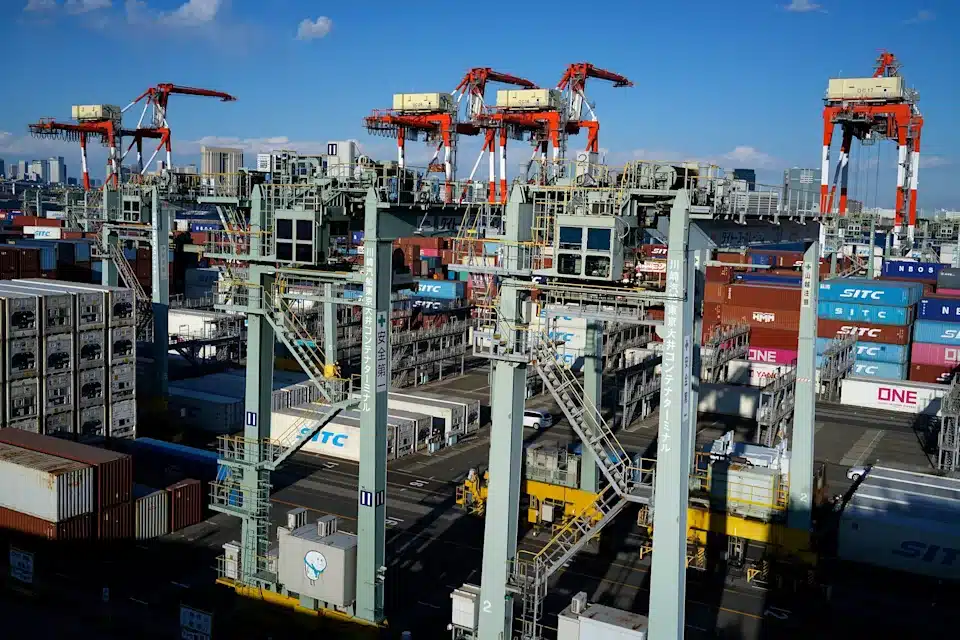
Japan’s exports to international markets grew steadily in October 2025, reflecting resilience in demand from Asia and Europe. However, shipments to the United States declined, pressured by ongoing tariffs and regulatory barriers. The contrasting trends highlight Japan’s diversified export strategy and the broader effects of trade tensions on global supply chains.
Export Growth Driven by Asia and Europe
Data from the Ministry of Finance indicates that Japan’s total exports rose 4.2% year-on-year in October, with strong contributions from China, South Korea, and the European Union. Semiconductor components, automotive parts, and precision machinery were the primary drivers, collectively accounting for nearly 60% of the growth. This sustained demand underscores the region’s ongoing reliance on Japanese high-value manufacturing and technology exports. Analysts note that while currency fluctuations, particularly the stronger yen, pose a headwind, robust orders from Asia and Europe have offset some of these pressures.
U.S. Exports Hit by Tariffs and Trade Barriers
Despite overall growth, Japanese exports to the United States fell 3.1% compared with the same period last year. Tariffs on certain automotive and industrial components, as well as regulatory compliance costs, have contributed to the decline. The reduction has forced some Japanese manufacturers to explore alternative routes, including increased exports to Southeast Asia and intra-regional supply chains. Financial markets are closely watching these trends, as declining U.S. shipments could affect corporate earnings for major Japanese exporters listed on both domestic and global exchanges.
Strategic Implications for Trade and Investment
The divergence between U.S. and other global markets highlights the impact of protectionist measures on corporate strategy and investor sentiment. Firms may accelerate diversification of their client base and regional production hubs to mitigate trade risk. For investors, understanding these dynamics is essential, as shifts in trade flows can influence stock performance, currency valuations, and sectoral profitability. Analysts also point to potential ripple effects on related industries, such as logistics, semiconductors, and automotive supply chains, which are sensitive to trade volumes and tariffs.
Looking ahead, market participants will monitor developments in U.S.-Japan trade negotiations and broader global economic indicators. Opportunities may arise for exporters targeting Asia and Europe, while risks remain from potential escalation of U.S. tariffs or additional regulatory measures. Investors and companies alike are advised to assess supply chain resilience, regional exposure, and currency impacts to navigate an evolving trade landscape through 2026.
Comparison, examination, and analysis between investment houses
Leave your details, and an expert from our team will get back to you as soon as possible
* This article, in whole or in part, does not contain any promise of investment returns, nor does it constitute professional advice to make investments in any particular field.
To read more about the full disclaimer, click here
- sagi habasov
- •
- 9 Min Read
- •
- ago 3 hours
SKN | Is “Mild Stagflation” the New Reality as Oil Stays Near $100 Amid Iran War Disruptions?
Bank of America has sharply revised its global economic outlook, warning that the ongoing Iran conflict is driving a “mild
- ago 3 hours
- •
- 9 Min Read

Bank of America has sharply revised its global economic outlook, warning that the ongoing Iran conflict is driving a “mild

- omer bar
- •
- 6 Min Read
- •
- ago 7 hours
SKN | Australia Extends $693 Million in Low-Cost Loans to Businesses to Ease Fuel Price Pressures
Amid rising fuel prices and supply constraints, the Australian government has introduced a $693 million low-interest loan program for businesses.
- ago 7 hours
- •
- 6 Min Read

Amid rising fuel prices and supply constraints, the Australian government has introduced a $693 million low-interest loan program for businesses.

- Ronny Mor
- •
- 8 Min Read
- •
- ago 12 hours
SKN | Is the Federal Reserve Preparing for Policy Whiplash as Inflation and Labor Risks Collide?
Fed Signals Strategic Flexibility Amid Rising Uncertainty Federal Reserve Bank of St. Louis President Alberto Musalem has reinforced a critical
- ago 12 hours
- •
- 8 Min Read

Fed Signals Strategic Flexibility Amid Rising Uncertainty Federal Reserve Bank of St. Louis President Alberto Musalem has reinforced a critical
- sagi habasov
- •
- 7 Min Read
- •
- ago 18 hours
SKN | Is the Fed Underestimating Inflation Risks as Oil Prices Surge Again?
Fed Signals Caution as Energy Prices Complicate Policy Outlook Federal Reserve officials are increasingly signaling a more cautious stance as
- ago 18 hours
- •
- 7 Min Read

Fed Signals Caution as Energy Prices Complicate Policy Outlook Federal Reserve officials are increasingly signaling a more cautious stance as

