


- orshu
- •
- 7 Min Read
- •
- 8 seconds ago
Key Points
- Israeli equities rebounded strongly, with the Tel Aviv-125 rising 1.45 percent after the previous session’s decline.
- Market breadth improved significantly, indicating renewed buying across sectors.
- Bond markets advanced alongside equities, reinforcing a balanced and confident investment environment.

Israeli financial markets closed higher on April 14, 2026, recovering from the previous day’s selloff. The rebound was broad-based, with strong gains across large-cap, mid-cap, and value segments. The swift recovery suggests that the prior decline was driven largely by short-term profit-taking rather than a fundamental shift in market sentiment.
Large Caps Lead Market Recovery with Strong Participation
The Tel Aviv-35 index climbed 1.55 percent to close at 4,450.82 points, with twenty-four advancing stocks compared to ten decliners. This strong performance in blue-chip stocks highlights renewed institutional buying and reinforces confidence in the market’s underlying strength.
The broader Tel Aviv-125 index gained 1.45 percent to 4,335.08 points. Market breadth improved significantly, with eighty-eight advancing stocks versus thirty-two declining. This shift back toward positive participation suggests that buyers quickly stepped in following the previous session’s weakness.
Equity market turnover reached approximately 4.70 billion shekels, indicating steady trading activity as investors repositioned and took advantage of lower prices.
Mid-Caps, Banks, and Value Stocks Regain Momentum
Mid-cap stocks also rebounded, with the Tel Aviv-90 index rising 1.02 percent to 3,937.34 points. Advancing stocks significantly outnumbered decliners, reflecting renewed investor interest in this segment.
The Tel Aviv 90 and banking index surged 1.74 percent, suggesting that financial stocks were a key driver of the recovery. Their strong performance indicates improving confidence in economic conditions and liquidity.
Value stocks outperformed, with the Tel Aviv-125 value index rising 1.82 percent. This continued strength highlights ongoing rotation into undervalued sectors, supporting the broader market.
The sector-balance index gained 1.18 percent, confirming that the rebound was widespread across industries and not limited to specific sectors.
Bond Markets Advance as Confidence Stabilizes
Fixed income markets also moved higher, reflecting a stable and constructive investment environment. The general bond index rose 0.13 percent, indicating steady demand for bonds.
Inflation-linked bonds posted gains, with the Tel Bond-Adjoined A index increasing 0.09 percent and the Tel Bond 60 index rising 0.11 percent. Short-term bonds edged up 0.01 percent, showing continued demand for lower-risk instruments.
Bond market turnover reached approximately 7.67 billion shekels, significantly higher than equity turnover. This elevated activity suggests ongoing portfolio adjustments and strong engagement in fixed income markets.
The parallel rise in both equities and bonds signals a balanced approach among investors, combining risk exposure with defensive positioning.
Forward Outlook: Recovery Strengthens but Volatility Remains a Factor
Following today’s rebound, the market appears to be stabilizing after a brief pullback. The key question now is whether this recovery can evolve into a sustained upward trend or if further volatility lies ahead.
Investors will closely monitor large-cap and banking sector performance, as they continue to drive overall market direction. Sustained strength in these areas would support further gains.
Market breadth will remain a critical indicator. Continued dominance of advancing stocks would confirm healthy momentum, while any weakening could signal renewed caution.
Bond market trends will also be important. Stability or gradual gains in fixed income alongside equities would reinforce confidence, while divergence may indicate shifting sentiment.
Potential risks include renewed profit-taking, global market volatility, and macroeconomic developments that could influence investor behavior. However, the rapid recovery seen today suggests that buyers remain active and willing to support the market.
The next sessions will be key in determining whether the Israeli market can extend its upward trajectory or enters a period of consolidation following recent volatility.
Comparison, examination, and analysis between investment houses
Leave your details, and an expert from our team will get back to you as soon as possible
* This article, in whole or in part, does not contain any promise of investment returns, nor does it constitute professional advice to make investments in any particular field.
To read more about the full disclaimer, click here
- omer bar
- •
- 6 Min Read
- •
- ago 2 hours
SKN | Oil Slides and Gold Climbs as US–Iran Talks Optimism Shifts Risk Sentiment
Global commodity markets moved in opposite directions as crude oil declined and gold advanced, reflecting shifting expectations that diplomatic engagement
- ago 2 hours
- •
- 6 Min Read

Global commodity markets moved in opposite directions as crude oil declined and gold advanced, reflecting shifting expectations that diplomatic engagement

- Lior mor
- •
- 5 Min Read
- •
- ago 2 hours
SKN | Wholesale Inflation Hits Three-Year High — What It Signals for Global Price Pressures
Wholesale inflation accelerated in March to a three-year high, underscoring persistent cost pressures in the upstream economy. The data
- ago 2 hours
- •
- 5 Min Read

Wholesale inflation accelerated in March to a three-year high, underscoring persistent cost pressures in the upstream economy. The data

- Arik Arkadi Sluzki
- •
- 5 Min Read
- •
- ago 3 hours
SKN | U.S. Small Business Confidence Drops to 11-Month Low — Warning Signal for Domestic Demand?
Small business sentiment in the United States declined to its lowest level in 11 months in March, reflecting growing
- ago 3 hours
- •
- 5 Min Read

Small business sentiment in the United States declined to its lowest level in 11 months in March, reflecting growing

- sagi habasov
- •
- 5 Min Read
- •
- ago 4 hours
SKN | Are Falling Oil Prices and Rising Treasuries Signaling a Geopolitical Risk Reset?
U.S. Treasury markets strengthened as oil prices retreated on growing optimism over a potential Iran peace deal, triggering a
- ago 4 hours
- •
- 5 Min Read
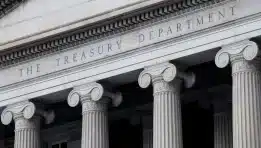
U.S. Treasury markets strengthened as oil prices retreated on growing optimism over a potential Iran peace deal, triggering a

