


- Ronny Mor
- •
- 8 Min Read
- •
- 8 seconds ago
Key Points
- Fed signals flexibility as both inflation and labor risks rise simultaneously.
- Energy-driven inflation complicates rate path amid geopolitical shocks.
- Markets increasingly expect prolonged higher rates with potential for policy reversal.
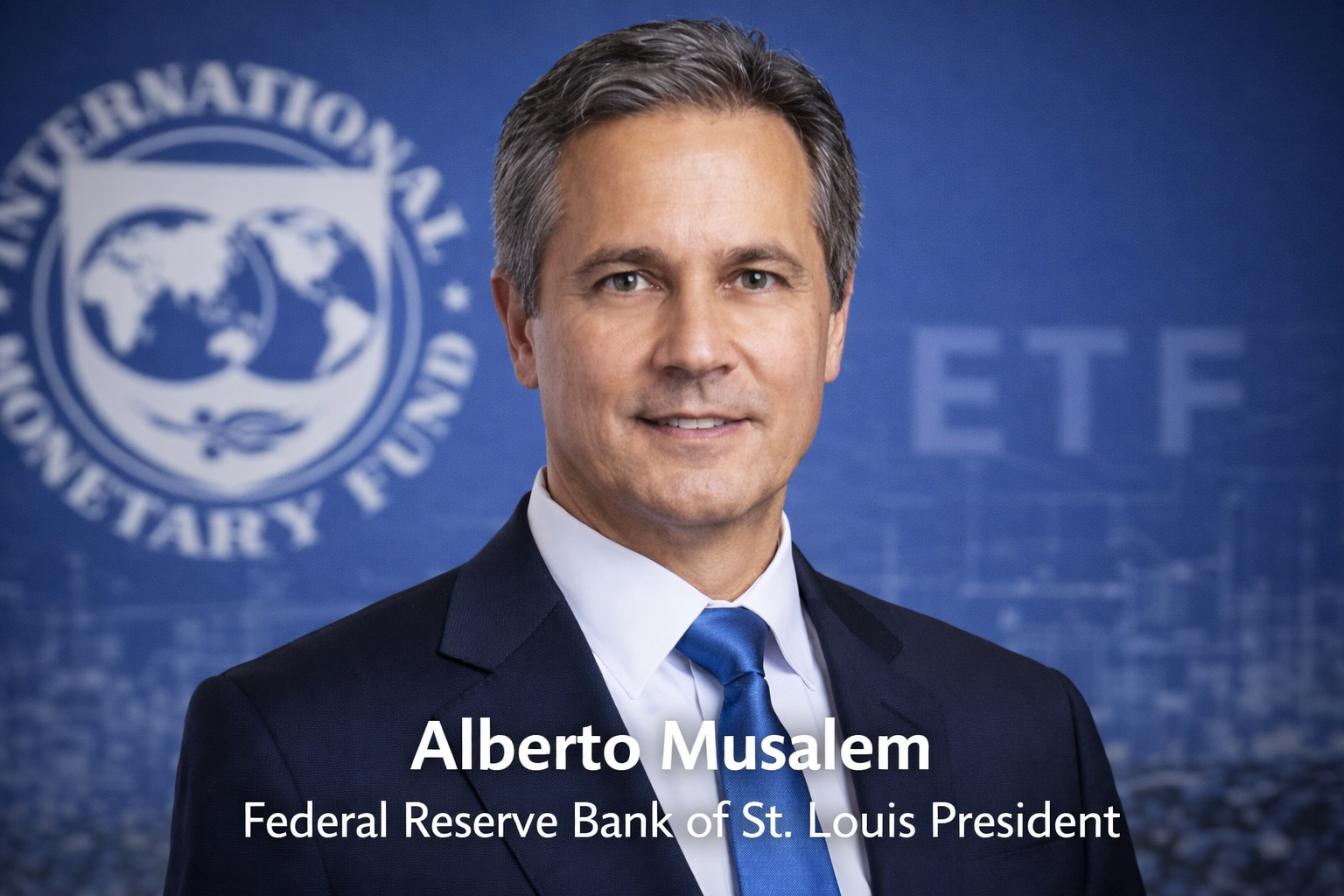
Fed Signals Strategic Flexibility Amid Rising Uncertainty
Federal Reserve Bank of St. Louis President Alberto Musalem has reinforced a critical shift in central bank messaging: policy is no longer on a fixed path. Instead, the Fed is preparing for a scenario where interest rates could move in either direction depending on how economic conditions evolve.
Musalem emphasized that current policy remains “well positioned,” but the balance of risks is becoming increasingly complex. With both inflation and employment facing mounting pressures, the Fed’s dual mandate is entering a more challenging phase. The message is clear—policy flexibility is no longer optional; it is essential.
This evolving stance reflects a broader recalibration across the Federal Reserve, as policymakers confront an economic environment shaped by external shocks rather than traditional demand cycles.
Energy Shock Reshapes Inflation Outlook
A key driver behind this uncertainty is the sharp rise in energy prices following the US-Israeli conflict with Iran. The surge has already pushed US gasoline prices above $4 per gallon, directly impacting consumers and feeding into headline inflation.
Musalem acknowledged that even if the conflict were to end quickly, the economic effects would persist. Damaged infrastructure, disrupted supply chains, and elevated energy costs are likely to leave “echoes” across markets and inflation data for months.
This introduces a critical complication for monetary policy. While core inflation may remain relatively contained, headline inflation is expected to rise meaningfully—creating a divergence that makes policy decisions more nuanced and potentially more volatile.
Labor Market Stability Faces New Pressure
While inflation remains a primary concern, the labor market is no longer a one-sided strength. Musalem noted that his baseline outlook—stable unemployment and steady growth—has weakened since the onset of the conflict.
He now expects slightly higher unemployment and slower economic growth, signaling early signs of strain in the broader economy. This creates a delicate balancing act for policymakers.
If labor conditions deteriorate without a corresponding surge in inflation, the Fed could pivot toward rate cuts. However, if inflation expectations become unanchored, tightening may be required—even at the expense of growth.
This dual-risk environment increases the probability of policy shifts that may appear abrupt or reactive, rather than gradual and predictable.
Markets Reprice the Rate Path
Financial markets are already adjusting to this new reality. Federal funds futures indicate that investors increasingly expect rates to remain elevated for longer, with growing probability assigned to a potential rate hike in 2026 rather than cuts.
This represents a notable shift from earlier expectations of easing. The combination of geopolitical instability, rising energy costs, and persistent inflation risks is forcing markets to reconsider the trajectory of monetary policy.
At the same time, stress in areas such as private credit is being closely monitored. While current issues appear linked to liquidity and valuation adjustments rather than systemic risk, they highlight the broader tightening in financial conditions.
Inflation Expectations Become the Key Battleground
Perhaps the most important takeaway from Musalem’s remarks is the emphasis on inflation expectations. He warned that maintaining credibility is critical, noting that the economy has faced multiple supply shocks in recent years.
Allowing expectations to drift higher could trigger a cycle of sustained inflation, weaker growth, and labor market deterioration. This risk is central to the Fed’s current thinking and will likely guide future decisions.
The challenge lies in responding to short-term shocks without undermining long-term credibility—a balance that becomes increasingly difficult in a volatile global environment.
Outlook: A Policy Path Defined by Data, Not Direction
Looking ahead, the Federal Reserve’s path will depend less on predefined plans and more on incoming data. Inflation trends, labor market performance, and geopolitical developments will all play a decisive role.
A rapid de-escalation in global tensions could stabilize energy prices and support a more dovish stance. However, persistent disruptions may force the Fed to maintain or even tighten policy despite slowing growth.
For now, the central bank is signaling readiness rather than commitment—an approach that reflects both caution and uncertainty.
Comparison, examination, and analysis between investment houses
Leave your details, and an expert from our team will get back to you as soon as possible
* This article, in whole or in part, does not contain any promise of investment returns, nor does it constitute professional advice to make investments in any particular field.
To read more about the full disclaimer, click here
- sagi habasov
- •
- 7 Min Read
- •
- ago 6 hours
SKN | Is the Fed Underestimating Inflation Risks as Oil Prices Surge Again?
Fed Signals Caution as Energy Prices Complicate Policy Outlook Federal Reserve officials are increasingly signaling a more cautious stance as
- ago 6 hours
- •
- 7 Min Read
Fed Signals Caution as Energy Prices Complicate Policy Outlook Federal Reserve officials are increasingly signaling a more cautious stance as

- omer bar
- •
- 6 Min Read
- •
- ago 2 days
SKN | Gold Rises as Fed Rate-Cut Speculation and Trump Remarks Influence Market Sentiment
Gold prices gained ground as investors weighed expectations of a potential Federal Reserve rate cut alongside market reactions to remarks
- ago 2 days
- •
- 6 Min Read

Gold prices gained ground as investors weighed expectations of a potential Federal Reserve rate cut alongside market reactions to remarks
- sagi habasov
- •
- 7 Min Read
- •
- ago 2 days
SKN | U.S. Eyes Alternatives After WTO Talks Fail to Renew E‑Commerce Moratorium
Global trade negotiations at the World Trade Organization’s (WTO) 14th ministerial meeting in Yaoundé, Cameroon concluded without agreement on extending
- ago 2 days
- •
- 7 Min Read
Global trade negotiations at the World Trade Organization’s (WTO) 14th ministerial meeting in Yaoundé, Cameroon concluded without agreement on extending

- Ronny Mor
- •
- 7 Min Read
- •
- ago 2 days
SKN | Is the Fed Signaling a Pause Despite Rising Oil Prices and Inflation Fears?
Fed Signals Patience in the Face of Energy-Driven Inflation Jerome Powell has made it clear that the Federal Reserve is
- ago 2 days
- •
- 7 Min Read
Fed Signals Patience in the Face of Energy-Driven Inflation Jerome Powell has made it clear that the Federal Reserve is

