


- sagi habasov
- •
- 7 Min Read
- •
- 9 seconds ago
Key Points
- Fed officials warn against dismissing oil-driven inflation shocks.
- Rising energy costs are already feeding into consumer prices and business pricing behavior.
- Labor market fragility complicates the Fed’s path forward.
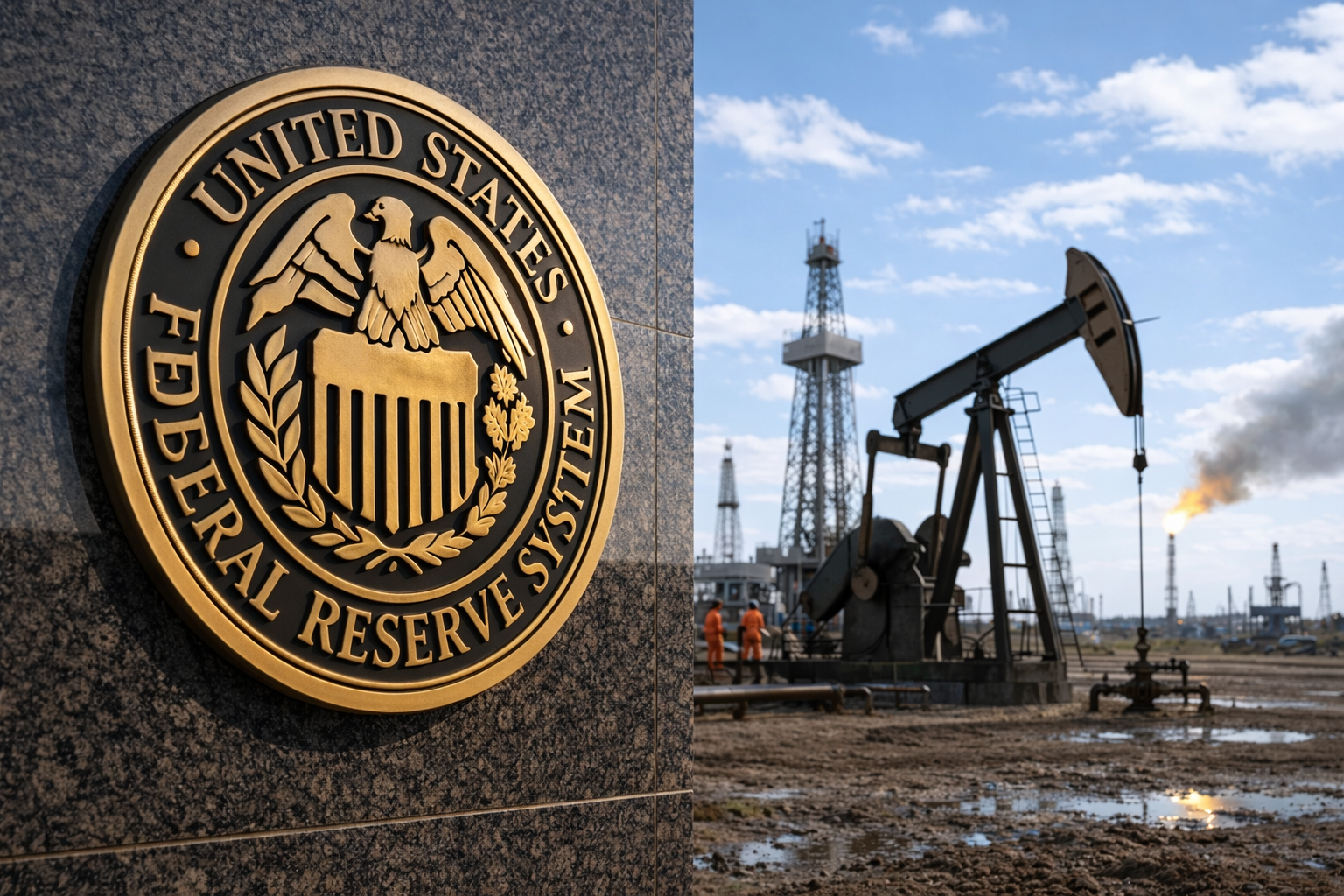
Fed Signals Caution as Energy Prices Complicate Policy Outlook
Federal Reserve officials are increasingly signaling a more cautious stance as rising oil prices threaten to reignite inflationary pressures. St. Louis Fed President Alberto Musalem warned that policymakers should not be too quick to dismiss the impact of supply-driven shocks, particularly in an environment where inflation remains persistently above target.
His remarks highlight a critical shift in tone. While central banks have historically “looked through” temporary energy spikes, the current backdrop—marked by elevated inflation and heightened geopolitical risk—makes that approach less reliable. The Fed now faces a more complex challenge, where ignoring energy-driven inflation could risk undermining credibility.
Oil Shock Risks Feeding Into Core Inflation
The recent surge in energy prices is already beginning to filter through the broader economy. According to Musalem, higher oil prices are expected to push headline inflation upward in the near term, with potential spillover effects into core inflation.
This transmission mechanism is key. Businesses are increasingly passing higher input costs onto consumers, as reflected in recent surveys showing the fastest rise in selling prices since mid-2022. Once these cost pressures become embedded, they are harder to reverse, raising the risk of more persistent inflation.
Unlike previous cycles, today’s environment is particularly sensitive to price increases. Consumers and firms, already accustomed to elevated inflation, may adjust expectations more quickly—potentially reinforcing a feedback loop between wages, prices, and inflation expectations.
Labor Market Weakness Adds Policy Complexity
Complicating the Fed’s outlook further is emerging softness in the labor market. While unemployment remains near levels associated with full employment, hiring momentum has slowed and is increasingly concentrated in a limited number of sectors.
Musalem noted that recent payroll growth has been hovering near the minimum needed to keep unemployment stable. At the same time, surveys suggest companies are becoming more cautious about hiring amid geopolitical uncertainty.
This creates a delicate balancing act. On one hand, rising inflation argues for tighter policy. On the other, weakening labor conditions increase the risk of an economic slowdown. A sudden rise in layoffs could quickly shift the narrative toward recession concerns.
Policy Path Hinges on Inflation Persistence
For now, the Fed appears inclined to hold interest rates steady, with Musalem indicating that current policy settings are “appropriate” given the uncertainty. However, the forward path remains highly dependent on how inflation evolves in the coming months.
Importantly, policymakers are also pushing back against overly optimistic assumptions around productivity gains from artificial intelligence. While AI could eventually help lower inflation, Musalem emphasized that it would be risky to base policy decisions on expectations that have yet to materialize.
This reinforces a broader theme: the Fed is prioritizing present risks over future possibilities, particularly as inflation continues to run above target.
Outlook: A Narrow Policy Window Emerges
Looking ahead, the Federal Reserve’s policy trajectory will depend on the interaction between energy prices, inflation dynamics, and labor market conditions. If oil-driven inflation proves persistent, the possibility of rate hikes could re-enter the conversation—even as growth risks build.
At the same time, any deterioration in employment could shift the balance toward easing, creating a highly uncertain policy environment.
Markets are now navigating this tension. The traditional playbook—where central banks look through energy shocks—may no longer apply as cleanly. Instead, policymakers are operating within a narrower margin for error, where both inflation and growth risks demand equal attention.
Comparison, examination, and analysis between investment houses
Leave your details, and an expert from our team will get back to you as soon as possible
* This article, in whole or in part, does not contain any promise of investment returns, nor does it constitute professional advice to make investments in any particular field.
To read more about the full disclaimer, click here
- omer bar
- •
- 6 Min Read
- •
- ago 2 days
SKN | Gold Rises as Fed Rate-Cut Speculation and Trump Remarks Influence Market Sentiment
Gold prices gained ground as investors weighed expectations of a potential Federal Reserve rate cut alongside market reactions to remarks
- ago 2 days
- •
- 6 Min Read

Gold prices gained ground as investors weighed expectations of a potential Federal Reserve rate cut alongside market reactions to remarks

- sagi habasov
- •
- 7 Min Read
- •
- ago 2 days
SKN | U.S. Eyes Alternatives After WTO Talks Fail to Renew E‑Commerce Moratorium
Global trade negotiations at the World Trade Organization’s (WTO) 14th ministerial meeting in Yaoundé, Cameroon concluded without agreement on extending
- ago 2 days
- •
- 7 Min Read
Global trade negotiations at the World Trade Organization’s (WTO) 14th ministerial meeting in Yaoundé, Cameroon concluded without agreement on extending

- Ronny Mor
- •
- 7 Min Read
- •
- ago 2 days
SKN | Is the Fed Signaling a Pause Despite Rising Oil Prices and Inflation Fears?
Fed Signals Patience in the Face of Energy-Driven Inflation Jerome Powell has made it clear that the Federal Reserve is
- ago 2 days
- •
- 7 Min Read
Fed Signals Patience in the Face of Energy-Driven Inflation Jerome Powell has made it clear that the Federal Reserve is
- sagi habasov
- •
- 7 Min Read
- •
- ago 2 days
SKN | Could the Fed Cut Rates Despite Rising Oil Prices and Inflation Fears?
Fed Debate Intensifies as Rate Cut Calls Emerge A growing divide is emerging within the Federal Reserve as policymakers weigh
- ago 2 days
- •
- 7 Min Read

Fed Debate Intensifies as Rate Cut Calls Emerge A growing divide is emerging within the Federal Reserve as policymakers weigh

