


- Lior mor
- •
- 6 Min Read
- •
- 4 months ago
Key Points
- The Fed cuts rates by 0.25% but reveals deep internal divisions on the future path.
- Markets rallied, yet pricing suggests skepticism about an extended easing cycle.
- Powell stresses that policy risks are balanced on both sides, making upcoming data pivotal.
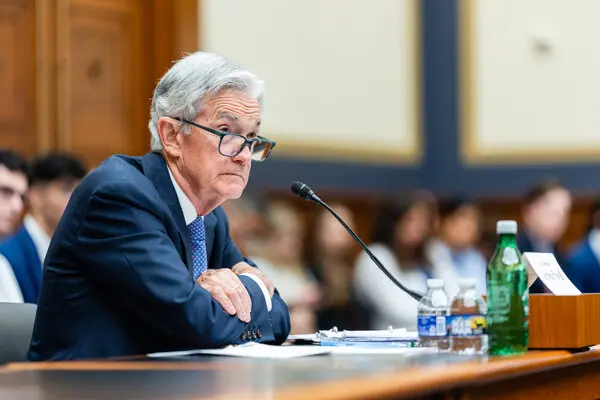
The Federal Reserve closed its final meeting of the year with a widely anticipated 25-basis-point rate cut, lowering the federal funds target range to 3.50%–3.75%. Yet the headline decision masked a deeper story. Sharp disagreement among policymakers signaled that the central bank is entering a more uncertain and politically sensitive phase of its tightening-and-easing cycle. With inflation-cooling progress slowing and labor-market data softening unevenly, the Fed’s internal debate is now as important as the policy outcome itself.
A Divided Committee and a Narrowing Policy Margin
The split vote underscored the complexity of the moment. Chicago Fed President Austan Goolsbee and Kansas City’s Jeff Schmid preferred to hold rates steady, viewing further easing as premature. In contrast, Governor Stephen Miran pushed for a more aggressive 50-basis-point cut, arguing that the slowdown in employment momentum requires quicker support. The divergence reflects a committee grappling with a narrowing margin for error as it seeks to balance inflation stability with labor-market resilience.
Fed Chair Jerome Powell’s comments reinforced how delicate the trade-offs have become. He described the institution as operating in a “challenging position” with “no risk-free path,” signaling that both an overly aggressive pivot and excessive caution carry material risks. The messaging suggested a recalibration rather than a fixed roadmap, highlighting the Fed’s emphasis on data dependence entering 2026.
Markets Cheer the Cut but See Mixed Signals
Equity markets initially interpreted the decision as supportive for growth. The S&P 500 closed just shy of its record high, and the small-cap Russell 2000 surged to an all-time high, indicating that investors view lower rates as a catalyst for credit-sensitive and domestically focused companies. However, the rally did not reflect a unanimous sense of clarity. Market pricing has begun to diverge from the Fed’s updated Summary of Economic Projections, which indicated a median expectation of only one additional cut in 2026.
Bond markets showed a more cautious stance, with long-dated yields stabilizing rather than falling sharply. Investors appear reluctant to assume a rapid easing cycle, recognizing that inflation dynamics remain difficult to predict and geopolitical risk continues to complicate global supply channels.
A New Phase for Monetary Strategy
The Fed’s policy direction in 2026 will hinge on whether inflation’s descent stalls and whether the labor market continues to cool in an orderly manner. Powell emphasized patience, noting that the policy rate has returned to a neutral posture—neither stimulating nor restraining economic activity. This status gives the Fed breathing room to reassess incoming data without signaling a predetermined pace for additional cuts.
As the central bank weighs its next steps, macro conditions may become more volatile. Consumer demand remains uneven, wage growth is slowing, and global economic headwinds—including energy market disruptions and renewed supply-chain pressures—could influence inflation trajectories more than domestic demand alone.
Comparison, examination, and analysis between investment houses
Leave your details, and an expert from our team will get back to you as soon as possible
* This article, in whole or in part, does not contain any promise of investment returns, nor does it constitute professional advice to make investments in any particular field.
To read more about the full disclaimer, click here
- Lior mor
- •
- 9 Min Read
- •
- ago 2 hours
SKN | Is the U.S. Labor Market Stabilizing After February’s Shock Decline?
The U.S. labor market is expected to regain some footing in March 2026, with forecasts pointing to a gain of
- ago 2 hours
- •
- 9 Min Read

The U.S. labor market is expected to regain some footing in March 2026, with forecasts pointing to a gain of

- sagi habasov
- •
- 9 Min Read
- •
- ago 2 hours
SKN | Is Russia’s Services Sector Losing Momentum as Demand Weakens and Costs Stay Elevated?
Russia’s services sector showed renewed signs of strain in March 2026, as the S&P Global Russia Services PMI dropped to
- ago 2 hours
- •
- 9 Min Read

Russia’s services sector showed renewed signs of strain in March 2026, as the S&P Global Russia Services PMI dropped to
- Lior mor
- •
- 6 Min Read
- •
- ago 19 hours
SKN | US Energy Independence or Market Illusion? Why Global Oil Dynamics Still Matter
Recent remarks suggesting that the United States is “totally independent of the Middle East” have reignited debate over the
- ago 19 hours
- •
- 6 Min Read

Recent remarks suggesting that the United States is “totally independent of the Middle East” have reignited debate over the
- sagi habasov
- •
- 9 Min Read
- •
- ago 1 day
SKN | Is “Mild Stagflation” the New Reality as Oil Stays Near $100 Amid Iran War Disruptions?
Bank of America has sharply revised its global economic outlook, warning that the ongoing Iran conflict is driving a “mild
- ago 1 day
- •
- 9 Min Read

Bank of America has sharply revised its global economic outlook, warning that the ongoing Iran conflict is driving a “mild


