


- Lior mor
- •
- 7 Min Read
- •
- 16 seconds ago
Key Points
- Bank of America raises its 2026 semiconductor forecast to $1.3 trillion, driven largely by AI demand.
- Growth is heavily concentrated in AI leaders like Nvidia, AMD, and Broadcom.
- Rising expectations depend on massive cloud spending, raising risks if AI monetization lags.

The global semiconductor industry is entering what could be its most transformative—and controversial—growth phase. A new forecast from Bank of America projecting a $1.3 trillion market by 2026 marks a dramatic upward revision, underscoring the accelerating impact of artificial intelligence on chip demand.
Yet beneath the bullish headline lies a more complex reality: growth is becoming increasingly concentrated, capital-intensive, and dependent on assumptions that may be difficult to sustain.
AI Becomes the Dominant Growth Engine
At the center of the revised outlook are AI-driven workloads, particularly in data centers. Companies such as Nvidia and Broadcom are leading this surge, benefiting from demand for high-performance compute, networking, and memory solutions.
Bank of America expects AI infrastructure to account for the majority of industry expansion, with additional support from industrial applications such as robotics and automation. This reflects a structural shift in semiconductor demand—from consumer-driven cycles to enterprise and infrastructure-led growth.
The implication is clear: the future of the chip industry is increasingly tied to AI scalability rather than traditional hardware refresh cycles.
Winners Concentrated in AI Compute Leaders
Beyond Nvidia and Broadcom, firms like Advanced Micro Devices and Marvell Technology are positioned as key beneficiaries of the AI boom.
At the same time, “picks and shovels” players such as Applied Materials and Lam Research are expected to gain from increased chip manufacturing complexity. Design-focused firms like Cadence Design Systems and Synopsys may also see renewed momentum as demand for advanced chip architectures rises.
However, this growth is far from evenly distributed. The semiconductor rally is increasingly concentrated in a small group of high-value players, leaving much of the broader market behind.
Traditional Consumer Segments Lag Behind
While AI-related segments are booming, traditional semiconductor markets—particularly smartphones and PCs—continue to struggle. Companies such as Qualcomm and Skyworks Solutions face ongoing headwinds from weak consumer demand.
Bank of America’s projections highlight this divergence, with compute and storage expected to grow by 43% year-over-year, while wireless communications could decline by 9%.
This bifurcation signals a fundamental shift in the industry, where growth is no longer broad-based but instead driven by a narrow set of high-growth applications.
Rising Expectations Depend on Massive Cloud Spending
One of the most critical assumptions underpinning the bullish outlook is the scale of future cloud investment. To meet projected semiconductor demand, global cloud capital expenditure would need to exceed $1 trillion—well above current consensus estimates.
This places significant pressure on hyperscalers such as Microsoft and Alphabet Inc. to sustain aggressive spending on AI infrastructure.
The challenge is twofold. First, companies must continue investing at unprecedented levels. Second, they must demonstrate meaningful returns on those investments. If AI monetization lags or capacity exceeds demand, the current growth narrative could face a sharp reassessment.
Outlook: Structural Growth or Emerging Bubble?
Looking ahead, the semiconductor industry appears poised for significant expansion—but with heightened risks. The path to a $2 trillion market by 2030 implies a 20% annual growth rate, more than double the historical average.
Such acceleration is possible, but it is not guaranteed.
The key variables will be the pace of AI adoption, the sustainability of hyperscaler spending, and the industry’s ability to translate infrastructure investment into real economic value.
For investors, this creates a high-reward but high-expectation environment—where execution matters as much as innovation.
Comparison, examination, and analysis between investment houses
Leave your details, and an expert from our team will get back to you as soon as possible
* This article, in whole or in part, does not contain any promise of investment returns, nor does it constitute professional advice to make investments in any particular field.
To read more about the full disclaimer, click here
- Lior mor
- •
- 6 Min Read
- •
- ago 3 minutes
SKN | Microsoft Leads Automation Software Earnings—Sustained AI Momentum or Peak Growth Cycle?
The latest Q4 earnings season for the automation software segment highlights a widening gap between market leaders and smaller
- ago 3 minutes
- •
- 6 Min Read

The latest Q4 earnings season for the automation software segment highlights a widening gap between market leaders and smaller

- omer bar
- •
- 7 Min Read
- •
- ago 2 hours
SKN | Is Apple Quietly Opening the Door to Nvidia in the AI Race?
Apple’s reported approval of a third-party driver enabling Nvidia GPUs on Apple Silicon Macs may appear incremental, but it carries
- ago 2 hours
- •
- 7 Min Read

Apple’s reported approval of a third-party driver enabling Nvidia GPUs on Apple Silicon Macs may appear incremental, but it carries
- omer bar
- •
- 10 Min Read
- •
- ago 13 hours
SKN | Is Tencent’s Bet on Huawei Chips Redefining China’s AI Power Balance?
Tencent Holdings is deepening its role in China’s artificial intelligence ecosystem by placing bulk orders for AI chips from Huawei
- ago 13 hours
- •
- 10 Min Read
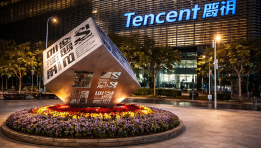
Tencent Holdings is deepening its role in China’s artificial intelligence ecosystem by placing bulk orders for AI chips from Huawei

- Ronny Mor
- •
- 7 Min Read
- •
- ago 23 hours
SKN | Is Google’s AI Investment Surge Creating the Next Wave of Tech Giants?
The artificial intelligence boom is not just transforming products and services—it is fundamentally reshaping how capital is deployed across the
- ago 23 hours
- •
- 7 Min Read

The artificial intelligence boom is not just transforming products and services—it is fundamentally reshaping how capital is deployed across the


