Key Points

  • Tencent is strengthening its AI strategy by integrating Huawei’s domestic chip solutions
  • The move supports China’s broader push for technological independence
  • Execution and ecosystem development will determine the long-term investment impact
hero

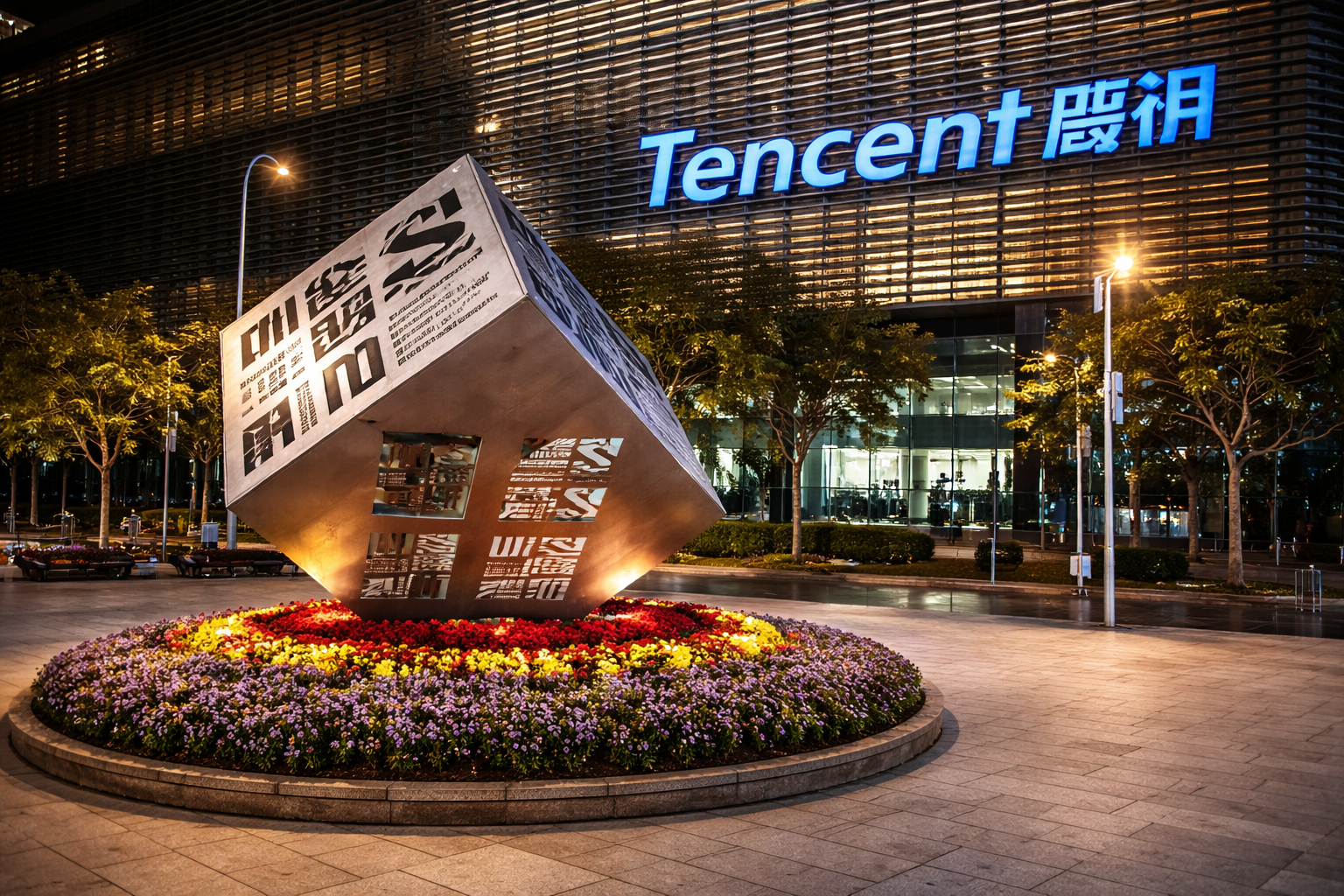
Tencent Holdings is deepening its role in China’s artificial intelligence ecosystem by placing bulk orders for AI chips from Huawei Technologies. The move, echoed by peers like Alibaba Group and ByteDance, signals a decisive shift toward domestic semiconductor solutions. Beyond procurement, this reflects a broader structural realignment in China’s tech sector, where software giants are increasingly integrating with local hardware supply chains to support long-term AI ambitions.

Strategic Shift: Building a Self-Reliant AI Stack

Tencent’s decision to source AI chips from Huawei marks a significant pivot in its infrastructure strategy. Historically, global leaders like Nvidia Corporation have dominated AI compute. However, geopolitical pressures and export restrictions have accelerated China’s push to develop a self-sufficient technology ecosystem.

By integrating Huawei’s chips into its operations, Tencent is aligning its massive data and software platforms—spanning social media, gaming, and cloud computing—with domestically produced hardware. This vertical alignment reduces external dependencies while strengthening internal control over performance, cost, and scalability.

AI Integration: Expanding Across Core Platforms

Artificial intelligence is becoming central to Tencent’s product ecosystem, from enhancing user engagement on social platforms to optimizing gaming experiences and expanding enterprise cloud services. Reliable access to AI compute is therefore not just a technical requirement but a strategic necessity.

Huawei’s chips could provide Tencent with a more predictable and politically insulated supply of computing power. This is particularly important as AI workloads continue to scale, requiring consistent access to high-performance hardware. Over time, this integration may enable Tencent to accelerate deployment of AI-driven features across its platforms, potentially strengthening its competitive position in both consumer and enterprise markets.

Ecosystem Dynamics: Collaboration Across Chinese Tech

Tencent’s participation alongside Alibaba and ByteDance highlights a coordinated industry shift toward domestic AI infrastructure. This collective backing could accelerate the development of a fully integrated ecosystem, where chips, software frameworks, and AI models are optimized for local use cases.

Such collaboration may also influence standards and interoperability within China’s tech landscape. As companies align around shared hardware platforms, the ecosystem could benefit from network effects, including improved software tooling and reduced fragmentation.

However, this convergence may also reshape competitive dynamics, as firms balance collaboration on infrastructure with competition in services and applications.

Execution Risks: Performance, Cost, and Compatibility

Despite its strategic appeal, the transition to domestic chips introduces several uncertainties. Huawei’s AI processors may differ from established alternatives in terms of performance benchmarks, software compatibility, and cost efficiency.

For investors, these variables are critical. Any gaps in performance or developer support could slow AI deployment or require additional investment in optimization. Conversely, if Huawei’s chips prove competitive, they could significantly enhance Tencent’s long-term cost structure and operational resilience.

This shift also challenges existing valuation assumptions, which may have been based on the use of globally dominant hardware platforms.

Investor Perspective: Reframing the Growth Narrative

Tencent’s move reflects a broader evolution in how investors should assess AI-driven growth. The focus is shifting from pure demand for AI services to the underlying infrastructure enabling that growth.

By securing domestic chip supply, Tencent is positioning itself to sustain AI expansion even amid external constraints. However, this also ties its future performance more closely to the success of China’s semiconductor ecosystem.

Investor sentiment may increasingly hinge on execution—specifically, how effectively Tencent integrates Huawei’s chips into its platforms and translates that capability into revenue growth.

Forward Outlook: A New Phase in AI Competition

Tencent’s alignment with Huawei represents more than a procurement decision; it is a strategic bet on the future of China’s AI independence. If successful, this approach could redefine competitive dynamics, not only within China but also in the global technology landscape.

Markets will be watching closely for signs of performance parity, ecosystem maturity, and tangible business impact. As AI continues to evolve, the interplay between hardware sovereignty and software innovation will likely become a defining theme for investors.


Comparison, examination, and analysis between investment houses

Leave your details, and an expert from our team will get back to you as soon as possible

    * This article, in whole or in part, does not contain any promise of investment returns, nor does it constitute professional advice to make investments in any particular field.

    To read more about the full disclaimer, click here
    SKN | Is Google’s AI Investment Surge Creating the Next Wave of Tech Giants?
    • Ronny Mor
    • 7 Min Read
    • ago 10 hours

    SKN | Is Google’s AI Investment Surge Creating the Next Wave of Tech Giants? SKN | Is Google’s AI Investment Surge Creating the Next Wave of Tech Giants?

    The artificial intelligence boom is not just transforming products and services—it is fundamentally reshaping how capital is deployed across the

    • ago 10 hours
    • 7 Min Read

    The artificial intelligence boom is not just transforming products and services—it is fundamentally reshaping how capital is deployed across the

    SKN | Ciena Stock Climbs Strongly in March: Network Demand Surge or Momentum Trade?
    • Arik Arkadi Sluzki
    • 6 Min Read
    • ago 11 hours

    SKN | Ciena Stock Climbs Strongly in March: Network Demand Surge or Momentum Trade? SKN | Ciena Stock Climbs Strongly in March: Network Demand Surge or Momentum Trade?

      Ciena Corporation (NYSE: CIEN) posted a notable gain in March, with its stock rising more than 11% as investors

    • ago 11 hours
    • 6 Min Read

      Ciena Corporation (NYSE: CIEN) posted a notable gain in March, with its stock rising more than 11% as investors

    SKN | Micron Technology: The One Chart That Could Define Its Next Move
    • omer bar
    • 6 Min Read
    • ago 12 hours

    SKN | Micron Technology: The One Chart That Could Define Its Next Move SKN | Micron Technology: The One Chart That Could Define Its Next Move

      Micron Technology (NASDAQ: MU) has become a focal point for investors seeking exposure to the AI-driven semiconductor boom. However,

    • ago 12 hours
    • 6 Min Read

      Micron Technology (NASDAQ: MU) has become a focal point for investors seeking exposure to the AI-driven semiconductor boom. However,

    SKN | Broadcom (AVGO) Surges on AI Momentum: Structural Growth or Short-Term Market Reaction?
    • orshu
    • 6 Min Read
    • ago 13 hours

    SKN | Broadcom (AVGO) Surges on AI Momentum: Structural Growth or Short-Term Market Reaction? SKN | Broadcom (AVGO) Surges on AI Momentum: Structural Growth or Short-Term Market Reaction?

      Broadcom Inc. (NASDAQ: AVGO) advanced sharply on April 07, with shares rising to approximately 333.27, reflecting strong investor confidence


    • ago 13 hours
    • 6 Min Read

      Broadcom Inc. (NASDAQ: AVGO) advanced sharply on April 07, with shares rising to approximately 333.27, reflecting strong investor confidence