





- Lior mor
- •
- 6 Min Read
- •
- 5 minutes ago


Key Points
- Realized volatility across S&P 500 stocks is increasingly concentrated toward unusually low levels, according to the latest market data.
- Only 12% of S&P 500 names are currently near their one-year realized-volatility highs, while 26% are near one-year lows.
- The divergence suggests a calmer market environment, but it could also leave investors vulnerable if volatility returns across a broader group of stocks.

Volatility Is Concentrating Near One-Year Lows
The latest volatility-breadth data show a notable shift in the behavior of individual S&P 500 stocks. As of September 4, approximately 26% of names were trading near their one-year realized-volatility lows, compared with only 12% near their one-year highs. The gap highlights how broadly subdued realized price fluctuations have become across the equity market.
The development is particularly striking when viewed against the broader rise in the S&P 500 shown in the chart. The index has advanced substantially since the spring of 2025, while the share of stocks experiencing elevated realized volatility has generally remained contained. This suggests that the current market advance has occurred alongside relatively muted day-to-day price movements across many individual constituents.
Calm Markets Can Encourage Greater Risk-Taking
Low realized volatility can create a favorable environment for investors. Stable price movements can reduce the immediate pressure on portfolios and make it easier for investors to maintain exposure to equities. Lower volatility can also encourage strategies that rely on relatively stable market conditions, potentially reinforcing demand for risk assets.
However, volatility itself is not necessarily a measure of fundamental risk. A stock can experience very little price movement while investors continue to face significant valuation, earnings or macroeconomic uncertainty. This distinction becomes particularly important when market participants begin interpreting subdued volatility as evidence that risk has permanently declined.
The Breadth of the Calm Matters More Than the Index Alone
The most important feature of the latest data may be the breadth of the volatility decline. With more than twice as many S&P 500 companies near their one-year realized-volatility lows as their highs, the current environment is not being driven solely by a handful of mega-cap stocks. A relatively broad group of companies is experiencing restrained price fluctuations.
That can support market stability, but it also creates an asymmetry if a common catalyst suddenly affects multiple sectors. A shift in interest-rate expectations, disappointing earnings, inflation surprises or geopolitical developments could cause realized volatility to rise across the market simultaneously. When volatility has been unusually subdued, the transition back toward normal levels can sometimes happen quickly.
For investors in the U.S. and Israel, the latest figures therefore offer a reason to distinguish between low volatility and low risk. The current environment remains supportive for equities as long as earnings and macroeconomic conditions remain stable, but investors should avoid assuming that today’s calm will continue indefinitely. The next phase will be determined by whether volatility remains contained as the S&P 500 advances or begins broadening upward from its currently depressed levels.
Comparison, examination, and analysis between investment houses
Leave your details, and an expert from our team will get back to you as soon as possible
* This article, in whole or in part, does not contain any promise of investment returns, nor does it constitute professional advice to make investments in any particular field.
To read more about the full disclaimer, click here
- orshu
- •
- 6 Min Read
- •
- ago 5 hours
SKN | European Markets Close Mixed as Euronext and Eurozone Stocks Advance While Broader Equities Lag
European markets closed September 8 with a mixed performance, as modest gains in several major continental benchmarks contrasted with
- ago 5 hours
- •
- 6 Min Read
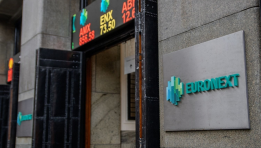
European markets closed September 8 with a mixed performance, as modest gains in several major continental benchmarks contrasted with
- orshu
- •
- 5 Min Read
- •
- ago 5 hours
SKN | Tel Aviv Stocks Slide as TA-90 Falls 1.42% and TA-125 Gives Up 0.96%
Broad Selling Hits Tel Aviv Equities Tel Aviv stocks closed sharply lower on September 8, 2026, reversing some of the
- ago 5 hours
- •
- 5 Min Read

Broad Selling Hits Tel Aviv Equities Tel Aviv stocks closed sharply lower on September 8, 2026, reversing some of the
- orshu
- •
- 6 Min Read
- •
- ago 7 hours
SKN | Americas Markets Trade Mixed as Brazil Leads Gains While U.S. Blue Chips Remain Under Pressure
Americas markets are trading with a distinctly mixed tone on September 8, as strong gains in Brazilian equities contrast
- ago 7 hours
- •
- 6 Min Read

Americas markets are trading with a distinctly mixed tone on September 8, as strong gains in Brazilian equities contrast

- Arik Arkadi Sluzki
- •
- 7 Min Read
- •
- ago 8 hours
SKN | The S&P 500’s Long Uptrend Signals More Gains Ahead — But Can the Rally Withstand Rising Risks?
The U.S. stock market enters the next 12 months with a notable technical tailwind, but the backdrop is becoming
- ago 8 hours
- •
- 7 Min Read

The U.S. stock market enters the next 12 months with a notable technical tailwind, but the backdrop is becoming

