Key Points

  • General Mills’ valuation adjustment reflects margin concerns rather than demand weakness
  • Reinvestment in marketing and pricing may delay near-term earnings recovery
  • Execution on product strategy and brand performance will determine future upside
hero

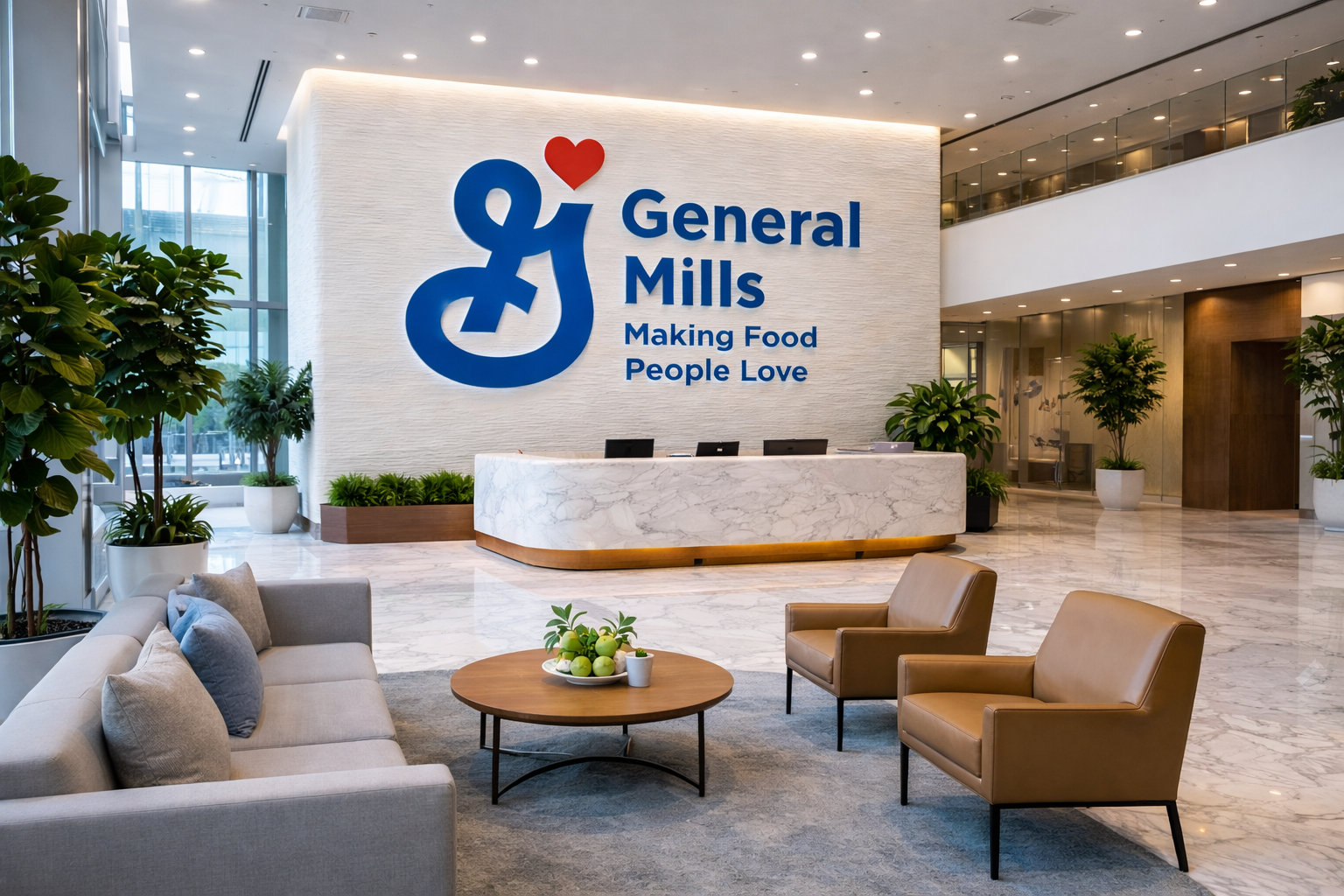
General Mills is facing a subtle but meaningful shift in its investment narrative, as analysts trim fair value estimates and reassess near-term profitability. While the reduction—from $41.53 to $40.89—appears modest, it reflects growing caution execution risks tied to reinvestment, product strategy, and evolving consumer behavior. In a market environment where defensive stocks are expected to provide stability, even small valuation adjustments can signal deeper concerns about growth durability and margin resilience.

Valuation Reset: Small Adjustment, Broader Implications

The 1.5% decline in modeled fair value may appear incremental, but it aligns with a broader trend of downward price target revisions across Wall Street. Notably, revenue expectations remain largely intact at approximately 8.4% growth, suggesting that demand itself is not the core concern. Instead, the adjustment reflects a slight compression in profitability assumptions, with net margins edging down and forward valuation multiples declining modestly.

This dynamic indicates that analysts are becoming more sensitive to cost structures and execution risks rather than questioning the company’s top-line trajectory. The unchanged discount rate further reinforces that macro risk perceptions remain stable, placing the focus squarely on company-specific factors.

Reinvestment Strategy: Short-Term Pressure, Long-Term Intent

A key driver behind the shifting narrative is General Mills’ decision to increase spending on pricing strategies, media campaigns, and in-store promotions throughout fiscal 2026. While these investments are designed to maintain competitiveness in a value-conscious consumer environment, they are expected to weigh on margins and delay earnings acceleration.

From a strategic standpoint, this reflects a defensive repositioning. Consumers, particularly in the U.S., continue to exhibit price sensitivity amid persistent inflationary pressures. By investing in brand visibility and pricing flexibility, General Mills aims to protect market share—even at the expense of near-term profitability.

Product Transformation: Moving Toward “Clean Label” Demand

Another important pillar of the company’s strategy is its transition away from certified synthetic colors. Aligning with broader industry trends and retailer initiatives, including those influenced by Target Corporation, General Mills is reformulating products to meet evolving consumer preferences for natural ingredients.

New product launches, such as reformulated cereals using natural color sources, highlight this shift. Additionally, the company has already achieved a milestone by removing certified colors from its entire K-12 school food portfolio ahead of schedule, reinforcing its commitment to transparency and health-conscious offerings.

However, such transitions often involve higher costs and operational complexity, which can further pressure margins during the adjustment phase.

Operational Challenges: Execution Risks and Portfolio Focus

Beyond reinvestment, analysts are closely monitoring potential operational headwinds. These include the possibility of restructuring actions, such as a Yoplait closure, and the company’s decision to concentrate on fewer, larger product launches in categories like snacks and cereal.

While this focused approach may improve long-term brand strength, it introduces timing risks. Larger product bets typically require longer development cycles and may take time to translate into measurable sales growth. In the interim, weaker performance in key segments—such as snack bars and cereals—could weigh on overall results.

Capital Allocation: Balancing Returns and Stability

General Mills continues to return capital to shareholders through share repurchases, having bought back billions of dollars’ worth of stock under its ongoing program. This reflects a commitment to shareholder value, even as the company navigates a more complex operating environment.

However, the balance between reinvestment and capital returns will be critical. Investors will need to assess whether current spending levels are sufficient to drive sustainable growth without eroding financial flexibility.

Forward Outlook: A Transition Phase for a Defensive Giant

Looking ahead, General Mills appears to be in a transitional phase, shifting from a purely defensive, margin-focused model toward a more investment-driven strategy aimed at long-term relevance. The success of this approach will depend on execution—particularly in marketing effectiveness, product innovation, and brand performance.

If flagship brands like Blue Buffalo and Pillsbury regain momentum and consumer demand stabilizes, the current valuation reset could prove temporary. However, failure to translate increased spending into tangible growth may lead to further downward revisions.


Comparison, examination, and analysis between investment houses

Leave your details, and an expert from our team will get back to you as soon as possible

    * This article, in whole or in part, does not contain any promise of investment returns, nor does it constitute professional advice to make investments in any particular field.

    To read more about the full disclaimer, click here
    SKN | Is Macy’s Undervalued After Its Pullback—or Reflecting Deeper Retail Headwinds?
    • Lior mor
    • 9 Min Read
    • ago 41 minutes

    SKN | Is Macy’s Undervalued After Its Pullback—or Reflecting Deeper Retail Headwinds? SKN | Is Macy’s Undervalued After Its Pullback—or Reflecting Deeper Retail Headwinds?

    Macy's has entered a new phase of investor scrutiny following a sharp cooldown in momentum. Despite delivering an impressive nearly

    • ago 41 minutes
    • 9 Min Read

    Macy's has entered a new phase of investor scrutiny following a sharp cooldown in momentum. Despite delivering an impressive nearly

    SKN | Is Micron’s Taiwan Expansion a Strategic Masterstroke for AI—or a High-Stakes Bet on Future Demand?
    • sagi habasov
    • 9 Min Read
    • ago 2 hours

    SKN | Is Micron’s Taiwan Expansion a Strategic Masterstroke for AI—or a High-Stakes Bet on Future Demand? SKN | Is Micron’s Taiwan Expansion a Strategic Masterstroke for AI—or a High-Stakes Bet on Future Demand?

    Micron Technology is doubling down on artificial intelligence infrastructure with a significant expansion of its DRAM footprint in Taiwan, acquiring

    • ago 2 hours
    • 9 Min Read

    Micron Technology is doubling down on artificial intelligence infrastructure with a significant expansion of its DRAM footprint in Taiwan, acquiring

    SKN | SK Hynix Shares Surge 15% Following Samsung’s Strong Earnings Outlook
    • omer bar
    • 5 Min Read
    • ago 2 hours

    SKN | SK Hynix Shares Surge 15% Following Samsung’s Strong Earnings Outlook SKN | SK Hynix Shares Surge 15% Following Samsung’s Strong Earnings Outlook

    SK Hynix experienced a significant stock rally, climbing 15% after industry peer Samsung Electronics reported expectations of substantially higher earnings

    • ago 2 hours
    • 5 Min Read

    SK Hynix experienced a significant stock rally, climbing 15% after industry peer Samsung Electronics reported expectations of substantially higher earnings

    SKN | Are Micron and Broadcom the Backbone of the AI Boom—or Already Priced for Perfection?
    • Ronny Mor
    • 8 Min Read
    • ago 2 hours

    SKN | Are Micron and Broadcom the Backbone of the AI Boom—or Already Priced for Perfection? SKN | Are Micron and Broadcom the Backbone of the AI Boom—or Already Priced for Perfection?

    As artificial intelligence continues to reshape global technology investment, two companies—Micron Technology and Broadcom Inc.—have emerged as critical enablers of


    • ago 2 hours
    • 8 Min Read

    As artificial intelligence continues to reshape global technology investment, two companies—Micron Technology and Broadcom Inc.—have emerged as critical enablers of