


- omer bar
- •
- 7 Min Read
- •
- 14 minutes ago
Key Points
- Alibaba’s new XuanTie C950 chip marks a major step toward vertical AI integration and hardware independence.
- The rise of agentic AI is reshaping infrastructure demands, favoring specialized high-performance processors.
- Economic pressures in China’s AI market are pushing firms toward cost control through in-house chip development.
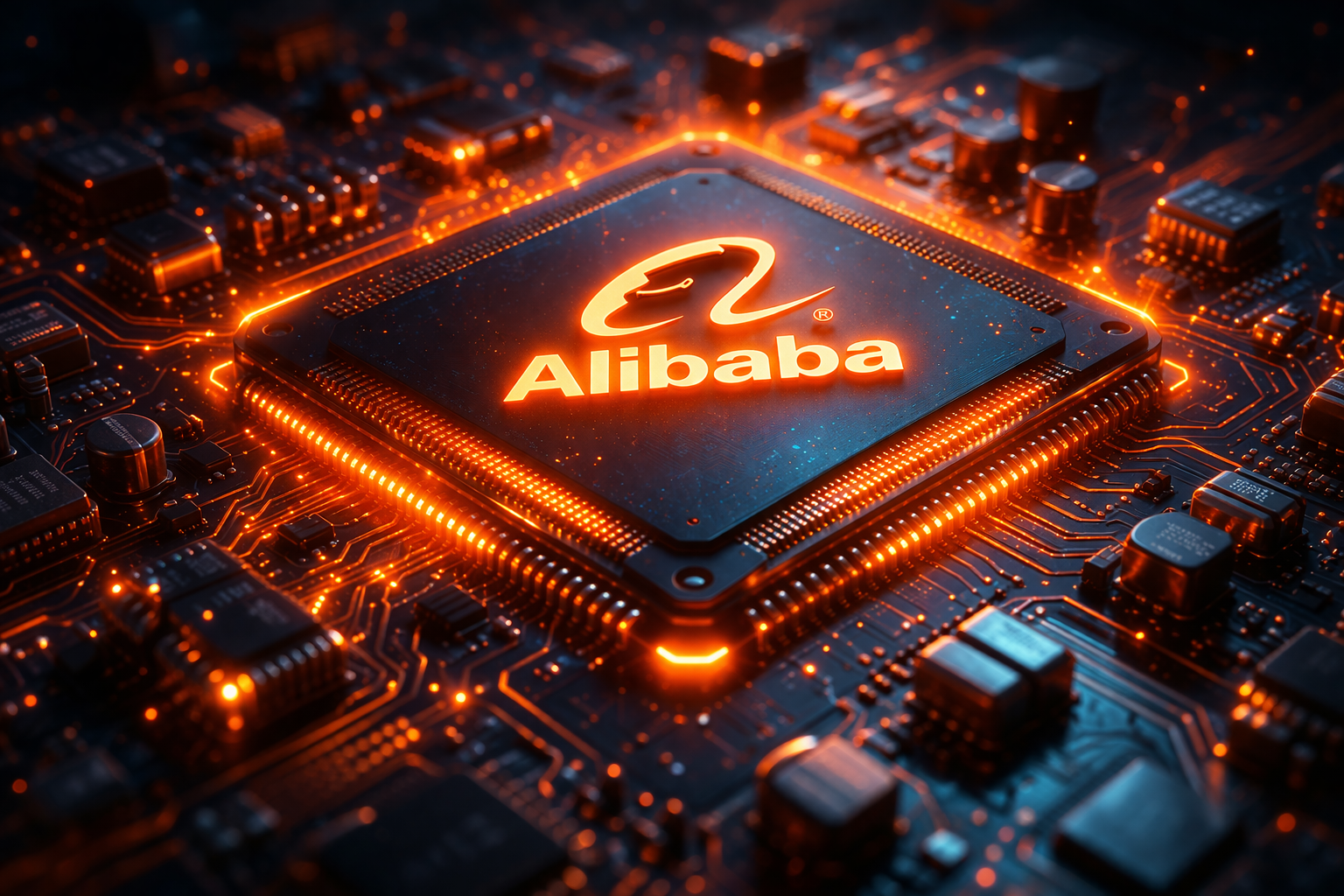
Alibaba is accelerating its push into advanced artificial intelligence infrastructure with the unveiling of its next-generation XuanTie C950 processor, signaling a deeper strategic pivot toward “agentic AI.” As competition intensifies and margins compress in China’s AI model market, the move highlights a broader shift: control over hardware is becoming just as critical as software in defining long-term dominance. The announcement positions Alibaba not only as a cloud and AI services provider, but increasingly as a vertically integrated technology player.
Performance Leap Signals Strategic Ambition
At the heart of the announcement is the XuanTie C950, a 5-nanometer server-grade chip built on the open-source RISC-V architecture. Unveiled at a conference hosted by Alibaba’s DAMO Academy, the processor reportedly delivers more than three times the performance of its predecessor, the C920, with clock speeds reaching 3.2 GHz.
This performance leap is not merely incremental—it reflects Alibaba’s ambition to compete in high-performance computing environments traditionally dominated by Western chipmakers. By leveraging RISC-V, Alibaba also aligns itself with a growing movement toward open architectures, reducing reliance on proprietary ecosystems controlled by companies like Nvidia and Intel.
The lack of disclosure regarding the manufacturing partner underscores ongoing sensitivities around semiconductor supply chains, particularly amid geopolitical tensions and export restrictions affecting China’s access to advanced fabrication technologies.
Agentic AI Drives the Next Phase of Competition
The chip’s launch is closely tied to Alibaba’s broader pivot toward agentic AI—systems capable of autonomously executing complex tasks with minimal human intervention. This shift is evident in the company’s recent rollout of enterprise platforms such as Wukong and its international counterpart, Accio Work, designed to automate business workflows for organizations.
Unlike traditional AI models that respond to prompts, agentic systems operate with a higher degree of independence, requiring significantly more compute power and optimized infrastructure. The XuanTie series is positioned to support these demands within Alibaba’s cloud ecosystem, complementing its Zhenwu chip line, which focuses on AI training and inference.
This dual-chip strategy reflects a more nuanced approach to AI infrastructure, where different workloads—training, inference, and autonomous execution—require specialized hardware solutions. It also signals Alibaba’s intent to compete not just in AI applications, but across the full technology stack.
Economic Pressures Reshape AI Strategy
Alibaba’s intensified focus on in-house chip development comes at a time of mounting pressure in China’s AI market. Rapid declines in token pricing, driven by fierce domestic competition, are squeezing margins and forcing companies to rethink profitability models.
By investing in proprietary hardware, Alibaba aims to reduce long-term costs and improve efficiency across its AI services. The creation of internal structures like the Alibaba Token Hub further illustrates a shift toward integrated platforms that combine compute, software, and enterprise solutions.
From an investor perspective, this strategy reflects a broader industry trend: companies are moving away from pure software plays toward capital-intensive infrastructure investments. While this approach requires significant upfront spending, it offers greater control over performance, scalability, and pricing power in the long run.
Looking ahead, Alibaba’s success will depend on its ability to execute across both hardware and software layers while navigating geopolitical constraints. If the company can effectively integrate its chip innovations with its growing suite of AI platforms, it may strengthen its position in the global AI race. However, competition remains fierce, and the path to sustainable profitability in the evolving AI economy is far from guaranteed.
Comparison, examination, and analysis between investment houses
Leave your details, and an expert from our team will get back to you as soon as possible
* This article, in whole or in part, does not contain any promise of investment returns, nor does it constitute professional advice to make investments in any particular field.
To read more about the full disclaimer, click here
- Ronny Mor
- •
- 7 Min Read
- •
- ago 1 minute
SKN | Is SK Hynix’s $8 Billion EUV Bet the Key to Winning the Next Memory Chip Cycle?
SK Hynix is making a decisive move to secure its position in the next generation of semiconductor manufacturing, committing nearly
- ago 1 minute
- •
- 7 Min Read
SK Hynix is making a decisive move to secure its position in the next generation of semiconductor manufacturing, committing nearly

- omer bar
- •
- 7 Min Read
- •
- ago 7 hours
SKN | Is OpenAI Too Dependent on Microsoft Ahead of Its Expected IPO?
OpenAI is signaling a critical vulnerability as it prepares for a potential public market debut: its deep reliance on Microsoft.
- ago 7 hours
- •
- 7 Min Read

OpenAI is signaling a critical vulnerability as it prepares for a potential public market debut: its deep reliance on Microsoft.

- Lior mor
- •
- 7 Min Read
- •
- ago 7 hours
SKN | Is Meta’s AI Talent Grab the Start of an Agent Wars Arms Race?
Meta is doubling down on its artificial intelligence ambitions with a strategic acqui-hire of top-tier talent from startup Dreamer, signaling
- ago 7 hours
- •
- 7 Min Read

Meta is doubling down on its artificial intelligence ambitions with a strategic acqui-hire of top-tier talent from startup Dreamer, signaling
- Ronny Mor
- •
- 5 Min Read
- •
- ago 19 hours
SKN | Trustpilot Hit With €4M Fine—Are Online Reviews Losing Consumer Trust?
Italy’s competition regulator has fined Trustpilot €4 million ($4.6 million), raising fresh concerns about the reliability of online review systems.
- ago 19 hours
- •
- 5 Min Read

Italy’s competition regulator has fined Trustpilot €4 million ($4.6 million), raising fresh concerns about the reliability of online review systems.

