


- Lior mor
- •
- 7 Min Read
- •
- 3 minutes ago
Key Points
- VSAT surged 18.7% in a single session, signaling a major shift in investor sentiment.
- The stock has gained over 422% in the past year, significantly outperforming the broader market.
- Despite strong revenue of $4.62B, profitability remains negative with ongoing net losses.

The sharp 18.7% surge in Viasat, Inc. (VSAT), which closed at $53.69, marks one of the most significant single-session moves for the satellite communications company in recent months. The rally pushes the stock toward the upper end of its 52-week range and reflects renewed investor confidence in a company that has struggled with profitability despite strong revenue growth. With a market cap exceeding $7.2 billion and a dramatic 422% one-year return, Viasat now stands at a critical inflection point between recovery narrative and valuation reality.
Momentum Builds on Strong Market Repositioning
Viasat’s recent rally reflects a broader re-rating of satellite and connectivity companies, particularly those positioned to benefit from rising global demand for broadband infrastructure. The stock’s 55.8% year-to-date return sharply contrasts with the S&P 500’s decline, highlighting strong relative performance.
This momentum suggests that investors are increasingly pricing in future growth tied to satellite communications, mobility solutions, and government contracts. Սակայն, such rapid gains also raise questions about sustainability, especially given the stock’s history of volatility.
Revenue Growth vs. Profitability Gap
Viasat reported trailing revenue of approximately $4.62 billion, demonstrating scale and steady top-line expansion. Quarterly results show improving earnings trends, with multiple consecutive beats in recent quarters, including a significant upside surprise in Q3.
However, the company continues to operate at a loss, with net income of approximately -$339 million and a negative profit margin of -7.34%. Return on equity also remains negative, indicating that profitability has not yet caught up with operational growth.
This disconnect between revenue strength and earnings weakness remains a central concern for investors.
Valuation Signals Mixed Expectations
From a valuation perspective, Viasat presents a complex picture. The absence of a meaningful P/E ratio due to negative earnings forces investors to rely on alternative metrics such as price-to-sales (1.55) and enterprise value-to-EBITDA (8.51).
These figures suggest that while the stock is not excessively expensive relative to revenue, the market is clearly pricing in a turnaround scenario. Analyst price targets averaging around $47.43—below the current trading price—indicate that the recent rally may have already exceeded consensus expectations.
This creates a potential mismatch between market sentiment and analyst outlook.
Balance Sheet and Financial Flexibility
One of the more critical aspects of Viasat’s investment case lies in its balance sheet. The company holds approximately $1.35 billion in cash, providing a buffer for operations and investment.
However, total debt levels remain elevated, with a debt-to-equity ratio exceeding 146%, reflecting significant leverage. While free cash flow appears strong at over $400 million, sustaining this while managing debt obligations will be key to long-term stability.
In a higher interest rate environment, leverage becomes an increasingly important risk factor.
Analyst Sentiment and Market Psychology
Analyst sentiment remains cautiously optimistic, with recent ratings maintaining a “Buy” stance and price targets being raised. However, the dispersion between low and high targets suggests uncertainty סביב the company’s trajectory.
Investor behavior appears increasingly momentum-driven, with strong inflows following earnings beats and price breakouts. This dynamic can support further upside in the short term, but also increases vulnerability to sharp corrections if expectations are not met.
The psychological shift from skepticism to optimism is evident—but not yet fully validated by fundamentals.
What Lies Ahead for Viasat?
Looking forward, Viasat’s upcoming earnings release in May will be a crucial catalyst. Investors will be watching closely for signs of sustained profitability improvement and debt management progress.
Key drivers include growth in satellite broadband demand, execution on integration strategies, and margin expansion. At the same time, macro factors such as interest rates and capital costs will influence valuation dynamics.
For now, Viasat sits at a pivotal moment—where strong momentum meets unresolved financial challenges, creating both opportunity and risk.
Comparison, examination, and analysis between investment houses
Leave your details, and an expert from our team will get back to you as soon as possible
* This article, in whole or in part, does not contain any promise of investment returns, nor does it constitute professional advice to make investments in any particular field.
To read more about the full disclaimer, click here
- orshu
- •
- 6 Min Read
- •
- ago 2 days
SKN | Bloom Energy Rallies on Elevated Oil Prices: Momentum Trade or Structural Energy Shift?
Bloom Energy (NYSE: BE) has seen a notable rally as oil prices approach $110 per barrel, driving renewed interest
- ago 2 days
- •
- 6 Min Read

Bloom Energy (NYSE: BE) has seen a notable rally as oil prices approach $110 per barrel, driving renewed interest

- Arik Arkadi Sluzki
- •
- 6 Min Read
- •
- ago 2 days
SKN | Figma’s Sharp Decline: Growth Reset or Market Repricing in Design Software?
Figma has experienced a significant pullback over the past month, with its stock falling by 28% as investors reassess
- ago 2 days
- •
- 6 Min Read

Figma has experienced a significant pullback over the past month, with its stock falling by 28% as investors reassess

- Lior mor
- •
- 6 Min Read
- •
- ago 2 days
SKN | NuScale Power Collapse: Deep Value Opportunity or Structural Risk in Small Modular Nuclear?
NuScale Power (NYSE: SMR) has experienced a steep decline from its peak valuation, with shares falling significantly as investors
- ago 2 days
- •
- 6 Min Read

NuScale Power (NYSE: SMR) has experienced a steep decline from its peak valuation, with shares falling significantly as investors

- sagi habasov
- •
- 6 Min Read
- •
- ago 2 days
SKN | Micron’s March Selloff: Memory Cycle Reset or Temporary AI-Driven Pause?
Micron Technology (NASDAQ: MU) experienced a sharp decline in March, with its stock falling by 18% as investors reassessed
- ago 2 days
- •
- 6 Min Read
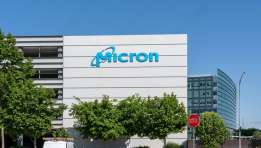
Micron Technology (NASDAQ: MU) experienced a sharp decline in March, with its stock falling by 18% as investors reassessed

