





- Arik Arkadi Sluzki
- •
- 6 Min Read
- •
- 2 months ago


Key Points
- Google has reportedly agreed to guarantee up to $44 billion in third-party data center leases spanning approximately 2.4 gigawatts across 10 projects.
- The reported backstop is intended to accelerate deployment of Google's TPU ecosystem as competition with Nvidia intensifies.
- Google expects TPU-related revenue to exceed the financial obligations created by the lease guarantees, according to the report.

Google is reportedly deepening its commitment to artificial intelligence infrastructure by guaranteeing up to $44 billion in third-party data center leases across roughly 2.4 gigawatts of capacity. The reported arrangement underscores the growing competition among hyperscale technology companies to secure the computing resources required to power next-generation AI models and enterprise applications.
If confirmed, the transaction would represent another significant investment in AI infrastructure, highlighting how cloud providers are increasingly combining long-term capital commitments with proprietary hardware strategies to meet surging demand for generative AI services.
Large-Scale Lease Guarantees Expand Google’s AI Infrastructure
According to the report, Google has agreed to guarantee up to $44 billion of third-party data center lease obligations covering approximately 2.4 gigawatts across 10 separate projects. Rather than constructing every facility directly, the reported structure allows Google to leverage external infrastructure partners while securing long-term computing capacity.
Long-duration lease guarantees have become increasingly common across the hyperscale cloud industry as companies compete to lock in power availability, land, and advanced data center capacity before supply constraints intensify. Such arrangements also provide developers with greater financing certainty while enabling cloud providers to scale AI infrastructure more rapidly.
TPUs Become a Strategic Alternative to Nvidia GPUs
A key objective of the reported agreement is to support wider deployment of Google’s proprietary Tensor Processing Units (TPUs). The company continues expanding its vertically integrated AI strategy by pairing internally developed chips with its cloud platform, creating an alternative to relying exclusively on Nvidia’s GPU ecosystem.
The report indicates that Google expects TPU-generated revenue to exceed the obligations created by the lease guarantees, suggesting management believes demand for AI computing services will continue to accelerate. If realized, the strategy could strengthen Google’s competitive position in cloud infrastructure while diversifying the industry’s hardware landscape.
AI Infrastructure Spending Continues to Accelerate
The reported commitment reflects a broader trend across the technology sector, where hyperscalers including Google, Microsoft, Amazon, and Meta continue committing tens of billions of dollars annually to expand AI infrastructure. Data centers, specialized semiconductors, networking equipment, and power availability have become strategic assets as enterprises increasingly deploy generative AI applications at scale.
For investors, the significance extends beyond the headline dollar amount. Large infrastructure commitments demonstrate the industry’s expectation that AI demand will remain elevated for years, while also highlighting the growing importance of proprietary hardware ecosystems in driving long-term cloud profitability.
Looking ahead, investors will monitor whether Google formally confirms the reported lease guarantees, the pace of TPU adoption within Google Cloud, and the financial returns generated from these infrastructure investments. Additional announcements regarding data center expansion, AI chip deployments, and enterprise customer demand will offer further insight into whether large-scale capital commitments translate into sustainable revenue growth as competition among global hyperscalers continues to intensify.
Comparison, examination, and analysis between investment houses
Leave your details, and an expert from our team will get back to you as soon as possible
* This article, in whole or in part, does not contain any promise of investment returns, nor does it constitute professional advice to make investments in any particular field.
To read more about the full disclaimer, click here
- omer bar
- •
- 7 Min Read
- •
- ago 17 minutes
SKN | DAX P (^GDAXI) Advances 1.13% Daily to 25,087.27 as 0.57% Weekly Pullback Holds Above 21,863 Support
The DAX P Index (^GDAXI) finished the trading session higher, advancing 1.13% (280.30 points) to settle near 25,087.27 Euros.
- ago 17 minutes
- •
- 7 Min Read
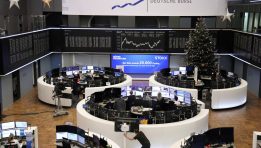
The DAX P Index (^GDAXI) finished the trading session higher, advancing 1.13% (280.30 points) to settle near 25,087.27 Euros.

- Lior mor
- •
- 6 Min Read
- •
- ago 1 hour
SKN | CBOE Volatility Index (^VIX) Softens 3.70% Daily to 14.84 as 3.07% Weekly Pullback Holds Above 13.38 Floor
The CBOE Volatility Index (^VIX) finished the trading session on October 9, 2026, lower, dropping 3.70% (0.57 points) to settle
- ago 1 hour
- •
- 6 Min Read

The CBOE Volatility Index (^VIX) finished the trading session on October 9, 2026, lower, dropping 3.70% (0.57 points) to settle

- Arik Arkadi Sluzki
- •
- 6 Min Read
- •
- ago 2 hours
SKN | Russell 2000 Index (^RUT) Advances 0.46% Daily to 2,806.98 as 0.91% Weekly Pullback Holds Above 2,303 Support
The Russell 2000 Index (^RUT) finished the trading session on October 9, 2026, higher, advancing 0.46% (12.85 points) to
- ago 2 hours
- •
- 6 Min Read

The Russell 2000 Index (^RUT) finished the trading session on October 9, 2026, higher, advancing 0.46% (12.85 points) to

- sagi habasov
- •
- 6 Min Read
- •
- ago 2 hours
SKN | S&P 500 (^GSPC) Advances 0.59% Daily to 7,811.54 as 1.15% Weekly Gain Holds Near 7,844 High
The S&P 500 Index (^GSPC) finished the trading session on October 9, 2026, higher, advancing 0.59% (46.18 points) to
- ago 2 hours
- •
- 6 Min Read
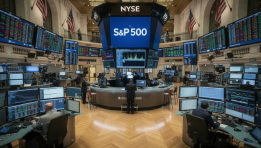
The S&P 500 Index (^GSPC) finished the trading session on October 9, 2026, higher, advancing 0.59% (46.18 points) to

