





- sagi habasov
- •
- 7 Min Read
- •
- 10 minutes ago


Key Points
- The Global Forum on Steel Excess Capacity agreed on a framework encouraging more trade measures against overproducing countries and limiting subsidies that support inefficient steel mills.
- The initiative targets global steel oversupply, with concerns that government support for loss-making producers is distorting competition and pressuring market-based steelmakers.
- The agreement comes as G20 trade officials discuss strategies to address non-market policies and industrial overcapacity, with China remaining a central focus of debate.
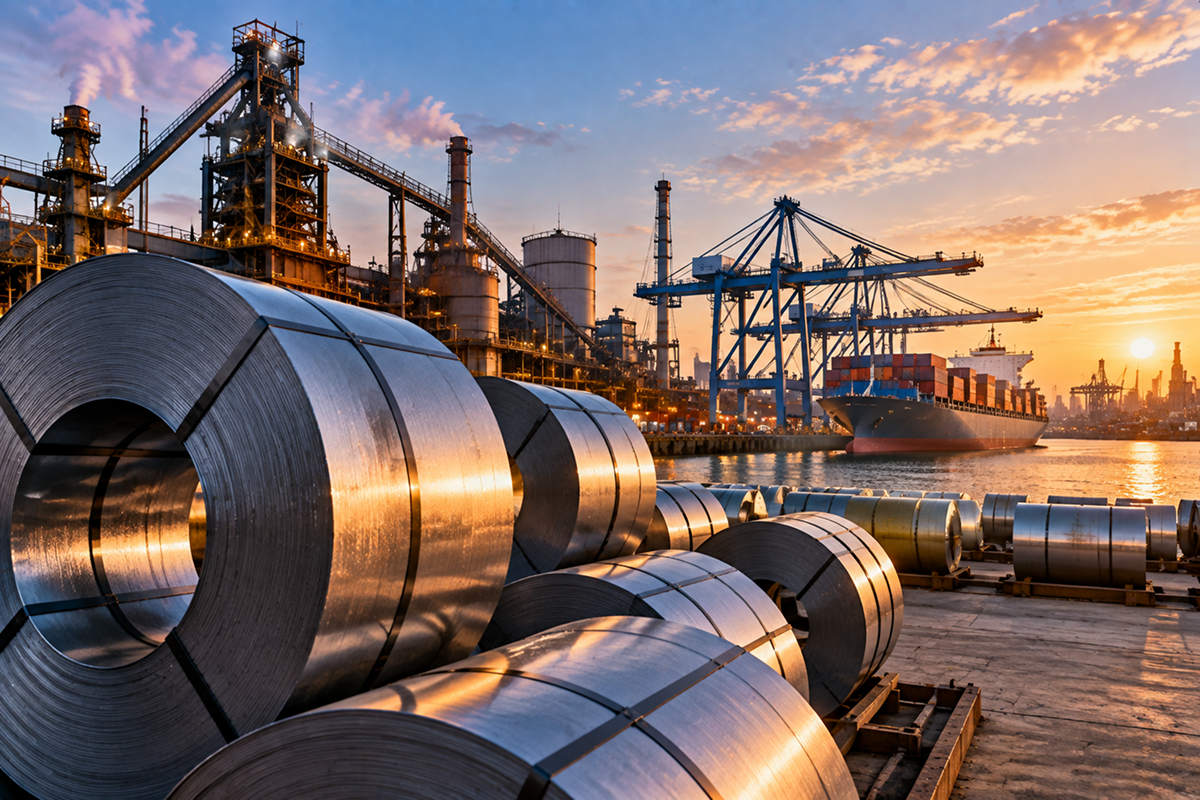
Members of an OECD-backed steel forum have agreed on a new framework aimed at addressing global steel overcapacity through stronger trade measures and restrictions on government support for uneconomic production. The agreement highlights growing international concerns that excess steel output, particularly from heavily subsidized producers, is creating pressure across global markets and affecting competition among manufacturers.
New Framework Targets Excess Production and Market Distortions
The Global Forum on Steel Excess Capacity, consisting of 28 market-oriented economies, agreed to work toward additional measures including potential tariffs on steel imports from countries with persistent overproduction. The framework also calls for limiting subsidies that allow loss-making steel mills to continue operating or encourage the construction of new facilities without sufficient economic justification.
The initiative was announced as a US-led G20 trade ministers’ meeting began in Milwaukee. Officials are seeking a coordinated approach to address structural problems in the steel industry, where production capacity has expanded faster than global demand in recent years.
Excess capacity can create significant challenges for steel producers because it places downward pressure on prices, reduces profitability and can encourage governments to intervene further to support domestic industries. The new framework aims to shift the focus toward market-driven production decisions rather than continued state support.
Trade Barriers Become a Central Tool in Steel Policy Debate
US Trade Representative Jamieson Greer said other countries could benefit from adopting trade barriers similar to those used by the United States to protect domestic steel industries. The comments reflect a broader shift among some economies toward using tariffs and other trade measures as tools to address concerns about industrial competition.
However, the use of tariffs remains a debated policy approach. Supporters argue that trade restrictions can provide protection against unfair competition and allow domestic producers to operate under more balanced market conditions. Critics warn that tariffs can increase costs for industries that rely on steel inputs and may contribute to wider trade tensions.
The framework also reflects a broader international effort to address what governments describe as non-market industrial policies. Earlier in September, all G20 nations except China agreed to take action on such policies, highlighting the continuing importance of industrial subsidies in global trade discussions.
Steel Industry Faces Long-Term Capacity Challenges
The steel sector is facing structural challenges beyond short-term market fluctuations. Global producers are navigating weaker demand growth, changing industrial patterns and significant investment requirements linked to decarbonization efforts.
For steel companies, the outcome of international policy discussions could influence future investment decisions, production strategies and competitive dynamics. Producers operating without significant government support may benefit from measures designed to reduce excess supply, while industries dependent on imported steel could face higher costs if additional tariffs are introduced.
For investors in Israel and global markets, the development highlights the growing connection between industrial policy, trade regulation and commodity markets. Future developments will depend on how effectively the new framework is implemented, whether major steel-producing countries adjust capacity levels and how governments balance domestic industrial priorities with global trade relationships. The evolution of steel policy could have broader implications for manufacturing, infrastructure costs and commodity-linked sectors worldwide.
Comparison, examination, and analysis between investment houses
Leave your details, and an expert from our team will get back to you as soon as possible
* This article, in whole or in part, does not contain any promise of investment returns, nor does it constitute professional advice to make investments in any particular field.
To read more about the full disclaimer, click here
- Lior mor
- •
- 7 Min Read
- •
- ago 9 minutes
SKN | Accelevation’s Nasdaq Debut Highlights Investor Caution Around AI Infrastructure Spending
Accelevation, a provider of infrastructure systems for artificial intelligence data centers, experienced a weaker-than-expected Nasdaq debut on Wednesday, highlighting
- ago 9 minutes
- •
- 7 Min Read

Accelevation, a provider of infrastructure systems for artificial intelligence data centers, experienced a weaker-than-expected Nasdaq debut on Wednesday, highlighting

- Ronny Mor
- •
- 6 Min Read
- •
- ago 10 minutes
SKN | Oil Prices Rise as US-Iran Talks Stall and Fuel Markets Tighten
Oil prices climbed by roughly $1 a barrel on Wednesday as stalled US-Iran negotiations and tighter fuel markets increased
- ago 10 minutes
- •
- 6 Min Read

Oil prices climbed by roughly $1 a barrel on Wednesday as stalled US-Iran negotiations and tighter fuel markets increased

- omer bar
- •
- 6 Min Read
- •
- ago 2 hours
SKN | Ford F-150 Supply Disruption to Weigh on Third-Quarter Wholesale Shipments
Ford’s F-150 production disruption is expected to affect the automaker’s third-quarter wholesale shipments even after the underlying supplier problem
- ago 2 hours
- •
- 6 Min Read

Ford’s F-150 production disruption is expected to affect the automaker’s third-quarter wholesale shipments even after the underlying supplier problem
- Lior mor
- •
- 7 Min Read
- •
- ago 2 hours
SKN | SEC Moves to Expand Retail Access to Private Assets as Investor Protection Debate Intensifies
The US Securities and Exchange Commission has proposed a new set of measures aimed at expanding access to private
- ago 2 hours
- •
- 7 Min Read

The US Securities and Exchange Commission has proposed a new set of measures aimed at expanding access to private

