





- orshu
- •
- 7 Min Read
- •
- 6 minutes ago


Key Points
- Global equities moved lower on September 8, with the S&P 500, Dow Jones and Nasdaq all declining, while Brazil's IBOVESPA advanced.
- Asian markets weakened broadly, led by a 1.70% decline in the Nikkei 225, while European markets remained comparatively resilient with modest gains across several major benchmarks.
- Tel Aviv recorded broad-based losses across all major supplied benchmarks, with the TA-90 falling 1.42% and the TA-125 declining 0.96%, while investors turn their attention to monetary policy, economic data and geopolitical risks on September 9.
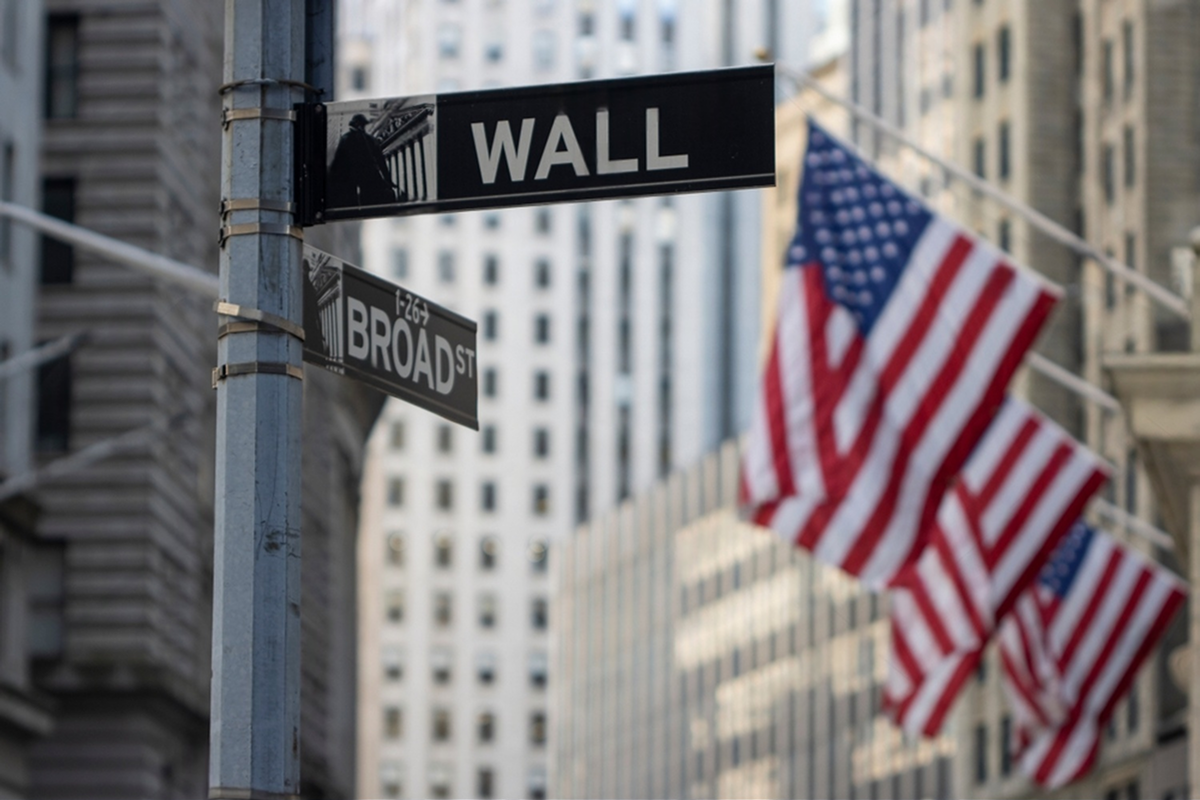
Global markets ended September 8, 2026, on a broadly weaker footing. U.S. equities declined following the Labor Day holiday, Asian markets recorded widespread losses, and Tel Aviv stocks fell across all major benchmarks. European markets were more resilient, with several leading indexes posting modest gains.
America: Wall Street Retreats as Major Indexes Decline
U.S. equities moved lower on September 8. The S&P 500 fell 0.58% to 7,673.52, while the Dow Jones Industrial Average declined 1.18% to 52,786.10. The Nasdaq fell 0.32% to 26,421.41.
The Russell 2000 also weakened, declining 0.52% to 2,960.20, indicating that pressure extended across both large-cap and smaller-company stocks. Canada’s S&P/TSX Composite Index fell 1.07% to 36,123.05.
Brazil provided a notable exception, with the IBOVESPA gaining 1.20% to 187,366.84. The U.S. Dollar Index was nearly unchanged at 98.77, while the VIX stood at 15.72, up 2.75%.
The contrasting performance across the Americas highlighted uneven investor sentiment as markets assessed economic conditions, interest-rate expectations and broader global risks.
Europe: Modest Gains Offset Isolated Declines
European markets were comparatively resilient on September 8. The Euronext 100 Index gained 0.22% to 1,921.17, while the EURO STOXX 50 rose 0.14% to 6,413.17. France’s CAC 40 also advanced 0.14% to 8,317.98.
The British Pound Index increased 0.13% to 135.35, while the Euro Index gained 0.09% to 116.24. Germany’s DAX was unchanged at 26,007.63.
The MSCI Europe Index slipped 0.07% to 2,875.45, while the FTSE 100 declined 0.10% to 10,811.66. Overall, European equities showed greater stability than U.S. and Asian markets during the session.
The Malta Stock Exchange was closed on September 8 for the Feast of Our Lady of the Rosary.
Asia: Broad Regional Weakness Led by Japan
Asian markets weakened on September 8, with most major benchmarks posting losses. The Nikkei 225 fell 1.70% to 65,269.33, marking the largest decline among the major regional indexes.
The S&P/ASX 200 declined 1.00% to 8,920.80, while South Korea’s KOSPI Composite Index fell 0.58% to 6,954.52. Hong Kong’s Hang Seng declined 0.38% to 25,317.18, and India’s S&P BSE SENSEX fell 0.63% to 75,655.85.
China’s SSE Composite Index was a notable exception, gaining 0.20% to 3,940.55. The Australian Dollar Index was unchanged at 72.04, while the Japanese Yen Index declined 0.24% to 64.01.
The regional performance pointed to renewed caution among investors, particularly in Japan and Australia, while Chinese equities showed relative strength.
Tel Aviv: Broad-Based Losses Across Major Benchmarks
Tel Aviv equities recorded a broadly negative session on September 8. The TA-35 fell 0.81% to 4,276.22, while the TA-90 declined 1.42% to 3,931.37. The TA-125 dropped 0.96% to 4,189.31.
Losses extended across every other supplied Tel Aviv benchmark. The TA-SME60 fell 0.61%, the TA 90 and Banks index declined 1.26%, the TA-200 dropped 1.12%, the TA Sector-Balance index fell 0.98%, and the TA-20 declined 0.80%.
Market breadth was strongly negative. Within the TA-125, 19 securities advanced compared with 106 securities that declined. Turnover in the TA-125 reached approximately NIS 2.98 billion, while turnover in the TA-35 totaled approximately NIS 2.29 billion.
Outlook for September 9: Monetary Policy and Market Risk in Focus
Trading on September 9 will focus on economic data, monetary-policy expectations, corporate developments, currency movements and geopolitical risks.
Investors will monitor inflation indicators and economic activity for signals about the future path of interest rates. Expectations surrounding central-bank policy remain important for equity valuations, bond yields and currency markets.
Energy prices, geopolitical developments and changes in global risk appetite could also influence trading conditions. After declines across major U.S., Asian and Tel Aviv benchmarks on September 8, investors will watch closely for signs of stabilization or further weakness.
Corporate earnings, company guidance and regional market developments will provide additional signals for investors assessing sector positioning and broader portfolio risk as September trading continues.
Comparison, examination, and analysis between investment houses
Leave your details, and an expert from our team will get back to you as soon as possible
* This article, in whole or in part, does not contain any promise of investment returns, nor does it constitute professional advice to make investments in any particular field.
To read more about the full disclaimer, click here
- Ronny Mor
- •
- 8 Min Read
- •
- ago 3 hours
SKN | Asian Markets Trade Mixed on September 9 as Yen and South Korea Lead Gains
Asian equity markets traded mixed during Wednesday morning’s session on September 9, with gains concentrated across South Korea and Japan
- ago 3 hours
- •
- 8 Min Read

Asian equity markets traded mixed during Wednesday morning’s session on September 9, with gains concentrated across South Korea and Japan

- orshu
- •
- 8 Min Read
- •
- ago 5 hours
SKN | OPEC+ Loses Its Grip on Oil Markets: Has the Era of Cartel-Driven Pricing Changed?
OPEC+ remains one of the world's largest coordinated oil-producing groups, but its ability to directly control global crude prices
- ago 5 hours
- •
- 8 Min Read

OPEC+ remains one of the world's largest coordinated oil-producing groups, but its ability to directly control global crude prices

- omer bar
- •
- 8 Min Read
- •
- ago 5 hours
SKN | Meta Puts Muse Under a $300,000 Bug Bounty: Can Security Keep Pace With Agentic AI?
Meta is expanding its security testing around Muse, its new personal AI agent, by putting the system under a
- ago 5 hours
- •
- 8 Min Read

Meta is expanding its security testing around Muse, its new personal AI agent, by putting the system under a
- Ronny Mor
- •
- 8 Min Read
- •
- ago 5 hours
SKN | Google and Blackstone’s $5 Billion AI Cloud Venture Faces Data-Center Delays: Can Project Braid Stay on Track?
Google and Blackstone’s $5 billion AI infrastructure venture is encountering delays at several planned data-center locations, according to the
- ago 5 hours
- •
- 8 Min Read

Google and Blackstone’s $5 billion AI infrastructure venture is encountering delays at several planned data-center locations, according to the

