





- Lior mor
- •
- 6 Min Read
- •
- 1 minute ago


Key Points
- Asian equities edged higher on Friday, November 27—with MSCI’s Asia-Pacific ex-Japan index rising 0.5% for a 1.9% weekly advance—even as the benchmark remained down 8.2% for a volatile November.
- The U.S. Dollar Index held steady near 103.81, advancing 1.8% in November toward its third consecutive monthly gain on safe-haven demand and 99% money-market odds of a December 9 Federal Reserve rate hike.
- For international allocators and Israeli institutional desks, rebounding S&P 500 and Nasdaq futures alongside firmer Treasury yields highlight the tension between holiday-thinned equity stabilization and hawkish global rate trajectories.
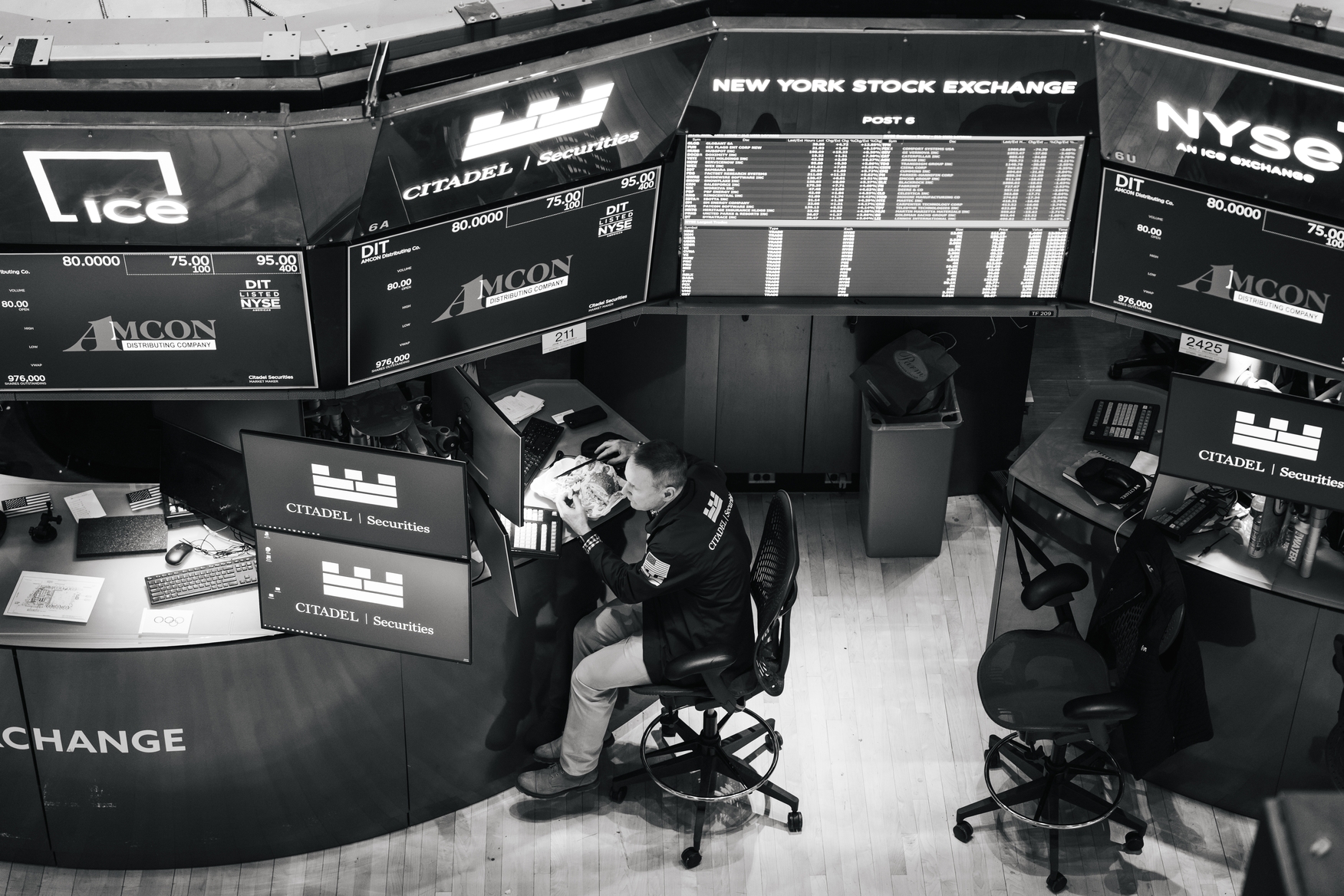
Global equity markets found tentative footing on Friday, November 27, 2026, closing out a bruising month on a steadier note as the U.S. Thanksgiving holiday lull offered respite from artificial intelligence valuation volatility. While MSCI’s broadest index of Asia-Pacific shares outside Japan gained 0.5% to finish the week 1.9% higher—trimming a steep 8.2% monthly drawdown—the U.S. dollar remained firmly underpinned near 22-month highs, positioning the greenback for its third consecutive monthly advance.
Holiday Lull Calms AI Turbulence Across Asian and U.S. Futures
With Wall Street closed on Thursday for Thanksgiving, U.S. equity futures pointed to constructive follow-through ahead of Friday’s shortened trading session, with S&P 500 futures advancing 0.8% and Nasdaq futures climbing 1.0%. Across Asia-Pacific trading, South Korean shares rallied 2.0% to lead regional gains, while Chinese blue chips slipped 0.2% after touching their lowest level since June 2025 a day earlier—even as fresh data showed faster profit growth at China’s industrial firms.
Market strategists cautioned that Friday’s calmer tape reflects lighter holiday liquidity rather than a resolution of underlying sector headwinds. Throughout November, heavy capital-expenditure commitments, governance turbulence at Nvidia Corp., and doubts over near-term AI monetization triggered widespread repricing across mega-cap technology and Asian semiconductor suppliers. Analysts note that elevated equity volatility is likely to persist until investors gain clearer visibility into both AI earnings trajectories and the terminal peak for U.S. interest rates.
Hawkish Fed Pricing, Treasury Yields, and Transmission Channels for Israeli Desks
In currency and fixed-income markets, the U.S. Dollar Index held steady around 103.81 on Friday—up approximately 1.8% in November and 5.7% year-to-date—supported by safe-haven equity outflows and firm monetary policy expectations. Interest-rate futures imply a 99% probability that the Federal Reserve will deliver a 25-basis-point rate hike on December 9, though speculation around a larger half-point move has faded. As cash Treasury trading resumed following Thursday’s holiday, two-year yields rose 3 basis points to 4.6705% and benchmark 10-year yields climbed 4 basis points to 4.8918%, while Brent crude dipped 0.4% to $96.14 per barrel yet remained on track for a 3.9% weekly gain.
For Israeli institutional pension managers and multi-asset desks on the Tel Aviv Stock Exchange (TASE), November’s cross-asset divergence has carried direct portfolio consequences. With the New Israeli Shekel (NIS) consolidating near 3.31–3.35 per dollar after weakening roughly 5.5% over the month, unhedged U.S. equity allocations cushioned November’s Nasdaq pullback through currency translation gains. Concurrently, domestic fixed-income allocators remain anchored in high-yielding nominal local sovereign bonds (Shahar) and inflation-linked government notes (Galil) to insulate portfolios against global rate repricing.
Outlook: Black Friday Session, December Central Bank Decisions, and Year-End Positioning
Market participants will turn their immediate attention to Friday’s shortened U.S. trading session—closing at 1:00 p.m. ET—where thin institutional participation could magnify price swings. Entering December, investors will monitor next week’s U.S. payrolls report, upcoming congressional testimony on semiconductor export controls, and sequential rate decisions from the Federal Reserve on December 9 and the Bank of Japan on December 18 to determine whether November’s equity floor holds into year-end.
Comparison, examination, and analysis between investment houses
Leave your details, and an expert from our team will get back to you as soon as possible
* This article, in whole or in part, does not contain any promise of investment returns, nor does it constitute professional advice to make investments in any particular field.
To read more about the full disclaimer, click here
- sagi habasov
- •
- 7 Min Read
- •
- ago 5 hours
SKN | Dollar Rally Pauses as Falling Yields Temper Safe-Haven Demand Ahead of Thanksgiving
The dollar's recent rally paused on November 26 as investors reduced their rush toward safer assets ahead of the
- ago 5 hours
- •
- 7 Min Read

The dollar's recent rally paused on November 26 as investors reduced their rush toward safer assets ahead of the
- sagi habasov
- •
- 6 Min Read
- •
- ago 7 hours
SKN | Hedge Funds Are Reducing AI Stock Exposure as Positioning Shifts Across Global Markets
Hedge funds are reducing their exposure to artificial intelligence-related equities following a period of substantial concentration in the sector,
- ago 7 hours
- •
- 6 Min Read
Hedge funds are reducing their exposure to artificial intelligence-related equities following a period of substantial concentration in the sector,

- Lior mor
- •
- 6 Min Read
- •
- ago 7 hours
SKN | US Corporate Credit Default Swap Trading Hits Record $9.6 Trillion as Demand for Risk Protection Accelerates
Activity in the US corporate credit derivatives market is accelerating, with trading volumes in credit default swap (CDS) indexes
- ago 7 hours
- •
- 6 Min Read
Activity in the US corporate credit derivatives market is accelerating, with trading volumes in credit default swap (CDS) indexes
- sagi habasov
- •
- 6 Min Read
- •
- ago 8 hours
SKN | Leveraged Semiconductor ETFs See a Surge in Investor Inflows as Chip Stocks Attract Dip Buyers
Investor demand for semiconductor exposure is intensifying, with significant capital flowing into both leveraged and traditional exchange-traded funds focused
- ago 8 hours
- •
- 6 Min Read

Investor demand for semiconductor exposure is intensifying, with significant capital flowing into both leveraged and traditional exchange-traded funds focused

