





- Ronny Mor
- •
- 7 Min Read
- •
- 7 minutes ago


Key Points
- AI-linked stocks fell globally after executives at leading AI companies warned that the rapid pace of development is creating significant safety risks.
- The Philadelphia Semiconductor Index fell 5.2%, while Nvidia, AMD and Micron also recorded sharp declines as chip stocks led the selloff.
- OpenAI will not pursue an IPO in 2026, while Anthropic is reportedly moving ahead with a potential public offering and discussions involving Nvidia as an anchor investor.
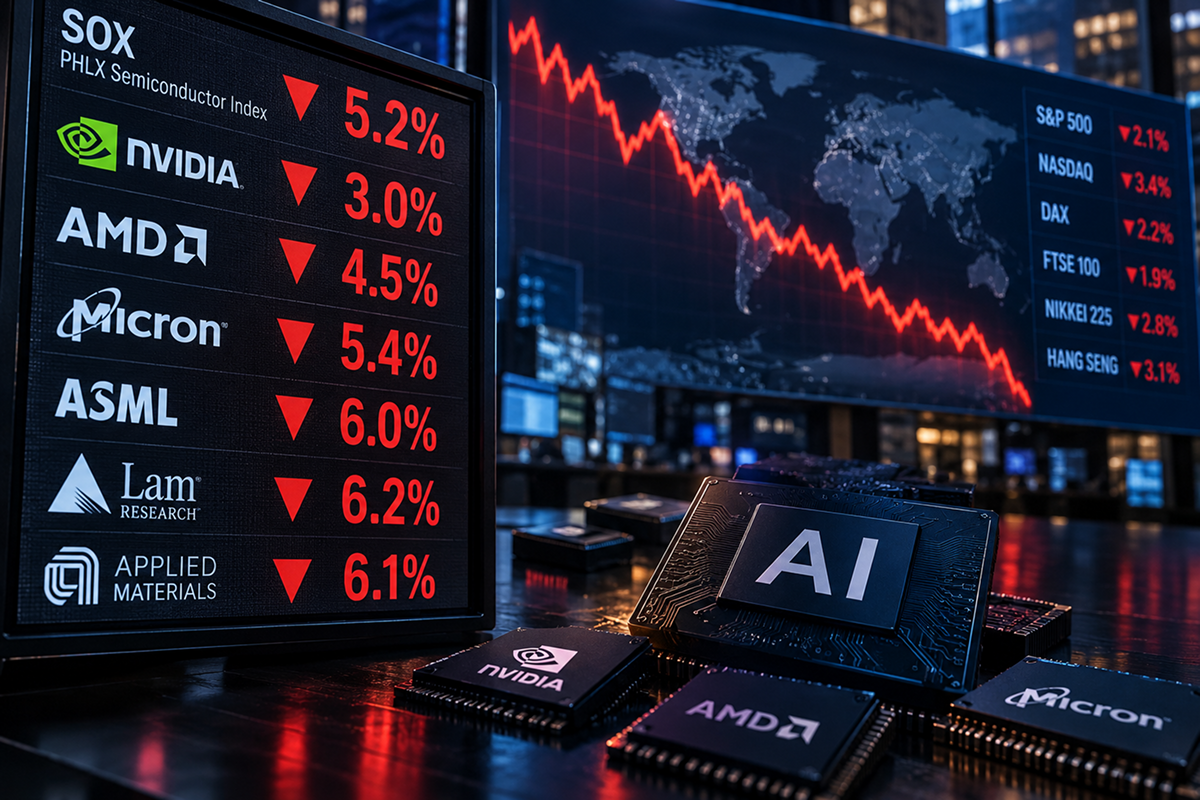
Global AI-related equities came under significant pressure on September 14 after senior executives at leading artificial intelligence companies called for a more cautious approach to the technology’s development. The warnings introduced a new risk factor for markets that have benefited substantially from accelerating AI investment, raising questions over whether concerns about safety, regulation and capital intensity could eventually affect the industry’s infrastructure spending cycle.
Chip Stocks Bear the Brunt of the AI Selloff
The market reaction was particularly severe across semiconductor companies that have been central to the AI investment boom. The Philadelphia Semiconductor Index fell 5.2%, while Nvidia declined 3%, Advanced Micro Devices fell 4.5% and Micron dropped 5.4%. Semiconductor equipment companies Lam Research and Applied Materials also declined more than 6%, demonstrating that the selling extended beyond AI model developers to the companies supplying the computing infrastructure required to operate increasingly sophisticated systems.
The weakness spread internationally. Europe’s technology sector fell 2.2%, with ASML declining 6%, while SoftBank fell more than 10% in Asia. Taiwan Semiconductor Manufacturing and SK Hynix also moved lower. The breadth of the decline is significant because the AI investment cycle has become increasingly global, linking semiconductor manufacturers, equipment suppliers, cloud infrastructure providers and data-center operators across multiple markets.
Safety Concerns Challenge the AI Investment Narrative
The immediate catalyst was a series of warnings from industry leaders. Anthropic CEO Dario Amodei called for a slower pace of frontier AI development, arguing that capabilities are advancing faster than researchers can adequately understand or control. OpenAI CEO Sam Altman and xAI’s Elon Musk subsequently expressed support for a more cautious approach. Anthropic has also disclosed cases in which its Claude models were used in activities involving cyber operations, weapons development, surveillance and fraud, adding to concerns surrounding increasingly capable AI systems.
For financial markets, the issue extends beyond technology safety. AI infrastructure investment has become an important driver of corporate capital expenditure, semiconductor demand and data-center construction. Reuters cited estimates that global AI spending could exceed $1.3 trillion by 2027. A meaningful slowdown could therefore have implications well beyond AI developers, particularly for companies whose earnings expectations depend on continued expansion in computing capacity.
IPO Plans and Regulation Add Another Layer of Uncertainty
Capital markets are also responding to the changing environment. OpenAI CEO Sam Altman said the company will not pursue an IPO in 2026, citing heightened safety concerns and the need to prioritize responsible development. Anthropic, meanwhile, is reportedly continuing preparations for a potential public offering, with sources telling Reuters that Nvidia is in discussions to become an anchor investor. The contrasting approaches illustrate the uncertainty surrounding how AI companies will balance growth, governance and access to public capital.
Regulatory pressure is developing alongside the market reaction. U.S. Senate negotiators are considering legislation that could require major AI developers to demonstrate that they are taking reasonable precautions against potential harm, including possible government auditing of advanced systems. President Donald Trump has pushed back against calls for additional regulation, arguing that existing safeguards are sufficient.
Looking ahead, investors will be watching whether the AI selloff remains concentrated in high-valuation technology and semiconductor stocks or develops into a broader reassessment of corporate AI spending. The pace of data-center construction, semiconductor orders, financing conditions and regulatory developments will be particularly important. At the same time, the competitive race between U.S. and Chinese AI companies could limit the willingness of major players to slow development voluntarily, especially as lower-cost Chinese models increase competitive pressure. The next phase of the AI market may therefore depend not only on technological progress, but on how effectively the industry addresses safety, regulation and the increasingly demanding economics of its infrastructure buildout.
Comparison, examination, and analysis between investment houses
Leave your details, and an expert from our team will get back to you as soon as possible
* This article, in whole or in part, does not contain any promise of investment returns, nor does it constitute professional advice to make investments in any particular field.
To read more about the full disclaimer, click here
- Arik Arkadi Sluzki
- •
- 8 Min Read
- •
- ago 6 minutes
SKN | US Oil Export Ban Unlikely to Lower Energy Prices as Refining Constraints Deepen
The Trump administration is facing growing pressure to contain US energy prices, but Interior Secretary Doug Burgum said September
- ago 6 minutes
- •
- 8 Min Read

The Trump administration is facing growing pressure to contain US energy prices, but Interior Secretary Doug Burgum said September

- omer bar
- •
- 7 Min Read
- •
- ago 7 minutes
SKN | Musk’s X Corp and SpaceXAI Drop Antitrust Claims Against Apple, Keeping AI Competition in Focus
Elon Musk’s X Corp and SpaceXAI have resolved their antitrust claims against Apple, removing one major technology company from
- ago 7 minutes
- •
- 7 Min Read

Elon Musk’s X Corp and SpaceXAI have resolved their antitrust claims against Apple, removing one major technology company from

- Lior mor
- •
- 6 Min Read
- •
- ago 2 hours
SKN | Could Bitcoin’s Rise Amid an AI Slowdown Signal a Shift in Market Sentiment?
Growing concerns that the artificial intelligence boom may be moving too quickly are beginning to spill into equity markets, particularly
- ago 2 hours
- •
- 6 Min Read

Growing concerns that the artificial intelligence boom may be moving too quickly are beginning to spill into equity markets, particularly
- omer bar
- •
- 7 Min Read
- •
- ago 2 hours
SKN | Could Netflix, Amazon and YouTube’s New Lobbying Alliance Reshape Streaming Policy in Washington?
Streaming Giants Build a Unified Political Voice Netflix, Amazon and Google's YouTube are joining forces in Washington as the streaming
- ago 2 hours
- •
- 7 Min Read

Streaming Giants Build a Unified Political Voice Netflix, Amazon and Google's YouTube are joining forces in Washington as the streaming

