


- omer bar
- •
- 6 Min Read
- •
- 26 minutes ago
Key Points
- Gemini Space Station reported a narrower Q4 loss, reflecting improved cost control and operational efficiency.
- Revenue increased, driven by expanding demand in the commercial space and satellite services sector.
- The company’s trajectory highlights growing momentum in the private space economy, despite ongoing capital intensity.

Gemini Space Station reported fourth-quarter results showing a reduction in net losses alongside rising revenue, signaling incremental progress in its path toward financial sustainability. The results come amid increasing global investment in the commercial space sector, where private companies are playing a larger role in satellite deployment, research infrastructure, and orbital services. While profitability remains a long-term objective, the latest performance suggests improving fundamentals.
Revenue Growth Reflects Expanding Space Economy
The company’s revenue growth in Q4 reflects rising demand for commercial space services, including satellite operations, research payload hosting, and potential partnerships with government and private entities. As the global space economy expands, companies like Gemini are positioning themselves to capture opportunities across multiple verticals.
Growth in revenue is particularly significant given the early-stage nature of the commercial space industry. Increased activity from both public and private sector clients has contributed to stronger top-line performance, signaling that demand for orbital infrastructure is gradually becoming more established.
For global investors, including those in Israel’s advanced technology sector, the expansion of space-related industries presents potential spillover effects in areas such as cybersecurity, communications, and satellite-based data services.
Cost Discipline Supports Loss Reduction
Gemini’s ability to narrow its quarterly losses highlights progress in managing operational costs, a critical factor for companies operating in capital-intensive industries like aerospace. Investments in infrastructure, research, and technology development continue to weigh on profitability, but improved efficiency is helping offset these pressures.
The company appears to be optimizing its cost structure while maintaining strategic investments, balancing near-term financial discipline with long-term growth ambitions. This approach is essential in an industry where high upfront capital expenditure is required before meaningful revenue scalability is achieved.
Despite these improvements, profitability remains a longer-term goal, and the company will need sustained revenue growth and continued cost control to achieve positive earnings.
Strategic Positioning in a Competitive Landscape
The commercial space sector is becoming increasingly competitive, with both established aerospace firms and emerging startups vying for market share. Gemini’s progress in reducing losses and growing revenue positions it as a participant in a rapidly evolving ecosystem.
Strategically, the company’s success will depend on its ability to secure long-term contracts, expand service offerings, and maintain technological differentiation. Partnerships with governments and private enterprises could play a key role in scaling operations and enhancing revenue visibility.
Macroeconomic conditions also influence the sector. Access to capital, interest rate levels, and investor appetite for high-growth industries can impact funding and expansion plans. As global markets navigate economic uncertainty, capital allocation toward space ventures may become more selective.
Looking ahead, Gemini Space Station’s outlook will depend on its ability to translate revenue growth into sustained financial improvement while navigating the complexities of the commercial space industry. Investors will be watching for continued progress in contract wins, operational milestones, and cost efficiency. Additionally, broader trends such as government space spending, private sector partnerships, and technological advancements will shape the company’s trajectory. While recent results indicate forward momentum, the path to profitability will require consistent execution in a highly competitive and capital-intensive environment.
Comparison, examination, and analysis between investment houses
Leave your details, and an expert from our team will get back to you as soon as possible
* This article, in whole or in part, does not contain any promise of investment returns, nor does it constitute professional advice to make investments in any particular field.
To read more about the full disclaimer, click here
- Lior mor
- •
- 6 Min Read
- •
- ago 1 minute
SKN | Firefly Aerospace Q4 Highlights Signal Expansion in Launch Services and Lunar Missions
Firefly Aerospace outlined its strategic progress and operational priorities during its fourth-quarter earnings call, highlighting expansion across launch services
- ago 1 minute
- •
- 6 Min Read
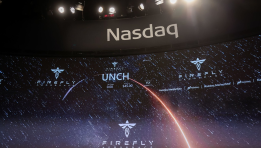
Firefly Aerospace outlined its strategic progress and operational priorities during its fourth-quarter earnings call, highlighting expansion across launch services

- sagi habasov
- •
- 6 Min Read
- •
- ago 48 minutes
SKN | FedEx Q3 Earnings Show Resilience as Revenue Growth Signals Stabilizing Global Trade Demand
FedEx Corporation delivered stronger-than-expected fiscal third-quarter results, with both non-GAAP earnings and revenue increasing compared to prior periods. The
- ago 48 minutes
- •
- 6 Min Read

FedEx Corporation delivered stronger-than-expected fiscal third-quarter results, with both non-GAAP earnings and revenue increasing compared to prior periods. The

- orshu
- •
- 7 Min Read
- •
- ago 2 hours
SKN | Intel Rebounds on AI Push, but Earnings Outlook Signals Ongoing Execution Challenges
Intel Corporation has seen a short-term rebound in its share price, supported by optimism around its artificial intelligence initiatives
- ago 2 hours
- •
- 7 Min Read
Intel Corporation has seen a short-term rebound in its share price, supported by optimism around its artificial intelligence initiatives
- Lior mor
- •
- 8 Min Read
- •
- ago 2 hours
SKN | Nvidia’s $1 Million GPU Deal With Amazon: A $1 Trillion AI Opportunity or Peak Demand Signal?
A massive new agreement between Nvidia and Amazon is reinforcing the scale—and stakes—of the global AI infrastructure race. The deal,
- ago 2 hours
- •
- 8 Min Read
A massive new agreement between Nvidia and Amazon is reinforcing the scale—and stakes—of the global AI infrastructure race. The deal,

