





- Ronny Mor
- •
- 7 Min Read
- •
- 4 hours ago
Key Points
- The London blue-chip FTSE 100 Index (^FTSE) concluded a volatile trading week at 10,497.29, paring back deep mid-week losses to log a 1.70% percentage change over the trailing five-day window.
- Friday's closing session brought modest relief as the benchmark index climbed 0.24% (24.84 points), buoyed by heavy buy-side activity in telecommunications and a cooling of the recent energy shock.
- Institutional allocators successfully absorbed a severe single-stock breakdown in healthcare weightings, maintaining a steady floor despite broader worries about long-term global interest rates.
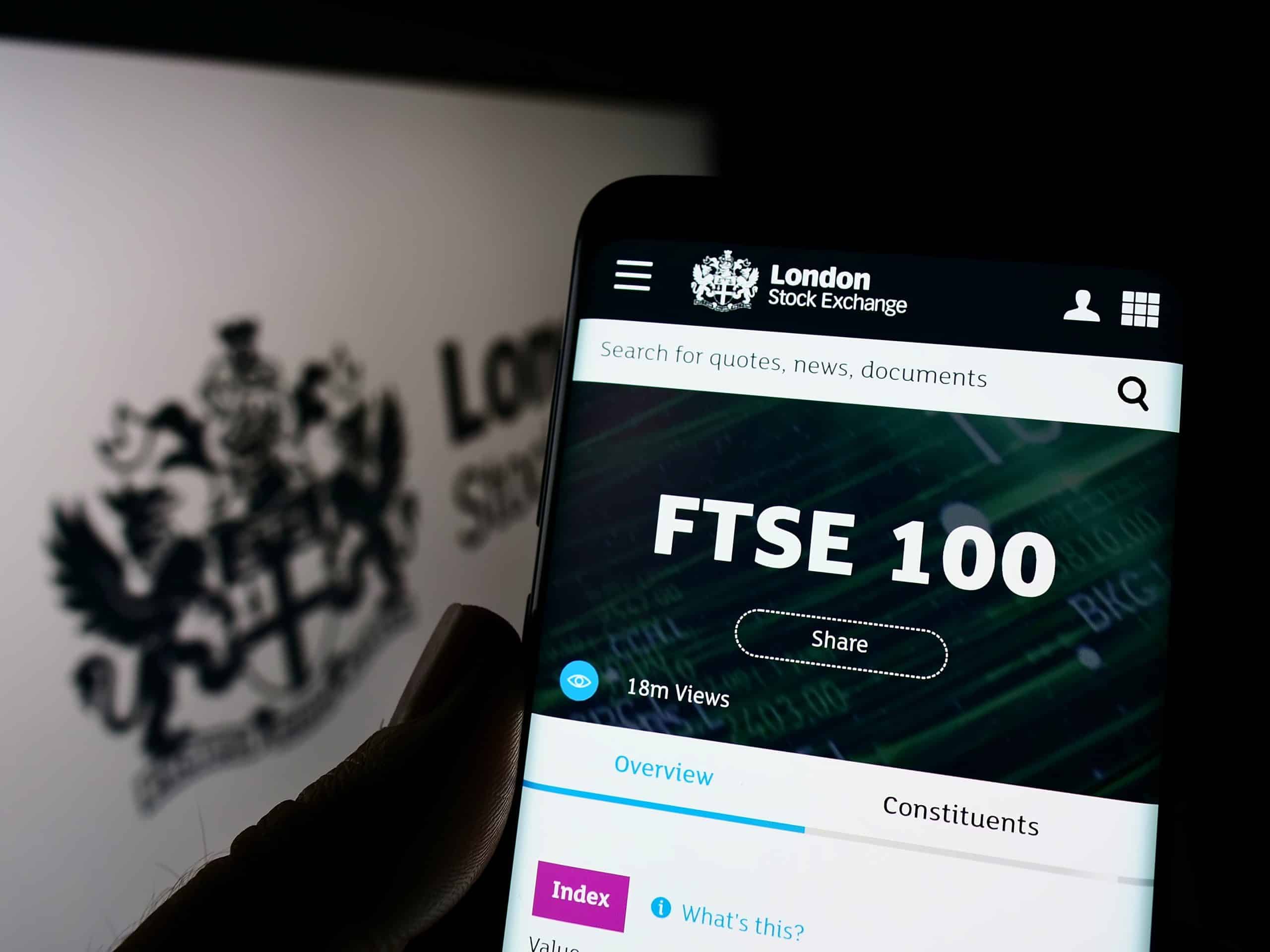
Broad-Market Gauge Builds Defensive Base After Volatile Multi-Day Shakeout
The UK flagship FTSE 100 Index (^FTSE) finished the trading week higher at 10,497.29, steadying after a turbulent mid-week macro disruption to post a net negative return of 1.70% over the selected five-day trailing period. While global equity spaces spent much of the weekly tracking frame pricing in sharp geopolitical war premiums, the London market managed a quiet, data-driven stabilization during the pre-weekend window. This minor 0.24% daily lift highlights a resilient layer of value accumulation as multi-asset managers rebalance exposures ahead of the upcoming second-quarter corporate earnings reporting cycle.
The five-day technical architecture revealed an agile chart pattern that found critical support near its horizontal baseline. Opening Friday’s session at 10,471.94 compared to its previous close of 10,472.45, the benchmark navigated an intraday range of 10,462.75 to 10,513.90 before closing near its session highs. Floating securely within its extensive 52-week parameters of 8,926.60 to 10,934.90, the index’s ability to defend the psychological 10,450 floor demonstrates robust institutional backing when cyclical large caps pull back to short-term moving averages.
Idiosyncratic Single-Stock Crosscurrents Buffet the City
The fundamental narrative underlying Friday’s trading session was dictated by sharp performance divergences among the index’s heavyweights. Leading the buy-side charge was telecommunications giant Vodafone, which exploded 12.67% to ignite broader cyclical sectors. This sector tailwind was reinforced by consumer and gaming mainstays, with Entain adding 4.04% and Marks & Spencer gaining 2.14%.
However, the broader index’s upward momentum was significantly capped by a severe liquidation wave in healthcare components. AstraZeneca shares plunged after its high-profile heart drug candidate, Wainua, missed a key primary target in a late-stage clinical study.
The clinical miss forced a sharp 3.49% contraction in AstraZeneca’s massive market capitalization on Friday, creating a heavy drag that masked broader sector strength. Additional sell-side friction materialized in the wealth management sector, where St. James’s Place dropped 8.63% on heightened worries regarding adviser retention and capital flight.
Monetary Easing Postponed Amid Sticky Global Yield Curves
Beyond localized corporate headlines, international trading desks spent the week recalibrating their long-term inflation models against macroeconomic developments across the Atlantic and at home. A noticeably cooler domestic employment readout from the United States—revealing a meager payroll addition of just 18,200 jobs—initially spurred hopes for a looser interest rate profile from the Federal Reserve. However, global bond markets behaved restrictively, keeping the 10-year U.S. Treasury yield elevated at 4.56%.
Domestically, the Bank of England (BoE) has maintained a firmly cautious baseline. Governor Andrew Bailey signaled that near-term interest rate cuts remain “off the table” due to persistent sticky elements in core services inflation. For internationally diversified allocators, navigating this prolonged higher-for-longer regime requires intense vigilance regarding currency volatility and shifting global risk benchmarks. Fluctuations in the British Pound relative to the U.S. Dollar alter the translated earnings profile of the FTSE’s massive roster of multinational dollar earners, making active foreign exchange risk mitigation and robust hedging frameworks a key operational discipline to safeguard underlying equity returns.
Outlook
Looking ahead, the near-term outlook for the FTSE 100 Index remains constructively balanced, with price action highly likely to enter a localized consolidation track as trading desks shift their focus directly to Q2 financial reports. Market participants will focus on upcoming core domestic consumer price index (CPI) updates and corporate forward guidance to verify if large-cap margins can withstand elevated capital costs and sticky energy inputs. While lingering geopolitical disruptions in the Middle East present prominent tactical downside risks, evidence of steady domestic consumer demand and resilient corporate execution should provide the technical cushion required to spark a steady advance back toward intermediate resistance zones near 10,650, though future adjustments will likely unfold in a gradual rather than linear progression.
Comparison, examination, and analysis between investment houses
Leave your details, and an expert from our team will get back to you as soon as possible
* This article, in whole or in part, does not contain any promise of investment returns, nor does it constitute professional advice to make investments in any particular field.
To read more about the full disclaimer, click here
- Ronny Mor
- •
- 5 Min Read
- •
- ago 2 minutes
SKN | Japanese Yen Index Closes Lower Despite Late-Week Surge as BoJ Policy and Intervention Risks Loom
The Japanese Yen Currency Index (^XDN) concluded the trading week with a net 0.39% decline, ending at 61.83 after
- ago 2 minutes
- •
- 5 Min Read

The Japanese Yen Currency Index (^XDN) concluded the trading week with a net 0.39% decline, ending at 61.83 after

- omer bar
- •
- 5 Min Read
- •
- ago 19 minutes
SKN | SSE Composite Index Retreats Below 4,000 as Macro Headwinds Eclipse Targeted State Support
The SSE Composite Index (000001.SS) concluded the trading week with a net 1.17% weekly decline, ending at 3,996.16 after experiencing
- ago 19 minutes
- •
- 5 Min Read

The SSE Composite Index (000001.SS) concluded the trading week with a net 1.17% weekly decline, ending at 3,996.16 after experiencing
- omer bar
- •
- 6 Min Read
- •
- ago 45 minutes
SKN | Euronext 100 Retreats Over the Week as Tech Selloff and Geopolitical Frictions Weigh on European Equities
The Euronext 100 Index (^N100) concluded the trading week with a net 1.58% decline, ending at 1,907.86 and snapping a
- ago 45 minutes
- •
- 6 Min Read
The Euronext 100 Index (^N100) concluded the trading week with a net 1.58% decline, ending at 1,907.86 and snapping a

- Lior mor
- •
- 6 Min Read
- •
- ago 1 hour
SKN | British Pound Index Edges Higher Over the Week as Hawkish BoE Rhetoric Offsets Late Profit-Taking
The British Pound Currency Index (^XDB) concluded the trading week with a net 0.41% weekly gain, ending at 134.03
- ago 1 hour
- •
- 6 Min Read

The British Pound Currency Index (^XDB) concluded the trading week with a net 0.41% weekly gain, ending at 134.03


