





- orshu
- •
- 7 Min Read
- •
- 3 hours ago
Key Points
- The FTSE 100 declined 0.36% on June 19, ending the session at 10,362.46 as investors locked in gains following recent market strength.
- Weakness in the index reflected cautious sentiment toward growth-sensitive sectors despite the benchmark remaining near its recent highs.
- Investors continue to monitor interest-rate expectations, corporate earnings, and global economic conditions for direction.
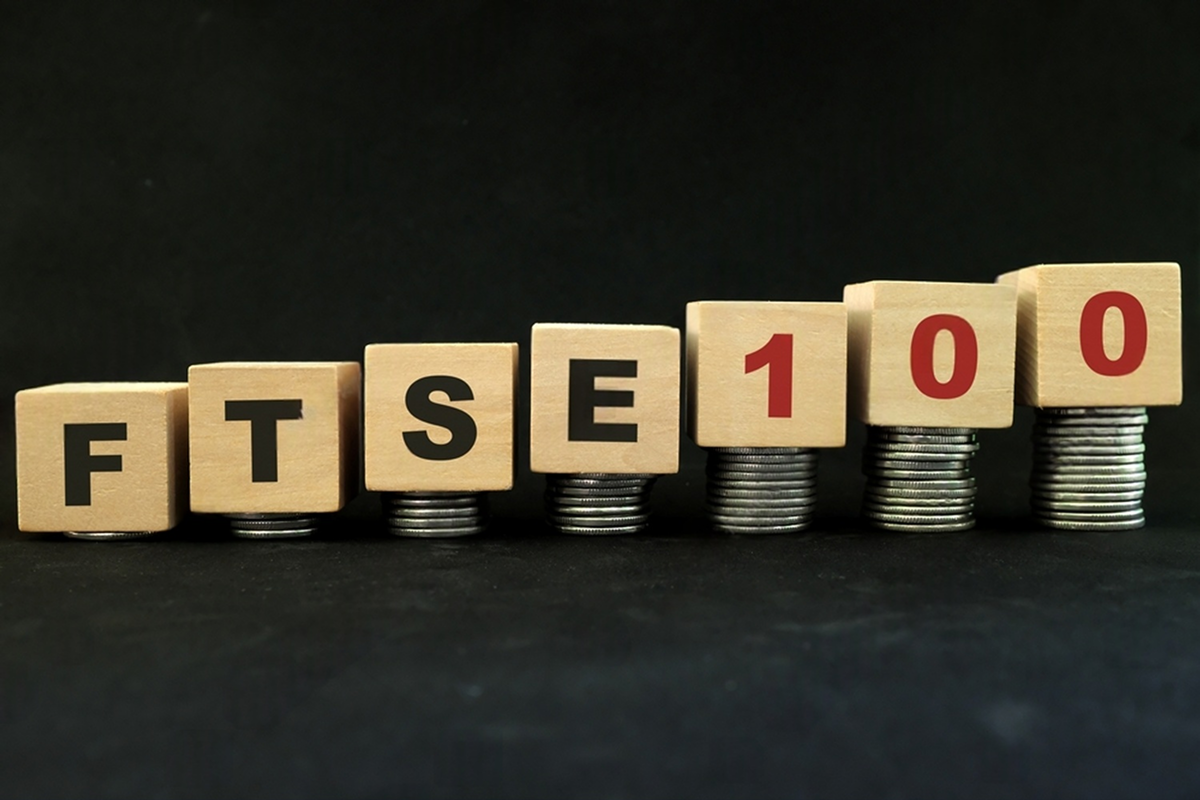
The United Kingdom’s FTSE 100 closed lower on June 19, retreating from earlier levels as investors assessed the balance between economic resilience and lingering macroeconomic risks. While the benchmark remains elevated compared with historical levels, the session reflected a degree of caution as market participants evaluated monetary policy expectations and the outlook for corporate earnings.
The decline occurred against a backdrop of ongoing uncertainty surrounding inflation, global growth prospects, and central bank policy. Although the pullback was relatively modest, it highlighted investors’ willingness to adopt a more selective approach following an extended period of strong equity market performance.
FTSE 100 Ends Session in Negative Territory
The FTSE 100 finished the trading day at 10,362.46, representing a decline of 0.36% from the previous close of 10,399.70. The index opened at 10,400.46 and traded within a daily range of 10,352.90 to 10,418.58 before ending near the lower portion of that range.
The intraday pattern suggested that sellers gradually gained the upper hand as the session progressed. After early attempts to stabilize, the benchmark moved lower during the afternoon, reflecting cautious positioning among investors.
Despite the decline, the FTSE 100 remains close to the upper end of its 52-week range of 8,707.70 to 10,934.90. This indicates that while short-term sentiment softened, the broader trend remains relatively constructive when viewed from a longer-term perspective.
Market participants continue to view large-cap UK-listed companies as attractive due to their international revenue exposure and diversified business models. Many FTSE 100 constituents generate a substantial portion of their earnings outside the United Kingdom, reducing direct dependence on domestic economic conditions.
Global Factors Continue to Shape Market Sentiment
The FTSE 100’s performance remains heavily influenced by developments beyond the UK economy. Global interest-rate expectations, commodity prices, and corporate earnings trends continue to play a significant role in shaping investor sentiment.
Many of the index’s largest constituents operate in sectors such as energy, mining, financial services, pharmaceuticals, and consumer goods. As a result, movements in global demand, commodity markets, and international trade often have a greater impact on the benchmark than domestic economic data alone.
Investors are also closely monitoring central bank communications. Any indication that policymakers may maintain higher interest rates for longer could affect valuation multiples and borrowing costs, particularly for sectors sensitive to financing conditions.
At the same time, resilience in labor markets and corporate earnings has provided support for equities globally. This has helped offset some concerns regarding slower economic growth and geopolitical uncertainty.
Defensive Characteristics Remain a Key Attraction
One reason the FTSE 100 continues to attract investor attention is its defensive composition. Compared with technology-heavy benchmarks such as the Nasdaq, the FTSE contains a larger concentration of mature companies with established cash flows and dividend-paying histories.
This structure can make the index relatively attractive during periods of uncertainty, as investors often seek exposure to businesses with stable earnings profiles. Energy producers, healthcare companies, and consumer staples firms frequently provide a degree of resilience when market volatility increases.
However, defensive characteristics can also limit upside participation during strong growth-driven rallies. As investors rotate toward higher-growth sectors, the FTSE 100 can occasionally underperform more technology-oriented benchmarks.
Looking ahead, investors will continue monitoring Bank of England policy decisions, inflation trends, corporate earnings reports, and global economic growth indicators. The FTSE 100 remains positioned between competing forces: support from its defensive sector composition and pressure from slower growth expectations. Market participants will be watching whether the index can regain momentum near current levels or whether broader macroeconomic concerns trigger a deeper period of consolidation. Developments in energy markets, international trade, and global monetary policy are likely to remain key drivers of performance in the weeks ahead.
Comparison, examination, and analysis between investment houses
Leave your details, and an expert from our team will get back to you as soon as possible
* This article, in whole or in part, does not contain any promise of investment returns, nor does it constitute professional advice to make investments in any particular field.
To read more about the full disclaimer, click here
- orshu
- •
- 7 Min Read
- •
- ago 1 hour
SKN | European Markets Retreat as Broad-Based Selling Pressures Regional Equities
European equity markets ended the June 19 session in negative territory as investors reduced exposure to regional risk assets amid
- ago 1 hour
- •
- 7 Min Read
European equity markets ended the June 19 session in negative territory as investors reduced exposure to regional risk assets amid
- orshu
- •
- 8 Min Read
- •
- ago 1 hour
SKN | Tel Aviv Market Extends June Decline as TA-125 Falls Below 4,100 and Value Stocks Lead Losses
Israeli equities closed lower on Friday, June 19, as investors remained cautious amid continued market volatility. While some segments of
- ago 1 hour
- •
- 8 Min Read

Israeli equities closed lower on Friday, June 19, as investors remained cautious amid continued market volatility. While some segments of

- Ronny Mor
- •
- 8 Min Read
- •
- ago 2 hours
SKN | Can Nvidia and AI Chip Stocks Keep Leading the Market as SpaceX Faces Growing Volatility?
Wall Street ended another eventful week with investors navigating geopolitical developments, Federal Reserve uncertainty, and continued enthusiasm surrounding artificial intelligence.
- ago 2 hours
- •
- 8 Min Read

Wall Street ended another eventful week with investors navigating geopolitical developments, Federal Reserve uncertainty, and continued enthusiasm surrounding artificial intelligence.
- orshu
- •
- 8 Min Read
- •
- ago 2 hours
SKN | SPY ETF Advances as Broad Market Strength Lifts S&P 500 Exposure
The SPDR S&P 500 ETF Trust (NYSEARCA: SPY), the world's largest exchange-traded fund tracking the S&P 500, delivered a
- ago 2 hours
- •
- 8 Min Read

The SPDR S&P 500 ETF Trust (NYSEARCA: SPY), the world's largest exchange-traded fund tracking the S&P 500, delivered a


