





- omer bar
- •
- 7 Min Read
- •
- 10 hours ago
Key Points
- The FTSE 100 Index (^FTSE) advanced approximately 0.98% over the trading week, closing at 10,600.37.
- The British benchmark experienced a robust late-week rally, supported by a 0.27% daily gain during the final session, reflecting improving institutional risk sentiment.
- Investors continue to balance corporate earnings resilience against global macroeconomic headwinds and shifting central bank monetary policy expectations.

UK large-cap equities ended the trading week with a net advance, as the FTSE 100 Index climbed approximately 0.98% to settle at 10,600.37. The weekly gain materialized following a highly dynamic multi-day trajectory, as international investors navigated shifting expectations surrounding regional inflation, global energy markets, and central bank policy paths. The upward movement highlights a renewed willingness among capital allocators to rotate into defensive value components, although broader macroeconomic uncertainties and global growth concerns continue to temper unbridled enthusiasm.
Late-Week Breakout and Capital Flows Guide Price Action
The FTSE 100 experienced highly dynamic price action throughout the week. After opening the period near the 10,572.39 level and navigating intra-week volatility that tested a daily low of 10,527.65, the benchmark staged a decisive late-week breakout. The index surged significantly higher on July 17, peaking near an intraday high of 10,623.69 before settling at 10,600.37. This upward trajectory was largely underpinned by targeted institutional buying across banking, commodity, and defensive healthcare giants that carry significant weight within the index.
As global growth projections faced selective cooling elsewhere, market participants increasingly viewed the British benchmark’s discounted multiple as an appealing destination for strategic asset entries. This institutional accumulation helped provide substantial structural support for the index within its broader 52-week range of 8,969.10 to 10,934.90. Nevertheless, participants remain highly disciplined, recognizing that price expansions remain highly sensitive to future macroeconomic clarity and concrete evidence of sustained domestic consumer demand.
Global Macro Conditions and Currency Volatility Shape Sentiment
The week’s positive momentum also reflected evolving expectations regarding the Bank of England’s monetary policy path. Evolving inflation metrics and labor data continue to heavily dictate equity positioning, as any signs pointing toward potential rate cuts generally support industrial and property sectors by lowering borrowing costs. However, these localized dynamics are heavily intertwined with global financial conditions.
Because a vast majority of FTSE 100 constituents derive their revenues from international operations, cross-border trade policies and systemic currency volatility between the British Pound, Euro, and U.S. Dollar heavily influence corporate profitability. Furthermore, ongoing regional conflicts and shifting supply-chain routes continue to inject a persistent geopolitical premium into commodity-linked equities, introducing mixed variables that global allocators must carefully balance. For international stakeholders, these external dependencies introduce tangible downside risks that necessitate rigorous risk management frameworks.
Economic Data and Corporate Earnings Will Be the Next Major Test
Attention is increasingly shifting toward upcoming domestic economic data releases and the acceleration of the corporate earnings season, which serve as primary structural drivers for market valuations. Investors will be watching closely for evidence that consumer sentiment, industrial output, and multinational corporate profit margins can withstand the friction of elevated global interest rates.
While the market has absorbed the week’s volatile swings to secure a 0.98% gain, analysts continue to emphasize that a sustained upward breakout will require stronger fundamental verification from incoming financial statements rather than speculative rotation alone. Strained regional fiscal outlooks across European trading partners and persistent macroeconomic uncertainty could still generate periods of heightened market volatility, continually testing the resilience of resilient corporate fundamentals.
Outlook: Looking ahead, the FTSE 100’s medium-term direction will likely depend on a combination of domestic inflation trends, Bank of England monetary policy developments, and global trade stability. Continued resilience in corporate earnings execution and a stabilizing macroeconomic backdrop could provide foundational support for the index to test the upper bounds of its 52-week range, while renewed spikes in global trade tensions or weakening industrial output may limit upside potential. For global institutional investors, British equities remain a critical value and defensive barometer, but maintaining a highly balanced approach toward both opportunities and systemic risks remains essential as macroeconomic conditions continue to evolve.
Comparison, examination, and analysis between investment houses
Leave your details, and an expert from our team will get back to you as soon as possible
* This article, in whole or in part, does not contain any promise of investment returns, nor does it constitute professional advice to make investments in any particular field.
To read more about the full disclaimer, click here
- Ronny Mor
- •
- 6 Min Read
- •
- ago 3 hours
SKN | Meta and Anthropic Signal the Next Phase of the AI Race as Competition Intensifies
The global artificial intelligence industry continues to evolve at a rapid pace, with leading developers racing to expand model
- ago 3 hours
- •
- 6 Min Read

The global artificial intelligence industry continues to evolve at a rapid pace, with leading developers racing to expand model

- orshu
- •
- 6 Min Read
- •
- ago 6 hours
SKN | Australian Dollar Currency Index Advances Modestly for the Week as Investors Weigh Earnings and Policy Outlook
The Australian Dollar Currency Index finished the trading week modestly higher, advancing approximately 0.41% from Monday through Friday before closing
- ago 6 hours
- •
- 6 Min Read

The Australian Dollar Currency Index finished the trading week modestly higher, advancing approximately 0.41% from Monday through Friday before closing
- Ronny Mor
- •
- 6 Min Read
- •
- ago 7 hours
SKN | Japanese Yen Currency Index Declines Modestly for the Week as Investors Weigh Policy Outlook and Yield Spreads
The Japanese Yen Currency Index finished the trading week modestly lower, declining approximately 0.41% from Monday through Friday before closing
- ago 7 hours
- •
- 6 Min Read

The Japanese Yen Currency Index finished the trading week modestly lower, declining approximately 0.41% from Monday through Friday before closing

- omer bar
- •
- 6 Min Read
- •
- ago 7 hours
SKN | Euronext 100 Index Finishes Slightly Lower for the Week as Investors Weigh Earnings and Policy Outlook
The Euronext 100 Index finished the trading week modestly lower, declining approximately 0.13% from Monday through Friday before closing
- ago 7 hours
- •
- 6 Min Read
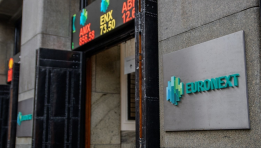
The Euronext 100 Index finished the trading week modestly lower, declining approximately 0.13% from Monday through Friday before closing


