





- omer bar
- •
- 6 Min Read
- •
- 7 hours ago
Key Points
- Euronext 100 Index declined approximately 0.13% over the Monday-to-Friday trading week, closing at 1,905.37.
- European equities showed resilience despite a modest decline in the final session, supported by steady corporate earnings expectations and improving investor sentiment.
- Markets remain sensitive to monetary policy, trade developments, and geopolitical risks, which could shape the next phase of European equity performance.
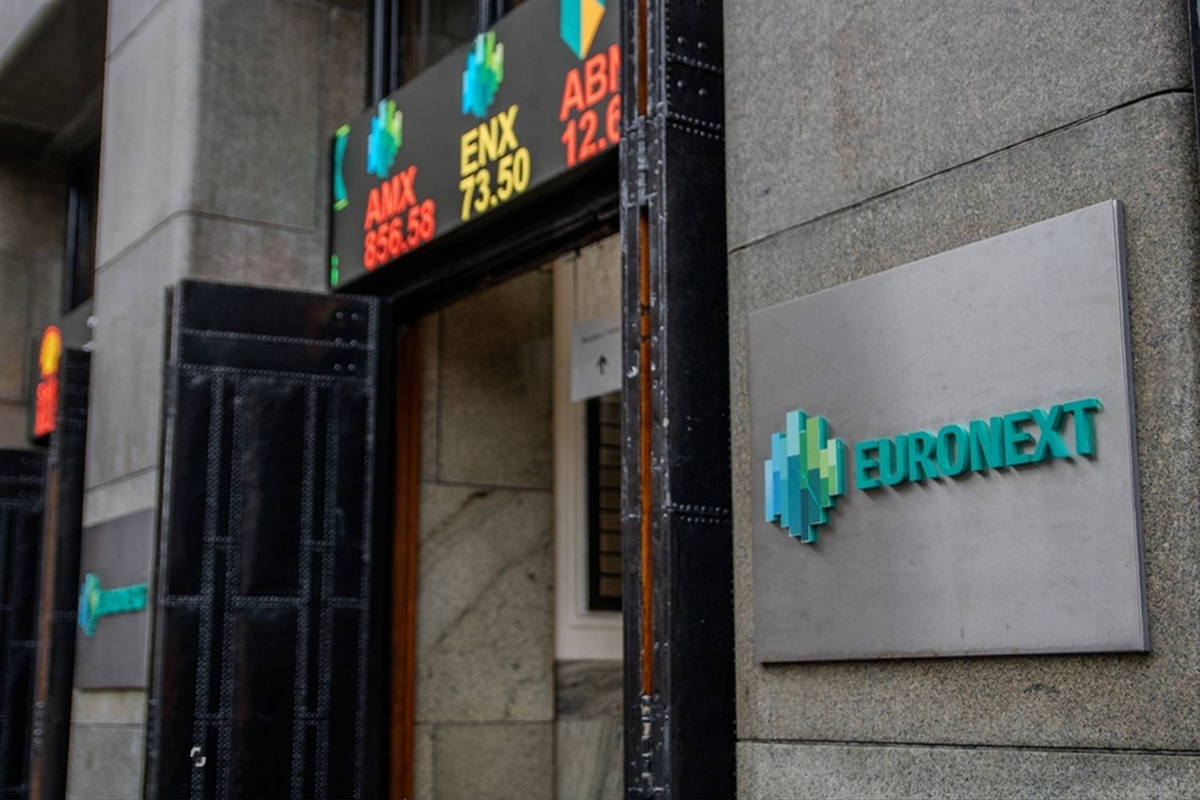
The Euronext 100 Index finished the trading week modestly lower, declining approximately 0.13% from Monday through Friday before closing at 1,905.37. While the benchmark retreated 0.79% in the latest session, it maintained a relatively stable weekly performance as investors balanced encouraging corporate fundamentals against ongoing macroeconomic uncertainty.
The week’s trading reflected cautious optimism across pan-European markets, with investors evaluating inflation trends, central bank expectations, and the outlook for regional economic growth amid an increasingly complex global environment.
Pan-European Equities Demonstrate Resilience
The Euronext 100 Index traded within a dynamic range throughout most of the week, briefly climbing above the 1,920 level mid-week before giving back part of those gains toward Friday’s close. Despite the late-session weakness, the overall performance suggested that buyers continued to support blue-chip European equities following recent periods of market volatility.
Financials, consumer staples, and industrial companies remained relatively stable across the region, while high-growth sectors continued to track global investor sentiment surrounding technological innovation and consumer demand. The balanced sector performance helped cushion the broader pan-European market from sharper declines.
Macroeconomic and Policy Expectations Remain in Focus
Investor attention continues to center on the outlook for European Central Bank policy, inflation dynamics, and the pace of economic activity across the eurozone. Moderating inflation has strengthened expectations that financing conditions may gradually become more supportive, although policymakers continue to emphasize a data-dependent approach.
At the same time, global trade developments, fiscal policy discussions, and geopolitical tensions remain important variables. Pan-European companies generate a significant share of their revenues internationally, making the region’s equity markets particularly sensitive to changes in global demand, currency movements, and international supply chains.
Israeli Investors Continue to Monitor European Exposure
For Israeli investors, pan-European equities remain an important component of international portfolio diversification. Many Israeli institutional investors maintain exposure to Euronext 100 multinational companies across sectors including pharmaceuticals, financial services, industrial manufacturing, consumer goods, and technology.
However, currency fluctuations between the euro, U.S. dollar, and Israeli shekel, together with evolving trade conditions and geopolitical developments, could continue to influence returns. As a result, investors are increasingly focusing on companies with resilient earnings, strong balance sheets, and diversified revenue streams.
Outlook: The near-term outlook for the Euronext 100 Index remains cautiously constructive but highly dependent on incoming economic data and corporate earnings. Continued moderation in inflation and stable earnings growth could support further gains, while renewed geopolitical tensions, weaker manufacturing activity, or shifts in central bank expectations may increase market volatility. For long-term investors, pan-European equities continue to offer exposure to globally diversified businesses, although maintaining a balanced view of both opportunities and downside risks remains appropriate as macroeconomic conditions evolve.
Comparison, examination, and analysis between investment houses
Leave your details, and an expert from our team will get back to you as soon as possible
* This article, in whole or in part, does not contain any promise of investment returns, nor does it constitute professional advice to make investments in any particular field.
To read more about the full disclaimer, click here
- Ronny Mor
- •
- 6 Min Read
- •
- ago 3 hours
SKN | Meta and Anthropic Signal the Next Phase of the AI Race as Competition Intensifies
The global artificial intelligence industry continues to evolve at a rapid pace, with leading developers racing to expand model
- ago 3 hours
- •
- 6 Min Read

The global artificial intelligence industry continues to evolve at a rapid pace, with leading developers racing to expand model

- orshu
- •
- 6 Min Read
- •
- ago 6 hours
SKN | Australian Dollar Currency Index Advances Modestly for the Week as Investors Weigh Earnings and Policy Outlook
The Australian Dollar Currency Index finished the trading week modestly higher, advancing approximately 0.41% from Monday through Friday before closing
- ago 6 hours
- •
- 6 Min Read

The Australian Dollar Currency Index finished the trading week modestly higher, advancing approximately 0.41% from Monday through Friday before closing
- Ronny Mor
- •
- 6 Min Read
- •
- ago 7 hours
SKN | Japanese Yen Currency Index Declines Modestly for the Week as Investors Weigh Policy Outlook and Yield Spreads
The Japanese Yen Currency Index finished the trading week modestly lower, declining approximately 0.41% from Monday through Friday before closing
- ago 7 hours
- •
- 6 Min Read

The Japanese Yen Currency Index finished the trading week modestly lower, declining approximately 0.41% from Monday through Friday before closing

- Lior mor
- •
- 6 Min Read
- •
- ago 8 hours
SKN | CAC 40 Index Finishes Flat for the Week as Investors Weigh Earnings and Policy Outlook
The CAC 40 Index finished the trading week virtually unchanged, recording a flat performance (0.00%) from Monday through Friday before
- ago 8 hours
- •
- 6 Min Read

The CAC 40 Index finished the trading week virtually unchanged, recording a flat performance (0.00%) from Monday through Friday before


