





- Lior mor
- •
- 7 Min Read
- •
- 8 minutes ago


Key Points
- FTC Chairman Andrew Ferguson said companies seeking antitrust exemptions for AI-related coordination should face close scrutiny while also lobbying for new regulation.
- The comments follow Anthropic CEO Dario Amodei's call for antitrust permission to allow AI companies to coordinate a slower pace of development over safety concerns.
- The dispute could influence the balance between AI safety cooperation, competition policy and the regulatory environment facing major technology companies.

The debate over how the United States should regulate advanced artificial intelligence is expanding beyond safety standards and into antitrust policy. Federal Trade Commission Chairman Andrew Ferguson said on September 15 that there should be deep scrutiny of AI companies seeking exemptions from competition law while simultaneously advocating for additional government regulation.
FTC Raises Concerns Over AI Antitrust Exemptions
Speaking in Washington, Ferguson said companies seeking antitrust exemptions should be viewed cautiously when those same companies are asking policymakers to impose new rules on the rapidly developing AI industry. He emphasized that the comments represented his personal opinion and did not directly name Anthropic, whose chief executive recently argued that rivals should be permitted to coordinate on slowing AI development because of potential safety risks.
The issue is important for technology markets because an antitrust exemption could potentially alter how major AI developers cooperate. Competition rules are designed to prevent arrangements that restrict competition, while companies argue that certain forms of cooperation may be necessary when dealing with risks that extend beyond individual firms. The policy question is therefore whether safety coordination can be structured without weakening competition among leading AI developers.
Anthropic’s Safety Argument Meets Competition Policy
Anthropic CEO Dario Amodei has argued that AI companies should have greater scope to coordinate around safety as models become increasingly capable. His position reflects concerns that competitive pressure could encourage companies to accelerate development even when they identify potentially serious risks. The proposal has generated disagreement within the technology industry, however, with critics questioning whether broad exemptions could provide established AI companies with additional influence over the market and its future regulatory framework.
Reuters also reported that OpenAI, Anthropic and Google DeepMind have been discussing AI safety cooperation without requiring an antitrust waiver, according to Bloomberg News. OpenAI’s global policy chief said discussions had been taking place for several weeks, suggesting that at least some forms of industry coordination can occur within existing legal structures. Reuters noted that the report had not been independently verified.
AI Regulation Could Affect Competition and Investment
The dispute comes as AI companies are attracting enormous amounts of capital and building infrastructure at unprecedented scale. Reuters reported that global AI spending is expected to approach $800 billion in 2026 and could reach approximately $1.08 trillion in 2027. Semiconductor companies and major technology firms have benefited from the investment cycle, but markets have also become increasingly sensitive to any indication that AI development or infrastructure spending could slow.
For policymakers, the challenge is balancing potential catastrophic-risk mitigation with maintaining open competition and innovation. The FTC already has a broad competition mandate under US antitrust law, including enforcement responsibilities under the Clayton Act. The agency has also examined competition implications surrounding partnerships between major cloud providers and AI developers, including issues involving access to computing resources, engineering talent and sensitive business information.
Looking ahead, investors and technology companies will monitor whether the US administration or Congress develops a more defined framework for AI safety cooperation and antitrust enforcement. The distinction between legitimate safety collaboration and coordination that could restrict competition will remain central to the debate. Any future exemptions, legislation or enforcement guidance could influence how leading AI companies collaborate, how smaller developers compete for infrastructure and capital, and how quickly the industry can expand while policymakers address emerging technological risks.
Comparison, examination, and analysis between investment houses
Leave your details, and an expert from our team will get back to you as soon as possible
* This article, in whole or in part, does not contain any promise of investment returns, nor does it constitute professional advice to make investments in any particular field.
To read more about the full disclaimer, click here
- omer bar
- •
- 7 Min Read
- •
- ago 8 minutes
SKN | Meta Reportedly Plans Camera-Free Smart Glasses as Wearable Strategy Expands
Meta Platforms is reportedly preparing to expand its smart-glasses portfolio with a camera-free model internally code-named Luna, according to
- ago 8 minutes
- •
- 7 Min Read

Meta Platforms is reportedly preparing to expand its smart-glasses portfolio with a camera-free model internally code-named Luna, according to

- Ronny Mor
- •
- 6 Min Read
- •
- ago 9 minutes
SKN | Tesla Faces NHTSA Scrutiny Over Cybercab Self-Certification and Driver Controls
Tesla is facing additional regulatory scrutiny over its Cybercab robotaxi after the U.S. National Highway Traffic Safety Administration ordered
- ago 9 minutes
- •
- 6 Min Read

Tesla is facing additional regulatory scrutiny over its Cybercab robotaxi after the U.S. National Highway Traffic Safety Administration ordered

- sagi habasov
- •
- 7 Min Read
- •
- ago 33 minutes
SKN | Could Calls to Slow Frontier AI Development Challenge the Technology Stock Rally?
Technology stocks came under pressure Tuesday as investors weighed an increasingly public debate over whether the artificial intelligence industry should
- ago 33 minutes
- •
- 7 Min Read

Technology stocks came under pressure Tuesday as investors weighed an increasingly public debate over whether the artificial intelligence industry should
- omer bar
- •
- 4 Min Read
- •
- ago 6 hours
SKN | Salesforce and NVIDIA Unveil Koa: A New Paradigm for Enterprise CRM Reasoning Models?
The Launch of Koa and the Strategic Alliance Between Salesforce and NVIDIA The technology and CRM landscapes are experiencing a
- ago 6 hours
- •
- 4 Min Read
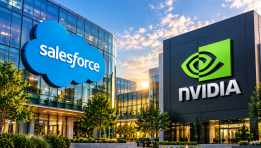
The Launch of Koa and the Strategic Alliance Between Salesforce and NVIDIA The technology and CRM landscapes are experiencing a

