


- omer bar
- •
- 9 Min Read
- •
- 2 hours ago
Key Points
- Ford recalls 4.3 million U.S. vehicles over brake and lighting software defect.
- Issue linked to module communication failure when towing trailers.
- Fix will involve a software update at no cost to customers.
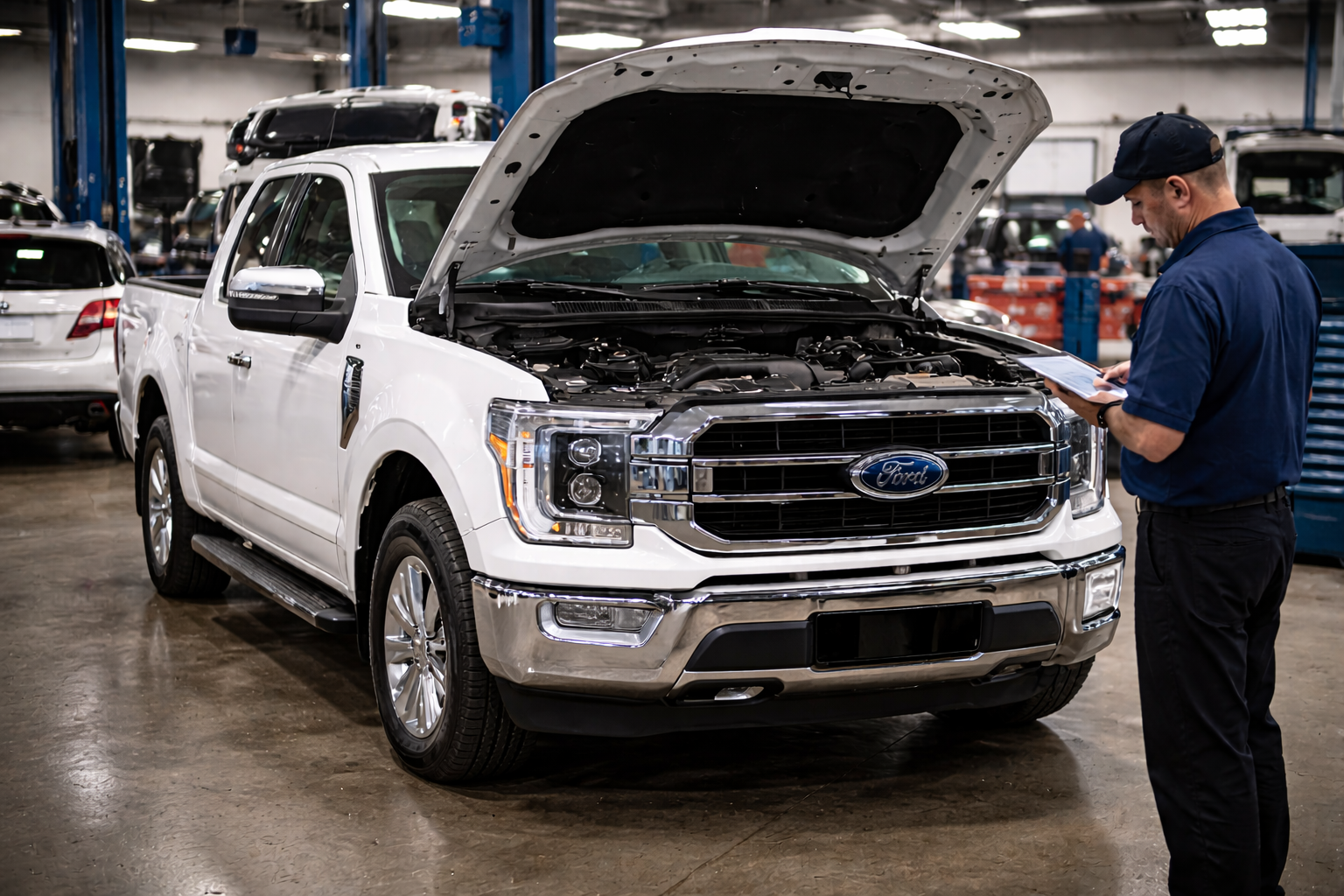
Ford Motor announced a recall of approximately 4.3 million pickup trucks and SUVs in the United States due to a software-related issue that could impair brake functionality and exterior lighting systems.
The automaker said a software error may cause a vehicle module to lose communication when towing a trailer. This malfunction could result in a loss of brake lights, turn signals, or in some cases, brake function — increasing the risk of accidents.
Affected Models and Scope
The recall covers several high-volume models from recent production years, including:
• 2021–2026 Ford F-150
• 2022–2026 Ford F-250 Super Duty
• 2022–2026 Expedition
• 2022–2026 Lincoln Navigator
• Maverick, Ranger, and E-Transit (select models)
According to the company, the issue is linked to a module communication failure during trailer towing. Ford plans to resolve the defect through a software update, which will be provided at no cost to owners.
Given the scale of the recall — one of the largest of 2026 so far — it highlights the growing complexity of modern vehicle electronics, where software reliability has become as critical as mechanical performance.
Industry-Wide Recall Pressure in 2026
Ford is not alone in facing recall challenges this year.
Rivian Automotive recalled 19,641 R1 vehicles in January over a rear suspension reassembly issue that could affect toe link joint integrity. The recall covered certain 2022–2025 R1S SUVs and R1T pickup trucks serviced between April 2022 and March 2025.
Meanwhile, General Motors recalled more than 43,000 Chevrolet, GMC, and Cadillac vehicles due to a transmission control valve defect that could cause rear wheels to lock unexpectedly, increasing crash risk.
The broader trend underscores the mounting regulatory scrutiny and operational complexity automakers face as vehicles become increasingly software-driven.
Market Performance and Investor View
Despite operational headwinds, Ford shares have gained 19.9% over the past six months, slightly underperforming the broader domestic automotive industry’s 22.8% growth over the same period.
Investors will likely focus on whether the recall leads to material cost pressures, potential litigation exposure, or reputational damage. However, because the remedy involves a software update rather than large-scale hardware replacement, financial impact may be contained relative to traditional mechanical recalls.
Still, the episode reinforces a structural reality in the modern auto sector: as vehicles evolve into rolling computers, software integrity becomes mission-critical — and large-scale updates can carry significant operational and reputational risk.
Highlights
Ford recalls 4.3 million U.S. vehicles over brake and lighting software defect.
Issue linked to module communication failure when towing trailers.
Fix will involve a software update at no cost to customers.
Ford Motor announced a recall of approximately 4.3 million pickup trucks and SUVs in the United States due to a software-related issue that could impair brake functionality and exterior lighting systems.
The automaker said a software error may cause a vehicle module to lose communication when towing a trailer. This malfunction could result in a loss of brake lights, turn signals, or in some cases, brake function — increasing the risk of accidents.
Affected Models and Scope
The recall covers several high-volume models from recent production years, including:
• 2021–2026 Ford F-150
• 2022–2026 Ford F-250 Super Duty
• 2022–2026 Expedition
• 2022–2026 Lincoln Navigator
• Maverick, Ranger, and E-Transit (select models)
According to the company, the issue is linked to a module communication failure during trailer towing. Ford plans to resolve the defect through a software update, which will be provided at no cost to owners.
Given the scale of the recall — one of the largest of 2026 so far — it highlights the growing complexity of modern vehicle electronics, where software reliability has become as critical as mechanical performance.
Industry-Wide Recall Pressure in 2026
Ford is not alone in facing recall challenges this year.
Rivian Automotive recalled 19,641 R1 vehicles in January over a rear suspension reassembly issue that could affect toe link joint integrity. The recall covered certain 2022–2025 R1S SUVs and R1T pickup trucks serviced between April 2022 and March 2025.
Meanwhile, General Motors recalled more than 43,000 Chevrolet, GMC, and Cadillac vehicles due to a transmission control valve defect that could cause rear wheels to lock unexpectedly, increasing crash risk.
The broader trend underscores the mounting regulatory scrutiny and operational complexity automakers face as vehicles become increasingly software-driven.
Market Performance and Investor View
Despite operational headwinds, Ford shares have gained 19.9% over the past six months, slightly underperforming the broader domestic automotive industry’s 22.8% growth over the same period.
Investors will likely focus on whether the recall leads to material cost pressures, potential litigation exposure, or reputational damage. However, because the remedy involves a software update rather than large-scale hardware replacement, financial impact may be contained relative to traditional mechanical recalls.
Still, the episode reinforces a structural reality in the modern auto sector: as vehicles evolve into rolling computers, software integrity becomes mission-critical — and large-scale updates can carry significant operational and reputational risk.
Comparison, examination, and analysis between investment houses
Leave your details, and an expert from our team will get back to you as soon as possible
* This article, in whole or in part, does not contain any promise of investment returns, nor does it constitute professional advice to make investments in any particular field.
To read more about the full disclaimer, click here
- sagi habasov
- •
- 5 Min Read
- •
- ago 55 minutes
SKN | Joby Aviation Jumps Pre-Market as FAA Progress and Analyst Upgrade Boost Sentiment
Joby Aviation shares moved higher in pre-market trading following renewed optimism around regulatory progress and analyst upgrades. While the electric
- ago 55 minutes
- •
- 5 Min Read

Joby Aviation shares moved higher in pre-market trading following renewed optimism around regulatory progress and analyst upgrades. While the electric
- sagi habasov
- •
- 5 Min Read
- •
- ago 4 hours
SKN | Infosys Gains as Dividend Yield and Stable Margins Offset Slower Growth Outlook
Infosys shares edged higher in the latest session, closing at $14.24 with a 2.89% gain. Despite short-term price strength, the
- ago 4 hours
- •
- 5 Min Read

Infosys shares edged higher in the latest session, closing at $14.24 with a 2.89% gain. Despite short-term price strength, the

- Ronny Mor
- •
- 5 Min Read
- •
- ago 5 hours
SKN | Photronics Surges Nearly 15% as Earnings Beat and Strong Margins Drive Breakout
Photronics delivered a sharp upside move this week, with shares climbing nearly 15% in a single session to close at
- ago 5 hours
- •
- 5 Min Read

Photronics delivered a sharp upside move this week, with shares climbing nearly 15% in a single session to close at

- omer bar
- •
- 7 Min Read
- •
- ago 5 hours
SKN | Nvidia Delivers 73% Revenue Surge — So Why Are Investors Still Unsatisfied?
Nvidia once again posted blockbuster numbers, but the market’s reaction was notably restrained. Despite a 73% year-over-year surge in fourth-quarter
- ago 5 hours
- •
- 7 Min Read

Nvidia once again posted blockbuster numbers, but the market’s reaction was notably restrained. Despite a 73% year-over-year surge in fourth-quarter

