


- Lior mor
- •
- 6 Min Read
- •
- 2 minutes ago
Key Points
- Firefly Aerospace emphasized growing demand for launch services, supported by increasing satellite deployment activity.
- The company highlighted progress in lunar missions and government partnerships, reinforcing its role in the space economy.
- Operational scaling and execution remain critical as Firefly navigates a capital-intensive and competitive industry.
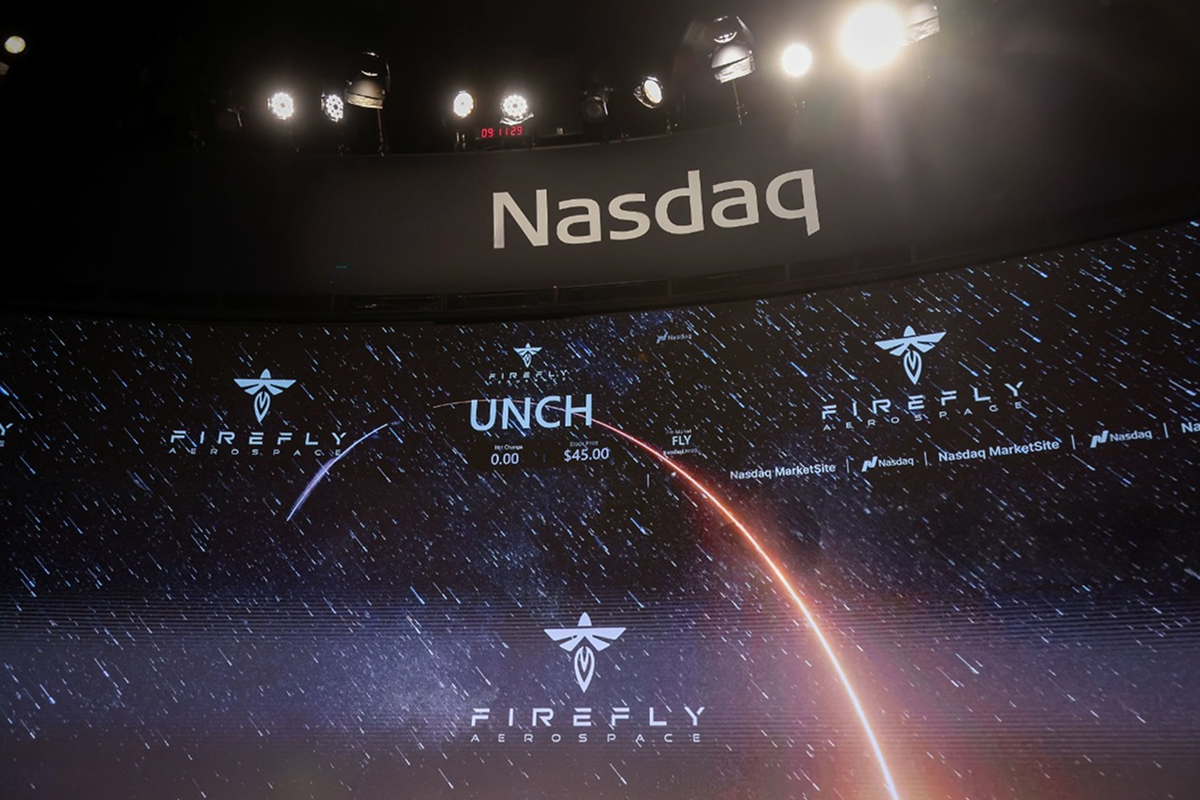
Firefly Aerospace outlined its strategic progress and operational priorities during its fourth-quarter earnings call, highlighting expansion across launch services and lunar exploration initiatives. The update comes as the global space industry continues to attract investment, driven by satellite deployment, defense spending, and commercial applications. As private space companies compete for contracts and scale operations, Firefly’s positioning reflects broader shifts in the evolving aerospace landscape.
Launch Services Demand Continues to Expand
Firefly’s earnings call underscored increasing demand for small- to medium-lift launch services, as satellite constellations and commercial space applications continue to grow. The company’s Alpha rocket program remains central to its strategy, targeting a segment of the market that requires flexible and cost-effective launch solutions.
The expansion of satellite networks for communications, earth observation, and defense applications has created sustained demand for launch capacity. Firefly’s ability to secure contracts and maintain launch cadence will be critical in translating this demand into consistent revenue streams.
Competition within the launch market remains intense, with both established players and emerging firms seeking to capture market share. Differentiation through reliability, pricing, and launch frequency will be key factors influencing Firefly’s long-term growth prospects.
Lunar Missions and Strategic Partnerships
A significant focus of the earnings call was Firefly’s involvement in lunar missions and government-backed initiatives. The company has positioned itself within programs aimed at supporting lunar exploration, including payload delivery and infrastructure development.
Government partnerships, particularly with U.S. space agencies, provide both funding stability and long-term growth opportunities. These contracts often serve as validation of technological capabilities, enhancing credibility within the industry.
The expansion into lunar services reflects a broader trend in the space economy, where companies are moving beyond launch capabilities to offer integrated solutions. This includes mission planning, payload integration, and data services, creating additional revenue streams.
Execution Risks and Capital Requirements
Despite positive momentum, Firefly faces challenges typical of the aerospace sector, including high capital requirements, operational risks, and execution complexity. Scaling launch operations while maintaining reliability is a critical hurdle, as delays or failures can impact both financial performance and reputation.
The company’s ability to manage costs while investing in research and development will influence its path toward profitability. Access to capital remains an important factor, particularly as interest rates and funding conditions evolve.
From a broader market perspective, Firefly’s progress reflects the increasing commercialization of space. For investors in Israel’s technology ecosystem, the company’s trajectory highlights opportunities in adjacent sectors such as satellite technology, cybersecurity, and data analytics.
Looking ahead, Firefly Aerospace’s outlook will depend on its ability to execute on launch schedules, expand partnerships, and scale its service offerings. Investors will monitor key milestones, including successful missions, contract wins, and progress in lunar initiatives. Additionally, developments in global space policy and funding will play a role in shaping demand. While the company’s strategic direction aligns with long-term industry growth, sustained success will require consistent execution in a competitive and capital-intensive environment.
Comparison, examination, and analysis between investment houses
Leave your details, and an expert from our team will get back to you as soon as possible
* This article, in whole or in part, does not contain any promise of investment returns, nor does it constitute professional advice to make investments in any particular field.
To read more about the full disclaimer, click here
- omer bar
- •
- 6 Min Read
- •
- ago 27 minutes
SKN | Gemini Space Station Narrows Losses as Revenue Growth Signals Progress in Commercial Space Economy
Gemini Space Station reported fourth-quarter results showing a reduction in net losses alongside rising revenue, signaling incremental progress in
- ago 27 minutes
- •
- 6 Min Read

Gemini Space Station reported fourth-quarter results showing a reduction in net losses alongside rising revenue, signaling incremental progress in

- sagi habasov
- •
- 6 Min Read
- •
- ago 49 minutes
SKN | FedEx Q3 Earnings Show Resilience as Revenue Growth Signals Stabilizing Global Trade Demand
FedEx Corporation delivered stronger-than-expected fiscal third-quarter results, with both non-GAAP earnings and revenue increasing compared to prior periods. The
- ago 49 minutes
- •
- 6 Min Read

FedEx Corporation delivered stronger-than-expected fiscal third-quarter results, with both non-GAAP earnings and revenue increasing compared to prior periods. The

- orshu
- •
- 7 Min Read
- •
- ago 2 hours
SKN | Intel Rebounds on AI Push, but Earnings Outlook Signals Ongoing Execution Challenges
Intel Corporation has seen a short-term rebound in its share price, supported by optimism around its artificial intelligence initiatives
- ago 2 hours
- •
- 7 Min Read
Intel Corporation has seen a short-term rebound in its share price, supported by optimism around its artificial intelligence initiatives

- Lior mor
- •
- 8 Min Read
- •
- ago 2 hours
SKN | Nvidia’s $1 Million GPU Deal With Amazon: A $1 Trillion AI Opportunity or Peak Demand Signal?
A massive new agreement between Nvidia and Amazon is reinforcing the scale—and stakes—of the global AI infrastructure race. The deal,
- ago 2 hours
- •
- 8 Min Read
A massive new agreement between Nvidia and Amazon is reinforcing the scale—and stakes—of the global AI infrastructure race. The deal,

