


- Lior mor
- •
- 7 Min Read
- •
- 2 months ago
Key Points
- The EU–India FTA is the largest trade deal ever signed by either side, reshaping global trade links.
- Tariff reductions are expected to boost manufacturing, services, and job creation across Europe.
- Strategically, the agreement strengthens economic resilience and democratic cooperation in global trade.
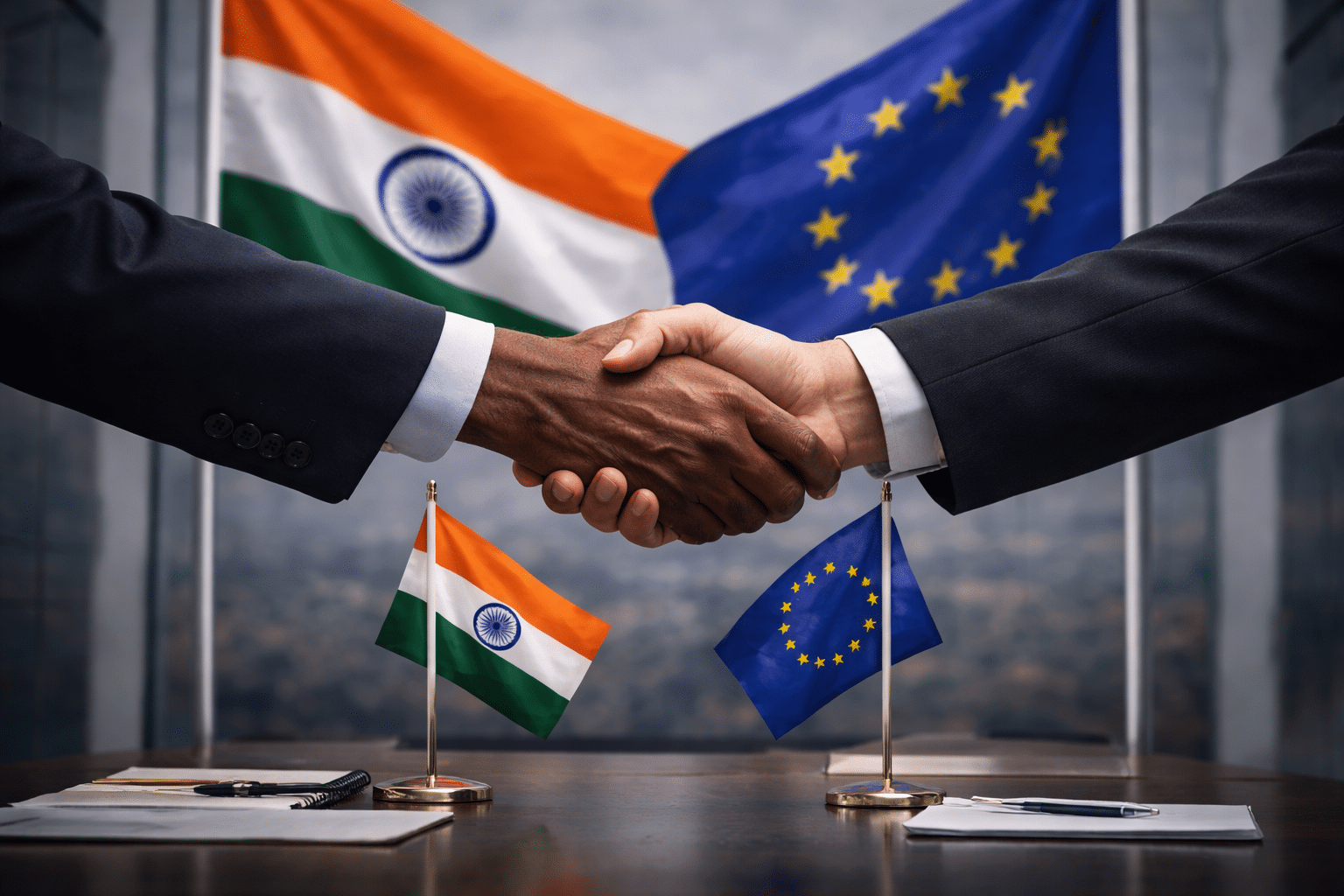
The European Union and India have finalized a landmark free trade agreement that significantly deepens economic ties between two of the world’s largest democracies. Coming at a time when global trade is increasingly shaped by tariffs, sanctions, and strategic rivalries, the deal represents a decisive move toward openness and long-term growth. For both sides, it is as much an economic pact as it is a geopolitical signal about the value of rules-based cooperation.
A Market of Unprecedented Scale
The agreement brings together the European Union and India into a free trade zone encompassing nearly two billion people. In economic terms, it links advanced European manufacturing and services with one of the fastest-growing major economies in the world. For Brussels, India offers scale, demographics, and growth momentum. For New Delhi, Europe provides technology, capital, and stable access to a high-income consumer base.
European Commission President Ursula von der Leyen described the agreement as historic, emphasizing that cooperation between large democracies can still deliver tangible economic gains. That framing matters, as the deal arrives amid a global backdrop of rising trade barriers and regional fragmentation.
Tariff Cuts Drive Industrial Opportunity
At the core of the agreement lies a dramatic reduction in tariffs. India will eliminate or reduce duties on more than 96% of EU goods exports, while the EU will liberalize almost all tariff lines on Indian imports over a multi-year transition period. This is particularly significant given that India’s average industrial tariffs are among the highest of any major economy.
European capital-intensive industries stand to benefit most. Machinery, electrical equipment, chemicals, pharmaceuticals, and aerospace products will gain progressively freer access to the Indian market, improving competitiveness and pricing power. The automotive sector is a notable winner, with Indian car tariffs falling sharply from triple-digit levels, albeit within quota limits. For European manufacturers, this opens the door to sustained participation in the world’s fastest-growing large auto market.
Jobs, Services, and Supply Chains
Trade between Europe and India already supports hundreds of thousands of jobs across the EU, particularly in manufacturing and services. As tariff barriers fall and trade volumes expand, employment effects are expected to ripple through supply chains, logistics, finance, and professional services. Services trade, often overlooked in tariff-focused discussions, is also set to deepen, reinforcing Europe’s strengths in engineering, consulting, and digital solutions.
From a strategic perspective, the deal enhances supply-chain diversification. For European firms seeking to reduce overreliance on single manufacturing hubs, India offers scale and resilience, while remaining politically aligned with democratic norms.
Agri-Food Access and Consumer Growth
Agriculture has long been a sensitive issue, but the agreement delivers meaningful breakthroughs. High Indian tariffs that previously limited European agri-food exports will be substantially reduced, allowing products such as wine, spirits, olive oil, and specialty foods to reach India’s expanding middle class. While volumes may grow gradually, the long-term potential is significant as consumer preferences evolve alongside income growth.
Looking Ahead
The EU–India free trade agreement is a long-term bet on growth, resilience, and strategic alignment. Its success will depend on execution, regulatory cooperation, and how quickly businesses adapt to new opportunities. In a world marked by uncertainty and protectionism, the deal stands out as a rare example of large-scale economic integration moving forward rather than backward.
Comparison, examination, and analysis between investment houses
Leave your details, and an expert from our team will get back to you as soon as possible
* This article, in whole or in part, does not contain any promise of investment returns, nor does it constitute professional advice to make investments in any particular field.
To read more about the full disclaimer, click here
- Lior mor
- •
- 6 Min Read
- •
- ago 5 hours
SKN | US Energy Independence or Market Illusion? Why Global Oil Dynamics Still Matter
Recent remarks suggesting that the United States is “totally independent of the Middle East” have reignited debate over the
- ago 5 hours
- •
- 6 Min Read

Recent remarks suggesting that the United States is “totally independent of the Middle East” have reignited debate over the

- sagi habasov
- •
- 9 Min Read
- •
- ago 12 hours
SKN | Is “Mild Stagflation” the New Reality as Oil Stays Near $100 Amid Iran War Disruptions?
Bank of America has sharply revised its global economic outlook, warning that the ongoing Iran conflict is driving a “mild
- ago 12 hours
- •
- 9 Min Read
Bank of America has sharply revised its global economic outlook, warning that the ongoing Iran conflict is driving a “mild

- omer bar
- •
- 6 Min Read
- •
- ago 17 hours
SKN | Australia Extends $693 Million in Low-Cost Loans to Businesses to Ease Fuel Price Pressures
Amid rising fuel prices and supply constraints, the Australian government has introduced a $693 million low-interest loan program for businesses.
- ago 17 hours
- •
- 6 Min Read
Amid rising fuel prices and supply constraints, the Australian government has introduced a $693 million low-interest loan program for businesses.

- Ronny Mor
- •
- 8 Min Read
- •
- ago 21 hours
SKN | Is the Federal Reserve Preparing for Policy Whiplash as Inflation and Labor Risks Collide?
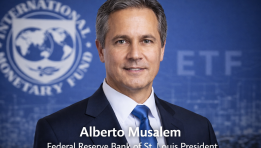
Fed Signals Strategic Flexibility Amid Rising Uncertainty Federal Reserve Bank of St. Louis President Alberto Musalem has reinforced a critical
- ago 21 hours
- •
- 8 Min Read
Fed Signals Strategic Flexibility Amid Rising Uncertainty Federal Reserve Bank of St. Louis President Alberto Musalem has reinforced a critical

