





- Ronny Mor
- •
- 8 Min Read
- •
- 7 hours ago
Key Points
- Elon Musk believes SpaceX could generate $1 trillion in annual revenue by 2030, a target far above current Wall Street forecasts.
- Analysts project SpaceX revenue between $330 billion and $470 billion by the end of the decade, well below Musk’s estimate.
- Artificial intelligence leaders such as Nvidia may have a more realistic path toward reaching the $1 trillion revenue milestone first.
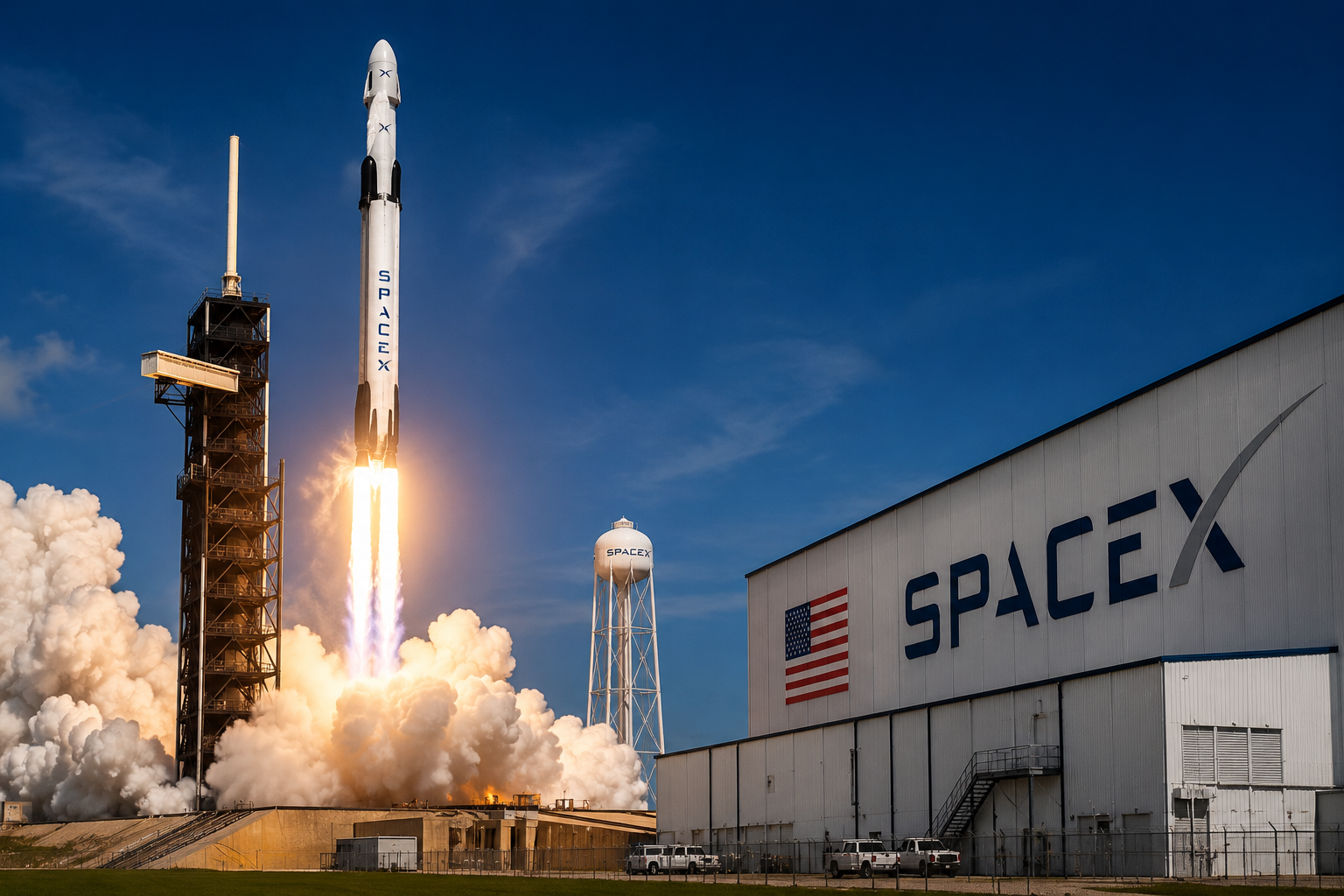
Elon Musk has never been known for setting modest goals, and his latest forecast for SpaceX is no exception. Following the company’s historic initial public offering, which valued the aerospace and technology giant at approximately $2.66 trillion, Musk stated that SpaceX could generate $1 trillion in annual revenue by 2030. The projection immediately captured Wall Street’s attention, not only because of its sheer scale but also because it would represent one of the fastest revenue expansions in corporate history. While investors remain enthusiastic about SpaceX’s long-term opportunities, many analysts believe that another technology leader—particularly in artificial intelligence—may be better positioned to reach that milestone first.
SpaceX’s Growth Story Continues to Accelerate
SpaceX has transformed from a private aerospace startup into one of the world’s most valuable publicly traded companies. The company generated approximately $18.7 billion in revenue during 2025, representing annual growth of roughly 33%. Its business model spans multiple high-growth segments, including commercial rocket launches, satellite deployment services, defense contracts, and the rapidly expanding Starlink satellite internet network.
The long-term opportunity remains significant. Starlink continues expanding globally, while reusable rocket technology has dramatically lowered launch costs and strengthened SpaceX’s competitive advantage. The company’s growing artificial intelligence initiatives and investments in next-generation space infrastructure could create additional revenue streams throughout the decade.
However, scaling from less than $20 billion in annual revenue to $1 trillion within five years would require an unprecedented growth trajectory that few companies have ever achieved.
Wall Street Remains More Conservative Than Musk
While investors often admire Musk’s ambitious vision, major financial institutions are taking a more measured approach. Morgan Stanley projects SpaceX revenue reaching approximately $330 billion by 2030, while Goldman Sachs estimates revenue could approach $470 billion by the end of the decade.
Even these forecasts represent extraordinary growth and would position SpaceX among the largest companies in the world. Yet they remain substantially below Musk’s $1 trillion target. The gap reflects the practical challenges associated with scaling infrastructure, expanding global operations, and commercializing emerging technologies within a relatively short timeframe.
Investors must also consider the significant capital expenditures required to support SpaceX’s ambitions. Continued investments in satellite networks, launch facilities, artificial intelligence infrastructure, and future space exploration projects could place pressure on profitability even as revenue expands rapidly.
Why Nvidia May Reach the Goal First
While SpaceX pursues long-term opportunities in aerospace and connectivity, Nvidia continues benefiting from one of the most powerful technology cycles in modern history. The artificial intelligence revolution has created unprecedented demand for advanced computing infrastructure, positioning Nvidia at the center of global AI development.
Recent comments from Nvidia leadership suggest the company already has visibility into more than $1 trillion in combined Blackwell and Rubin platform demand through 2027. Unlike SpaceX, Nvidia operates in a market where enterprise adoption can scale rapidly without requiring the same level of physical infrastructure expansion.
As AI becomes increasingly integrated across industries ranging from healthcare and finance to manufacturing and autonomous systems, Nvidia’s revenue trajectory may prove more scalable and predictable than aerospace-driven growth models.
What Investors Should Watch Going Forward
The debate over which company could become the first to generate $1 trillion in annual revenue highlights the extraordinary opportunities emerging from both artificial intelligence and space technology. SpaceX possesses unique assets, powerful competitive advantages, and visionary leadership capable of delivering exceptional long-term growth. However, achieving Musk’s target will require sustained execution across multiple businesses simultaneously.
Meanwhile, Nvidia and other AI infrastructure leaders continue benefiting from accelerating global investment in computing power. Investors should closely monitor revenue growth rates, capital spending requirements, and market adoption trends in both sectors. Whether the future belongs first to artificial intelligence or space technology, the race toward the trillion-dollar revenue milestone is likely to become one of the defining corporate stories of the decade.
Comparison, examination, and analysis between investment houses
Leave your details, and an expert from our team will get back to you as soon as possible
* This article, in whole or in part, does not contain any promise of investment returns, nor does it constitute professional advice to make investments in any particular field.
To read more about the full disclaimer, click here
- Ronny Mor
- •
- 7 Min Read
- •
- ago 6 hours
SKN | Could Sandisk Deliver More Upside Than Micron as AI Memory Demand Accelerates?
The artificial intelligence revolution continues to reshape the semiconductor industry, creating enormous opportunities for memory chip manufacturers. While Micron Technology
- ago 6 hours
- •
- 7 Min Read

The artificial intelligence revolution continues to reshape the semiconductor industry, creating enormous opportunities for memory chip manufacturers. While Micron Technology

- omer bar
- •
- 7 Min Read
- •
- ago 8 hours
SKN | Whirlpool Earnings Highlight Diverging Trends in Consumer Appliances vs Electrical Systems Peers
The latest earnings season for industrial and consumer discretionary stocks has revealed a growing divergence between companies exposed to
- ago 8 hours
- •
- 7 Min Read

The latest earnings season for industrial and consumer discretionary stocks has revealed a growing divergence between companies exposed to
- Ronny Mor
- •
- 7 Min Read
- •
- ago 8 hours
SKN | Renewable Energy Stocks Face Mixed Q1 Signals as First Solar Sets the Benchmark
The renewable energy sector entered the latest earnings season under heightened scrutiny as investors evaluated whether strong long-term demand trends
- ago 8 hours
- •
- 7 Min Read

The renewable energy sector entered the latest earnings season under heightened scrutiny as investors evaluated whether strong long-term demand trends

- sagi habasov
- •
- 7 Min Read
- •
- ago 11 hours
SKN | Warner Bros Discovery Earnings Reveal Structural Pressures in Streaming and Media Transformation
Warner Bros Discovery reported its latest quarterly results amid a broader reassessment of the media and entertainment sector, where
- ago 11 hours
- •
- 7 Min Read
Warner Bros Discovery reported its latest quarterly results amid a broader reassessment of the media and entertainment sector, where


