


- Lior mor
- •
- 7 Min Read
- •
- 18 seconds ago
Key Points
- Kia plans to enter the U.S. pickup segment with a midsize, hybrid-focused truck by 2030.
- The move targets a highly profitable market dominated by legacy American automakers.
- Success will depend on differentiation, pricing, and shifting consumer demand toward electrification.
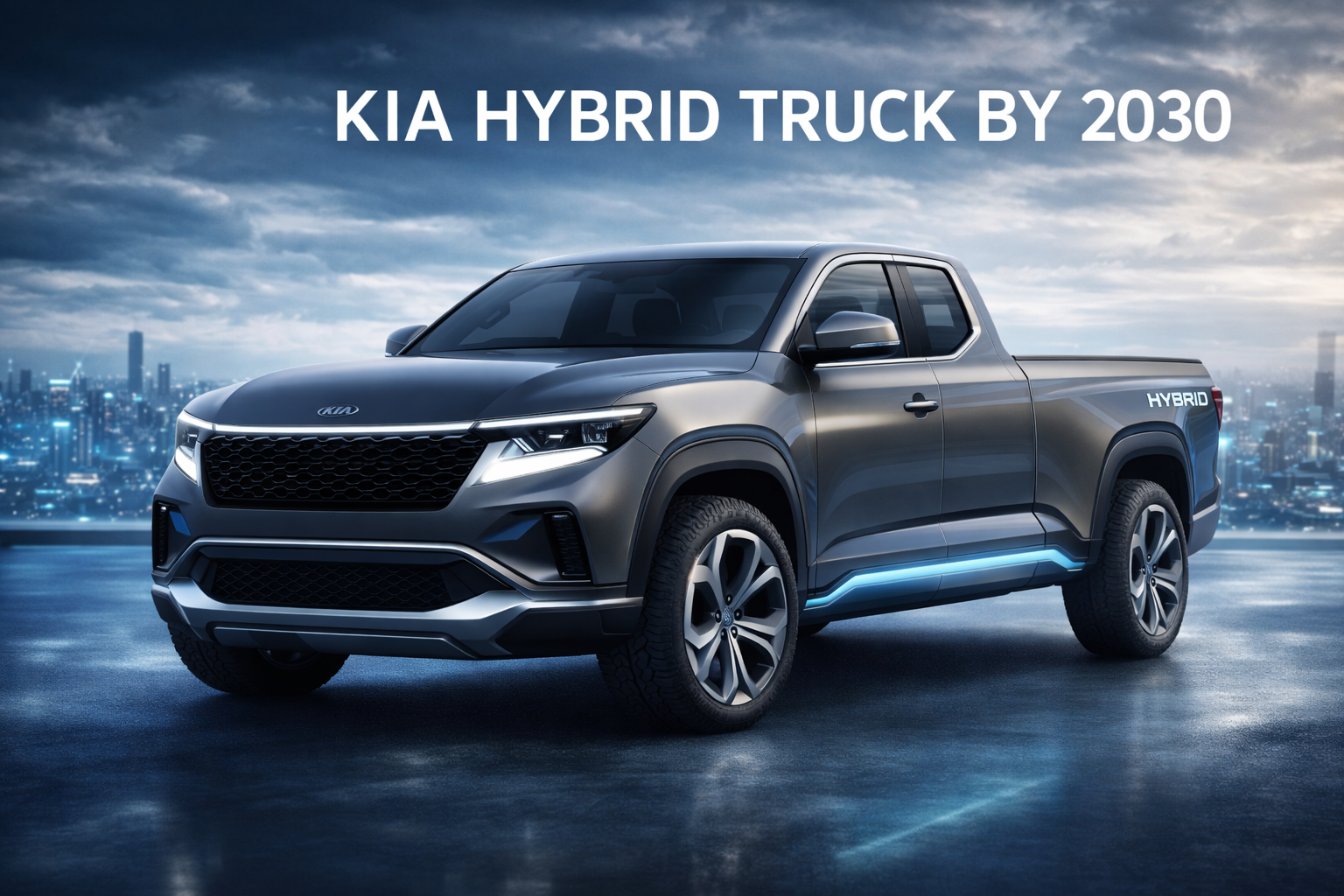
Kia’s announcement that it will launch a U.S.-focused pickup truck by 2030 marks a significant strategic pivot as the automaker seeks to expand its footprint in one of the most competitive and lucrative segments in the automotive industry. With pickup trucks accounting for roughly 20% of total U.S. vehicle demand, the move signals Kia’s ambition to evolve beyond its traditional passenger vehicle lineup and capture higher-margin opportunities in North America.
Targeting a High-Stakes, High-Margin Segment
The U.S. pickup market has long been dominated by established players such as Ford Motor Company, General Motors, and Stellantis, whose full-size trucks generate substantial profits and brand loyalty. Rather than competing directly in this entrenched segment, Kia appears to be taking a more strategic approach by targeting the midsize category.
This positions the company against models like the Toyota Tacoma, Ford Ranger, and Chevrolet Colorado—a segment that has seen renewed growth due to affordability and practicality. By focusing on this space, Kia can avoid head-to-head competition with the most dominant full-size trucks while still tapping into strong demand.
Hybrid Strategy Reflects Changing Consumer Trends
A key differentiator in Kia’s approach is its emphasis on hybrid variants, with at least one version expected to be produced in the United States. This aligns with broader industry trends, as automakers increasingly shift toward electrification to meet regulatory requirements and evolving consumer preferences.
Hybrid pickups could offer a compelling value proposition: improved fuel efficiency without sacrificing the utility and range that traditional truck buyers expect. If executed effectively, this could allow Kia to carve out a niche among environmentally conscious consumers who are not yet ready to transition fully to electric vehicles.
However, the challenge lies in balancing innovation with the expectations of a customer base that has historically prioritized durability, towing capacity, and performance over efficiency.
Ambitious Growth Targets and Market Positioning
Kia’s pickup strategy is part of a broader growth plan that includes increasing U.S. sales to over 1 million units annually and expanding market share to 6.2% by 2030. The company is also targeting annual pickup sales of around 90,000 units in North America, aiming to capture approximately 7% of the midsize truck segment by the mid-2030s.
These targets reflect confidence in the brand’s ability to scale and compete in new categories. Kia’s recent entry into the global pickup market with its Tasman model suggests that the company is building the necessary expertise, though it remains unclear how much of that platform will carry over to the U.S.-specific version.
Execution Risks and Competitive Pressure
Despite the opportunity, Kia faces significant execution risks. The pickup market is not only highly competitive but also deeply entrenched in brand loyalty, particularly among American consumers. Breaking into this segment requires more than just a competitive product—it demands strong marketing, dealer support, and long-term credibility.
Pricing will also be critical. To gain traction, Kia may need to position its truck as a value-driven alternative while still delivering on performance expectations. Additionally, supply chain localization and U.S.-based production could play a key role in cost management and regulatory compliance.
Looking ahead, Kia’s success in the pickup segment will depend on its ability to differentiate through hybrid technology, competitive pricing, and brand positioning. If executed well, the move could unlock a significant new revenue stream. If not, it risks becoming another example of how difficult it is to disrupt one of America’s most competitive automotive markets.
Comparison, examination, and analysis between investment houses
Leave your details, and an expert from our team will get back to you as soon as possible
* This article, in whole or in part, does not contain any promise of investment returns, nor does it constitute professional advice to make investments in any particular field.
To read more about the full disclaimer, click here
- orshu
- •
- 6 Min Read
- •
- ago 22 hours
SKN | Plug Power Rebounds Sharply: Recovery Momentum or Persistent Risk in Hydrogen Stocks?
Plug Power Inc. (NASDAQ: PLUG) moved higher on April 08, closing at 2.65 after gaining 5.16%, reflecting renewed investor
- ago 22 hours
- •
- 6 Min Read
Plug Power Inc. (NASDAQ: PLUG) moved higher on April 08, closing at 2.65 after gaining 5.16%, reflecting renewed investor

- Ronny Mor
- •
- 6 Min Read
- •
- ago 1 day
SKN | Telecom Stocks Gain Safe-Haven Appeal as High Dividends Attract Investor Demand
Telecommunications stocks are regaining attention among global investors as a potential safe-haven play, driven by attractive dividend yields and
- ago 1 day
- •
- 6 Min Read

Telecommunications stocks are regaining attention among global investors as a potential safe-haven play, driven by attractive dividend yields and
- Ronny Mor
- •
- 10 Min Read
- •
- ago 1 day
SKN | Is General Mills Losing Its Defensive Edge—or Positioning for a Strategic Reset?
General Mills is facing a subtle but meaningful shift in its investment narrative, as analysts trim fair value estimates and
- ago 1 day
- •
- 10 Min Read

General Mills is facing a subtle but meaningful shift in its investment narrative, as analysts trim fair value estimates and

- Lior mor
- •
- 9 Min Read
- •
- ago 1 day
SKN | Is Macy’s Undervalued After Its Pullback—or Reflecting Deeper Retail Headwinds?
Macy's has entered a new phase of investor scrutiny following a sharp cooldown in momentum. Despite delivering an impressive nearly
- ago 1 day
- •
- 9 Min Read

Macy's has entered a new phase of investor scrutiny following a sharp cooldown in momentum. Despite delivering an impressive nearly

