





- orshu
- •
- 7 Min Read
- •
- 7 months ago
Key Points
- Bitcoin remains 28% below its all-time high as macro uncertainty, ETF inflow slowdowns, and regulatory pressures weigh on sentiment.

Bitcoin continues to trade well below its record peak, with the world’s largest cryptocurrency facing a trio of macro, liquidity, and regulatory challenges that have tempered the enthusiasm seen during earlier rallies. The latest slowdown comes as risk assets globally reassess valuations in response to higher-for-longer interest-rate expectations and shifting capital flows. For investors in Israel and worldwide, Bitcoin’s stagnation offers a window into how digital assets respond to evolving monetary dynamics and maturing market structures.
Macro headwinds: higher-for-longer rates reshape risk appetite
The Federal Reserve’s signaling that rate cuts may arrive later than markets expected has reduced appetite for speculative assets, including cryptocurrencies. Bitcoin historically performs well in easing cycles, when liquidity expands and investors seek alternatives to low-yielding traditional assets. But with U.S. Treasury yields still elevated and inflation not yet anchored at 2%, risk-sensitive assets remain vulnerable.
Equity volatility and shifting expectations in bond markets have added to the uncertainty. As institutional portfolios rebalance toward safer assets, exposure to crypto has become harder to justify in the near term. For Israeli investors — many of whom participate in global digital-asset funds — the macro backdrop reflects a broader recalibration across risk assets, from growth equities to emerging-market bonds.
ETF flows and liquidity pressures
Spot Bitcoin ETFs, launched to great anticipation, initially drove significant inflows and contributed to price momentum earlier in the year. However, recent weeks have shown a noticeable deceleration in ETF demand, with several funds experiencing muted net flows or small outflows. While overall ETF liquidity remains robust, the slowing pace indicates waning near-term enthusiasm among institutional allocators.
At the same time, crypto market liquidity has tightened. Order-book depth on major exchanges has fallen, leaving Bitcoin more susceptible to sharp swings when large trades occur. Lower liquidity also affects market-making activity and increases the cost of entering or exiting large positions. This environment discourages institutional traders seeking predictable execution conditions, further reinforcing the slowdown in ETF-driven participation.
Regulatory uncertainty continues to cloud sentiment
Ongoing global regulatory actions — from U.S. enforcement activity to new EU and Asian compliance frameworks — are shaping investor behavior. While some rules aim to provide clarity, the fragmented pace of implementation has created pockets of uncertainty. In the United States, debates over custody rules, stablecoin oversight, and exchange supervision continue to deter certain institutional investors.
Outside the U.S., jurisdictions such as the U.K., Singapore, and the EU are rolling out more structured regulatory regimes, but differences in supervision could lead to market fragmentation. For Israel, where the digital-asset regulatory roadmap is still evolving, global developments influence how domestic institutions assess exposure to crypto-related instruments and infrastructure firms.
Looking ahead, Bitcoin’s trajectory will hinge on several key signals: the Fed’s policy path, the pace of ETF flows, and the clarity emerging from global regulatory frameworks. Should liquidity improve and macro conditions ease, digital assets could regain momentum. But until these headwinds subside, Bitcoin is likely to remain sensitive to macro data releases, treasury yield moves, and shifts in institutional participation — keeping volatility elevated as markets navigate the next phase of digital-asset maturation.
Comparison, examination, and analysis between investment houses
Leave your details, and an expert from our team will get back to you as soon as possible
* This article, in whole or in part, does not contain any promise of investment returns, nor does it constitute professional advice to make investments in any particular field.
To read more about the full disclaimer, click here
- omer bar
- •
- 6 Min Read
- •
- ago 3 hours
SKN | TA 35 Index Eases Below 4,150 as Large-Cap Consolidation Signals Caution Amid Macro Realignment
The TA 35 Index delivered a weaker week of overall performance, declining roughly 4.59% to settle near 4,144.01. The
- ago 3 hours
- •
- 6 Min Read

The TA 35 Index delivered a weaker week of overall performance, declining roughly 4.59% to settle near 4,144.01. The

- Lior mor
- •
- 7 Min Read
- •
- ago 3 hours
SKN | TA 125 Index Eases Below 4,100 as Blue-Chip Consolidation Tests Key Support Levels
The TA 125 Index delivered a weaker week of overall performance, declining roughly 4.91% to finish near 4,081.52. The
- ago 3 hours
- •
- 7 Min Read
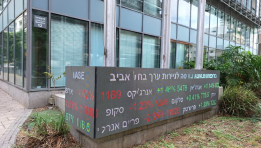
The TA 125 Index delivered a weaker week of overall performance, declining roughly 4.91% to finish near 4,081.52. The

- Arik Arkadi Sluzki
- •
- 7 Min Read
- •
- ago 4 hours
SKN | TA-RealEstate Index Slips Below 1,470 as Israeli Property Sector Faces Weekly Correction
The TA-RealEstate Index delivered a weaker week of performance, declining roughly 5.86% and ending near 1,461.69. The move reinforces
- ago 4 hours
- •
- 7 Min Read

The TA-RealEstate Index delivered a weaker week of performance, declining roughly 5.86% and ending near 1,461.69. The move reinforces

- sagi habasov
- •
- 7 Min Read
- •
- ago 5 hours
SKN | TA Banks 5 Index Slips Below 7,700 as Israeli Banking Sector Faces Weekly Correction
The TA Banks 5 Index delivered a weaker week of performance, declining roughly 4.51% and ending near 7,618.56. The
- ago 5 hours
- •
- 7 Min Read

The TA Banks 5 Index delivered a weaker week of performance, declining roughly 4.51% and ending near 7,618.56. The


