


- Lior mor
- •
- 9 Min Read
- •
- 6 minutes ago
Key Points
- South Korea’s KOSPI and Japan’s Nikkei 225 lead gains during the Asian morning session on April 6.
- Mainland China and Hong Kong markets face pressure and holiday-related disruptions tied to the Ching Ming Festival.
- Several regional exchanges, including Israel, Taiwan, and Thailand, operate under holiday schedules impacting liquidity across Asia-Pacific markets.

Asian equity markets opened the week with mixed performance on Monday, April 6, as investors navigated divergent regional trends and widespread holiday closures across several financial centers. Early gains in South Korea and Japan helped support broader market sentiment, while declines in mainland China, Hong Kong, and Australia highlighted ongoing caution among investors assessing economic signals and currency movements.
The Asian morning session is unfolding against a backdrop of reduced trading volumes in parts of the region due to multiple national holidays, which are influencing liquidity and price volatility across several major exchanges.
Japan and South Korea Drive Early Gains
Japan and South Korea emerged as the strongest performers in early Asian trading, providing stability for regional equity markets. South Korea’s KOSPI Composite Index climbed 1.46 percent to 5,455.60, making it the top-performing major index during the morning session. Gains were supported primarily by semiconductor manufacturers and technology companies, sectors that continue to benefit from global demand linked to artificial intelligence infrastructure and next-generation electronics.
Japan’s Nikkei 225 followed with a solid advance of 0.94 percent to 53,625.01. Investor demand centered on export-oriented industries including automotive manufacturers, industrial conglomerates, and electronics firms. Expectations of continued global demand, combined with a relatively supportive currency environment, helped maintain positive sentiment toward Japanese equities.
Currency markets reflected modest weakness in the Japanese yen. The Japanese Yen Index declined 0.48 percent to 62.66, a move that often supports Japan’s export-heavy corporate sector by improving international price competitiveness. For investors, the currency environment remains a key factor influencing earnings projections for many Japanese multinational companies.
China and Hong Kong Under Pressure Amid Holiday Effects
Mainland Chinese and Hong Kong equities moved lower during the morning session, with both markets facing additional disruption due to the Ching Ming Festival holiday period.
China’s SSE Composite Index declined 1.00 percent to 3,880.10 as investors continued to evaluate the pace of economic recovery and policy developments. Market sentiment remains cautious as participants look for stronger signals of sustained growth in manufacturing, consumption, and the property sector.
Hong Kong’s Hang Seng Index also fell, slipping 0.70 percent to 25,116.53. The market’s sensitivity to global capital flows and investor sentiment toward Chinese technology and financial companies contributed to the decline.
Several regional markets are affected by holiday closures or limited trading schedules. China’s Shanghai Stock Exchange and Shenzhen Stock Exchange, along with the Hong Kong Stock Exchange, are observing the Ching Ming Festival. Taiwan’s Taiwan Stock Exchange is closed for Tomb Sweeping Day, while Thailand’s Stock Exchange of Thailand is closed for Chakri Day.
In the Middle East, Israel’s Tel Aviv Stock Exchange will operate with an early close at 14:30 local time due to the Passover holiday, while Lebanon’s Beirut Stock Exchange remains closed for Easter.
Australia and India Reflect Diverging Market Sentiment
Elsewhere in the region, markets displayed a mixed performance reflecting varied economic drivers. Australia’s S&P/ASX 200 fell 1.06 percent to 8,579.50, weighed down by declines in mining, financial, and energy stocks. Commodity-linked companies often respond quickly to shifts in global resource demand, making the Australian market particularly sensitive to international growth expectations.
The Australian Dollar Index also weakened, falling 0.35 percent to 69.04. Currency fluctuations remain closely tied to commodity price trends and global trade expectations, both of which continue to shape investor sentiment toward Australian assets.
India’s S&P BSE SENSEX provided a contrast, rising 0.25 percent to 73,319.55. The modest gain reflects continued confidence in India’s domestic growth story, which is supported by strong consumer demand, infrastructure expansion, and steady foreign investment inflows. Many global investors increasingly view India as one of Asia’s most resilient long-term growth markets.
Meanwhile, markets in Oceania are also affected by holiday schedules. Australia’s Sydney Stock Exchange and the New Zealand Exchange are observing Easter-related closures, contributing to thinner liquidity across the broader Asia-Pacific region.
Outlook: Investors Watch Liquidity, Currency Trends, and Regional Growth Signals
As trading continues across Asia on April 6, investors are likely to focus on whether the strength seen in Japan and South Korea can offset weakness in other regional markets. Holiday-related closures across China, Hong Kong, Taiwan, Thailand, and Oceania may continue to limit liquidity, potentially amplifying short-term price swings in active markets.
Currency movements, particularly involving the Japanese yen and the Australian dollar, will remain important indicators for investors evaluating export competitiveness and global capital flows. At the same time, market participants will closely monitor economic data releases, corporate earnings expectations, and policy developments that could influence regional growth trajectories.
For global and Israeli investors tracking Asian markets, the current environment presents a complex mix of opportunities and risks. Continued strength in technology-driven economies could attract further capital inflows, while stabilization in Chinese equities may play a critical role in determining whether broader Asian markets regain stronger upward momentum in the coming sessions.
Comparison, examination, and analysis between investment houses
Leave your details, and an expert from our team will get back to you as soon as possible
* This article, in whole or in part, does not contain any promise of investment returns, nor does it constitute professional advice to make investments in any particular field.
To read more about the full disclaimer, click here
- Arik Arkadi Sluzki
- •
- 6 Min Read
- •
- ago 12 hours
SKN | TA-35 Executes a 2.20% Friday Surge to Reclaim 4,180 Level Following Early-Week Market Consolidation
The Tel Aviv Stock Exchange witnessed acute price action this week as the flagship TA-35 Index absorbed significant early-week
- ago 12 hours
- •
- 6 Min Read
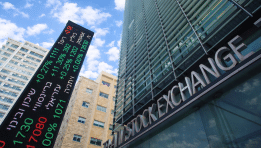
The Tel Aviv Stock Exchange witnessed acute price action this week as the flagship TA-35 Index absorbed significant early-week

- sagi habasov
- •
- 6 Min Read
- •
- ago 13 hours
SKN | TA-125 Orchestrates a Powerful 2.27% Rebound to Reclaim 4,100 Amid Mid-Week Volatility
The Tel Aviv Stock Exchange witnessed acute price action this week as the TA-125 Index absorbed heavy early-week distribution
- ago 13 hours
- •
- 6 Min Read

The Tel Aviv Stock Exchange witnessed acute price action this week as the TA-125 Index absorbed heavy early-week distribution

- orshu
- •
- 6 Min Read
- •
- ago 14 hours
SKN | TA-RealEstate Index Breaches 1,500 Mark Amid Strong Weekly Recovery and Renewed Investor Confidence
The Israeli real estate sector demonstrated remarkable technical resilience this week as the TA-RealEstate Index engineered a robust recovery
- ago 14 hours
- •
- 6 Min Read

The Israeli real estate sector demonstrated remarkable technical resilience this week as the TA-RealEstate Index engineered a robust recovery

- Ronny Mor
- •
- 7 Min Read
- •
- ago 15 hours
SKN | TA Banks 5 Index Secures a Resilient 0.88% Weekly Advance Driven by a Powerful 1.54% Friday Surge
The Israeli financial sector demonstrated notable structural fortitude this week as the TA Banks 5 Index engineered a robust
- ago 15 hours
- •
- 7 Min Read

The Israeli financial sector demonstrated notable structural fortitude this week as the TA Banks 5 Index engineered a robust

