


- Lior mor
- •
- 9 Min Read
- •
- 4 hours ago
Key Points
- South Korea’s KOSPI and Japan’s Nikkei 225 lead gains in Friday’s Asian morning session, signaling resilience in regional equity sentiment.
- Chinese and Hong Kong markets trade lower, reflecting cautious positioning from investors as regional momentum softens.
- Currency markets show mixed signals, with the Australian dollar strengthening while the Japanese yen weakens slightly.

Asian equity markets opened Friday, April 10 with mixed performance across the region as investors navigated diverging economic signals and shifting global risk sentiment during the morning trading session. Gains in South Korea and Japan provided support to regional markets, while China, Hong Kong, and India traded lower as investors reassessed recent rallies and adjusted positions ahead of the weekend.
The mixed start reflects ongoing uncertainty about the strength of global economic momentum and the pace of recovery across Asia’s major economies. At the same time, currency movements and regional holidays are also influencing market participation during the session.
South Korea and Japan Lead Regional Gains
South Korea’s KOSPI Composite Index emerged as one of the top performers in Asia’s Friday morning session, rising 1.74 percent to 5,878.81. The strong advance highlights continued investor interest in South Korea’s technology-heavy market, particularly companies tied to semiconductors, artificial intelligence infrastructure, and advanced electronics manufacturing.
Global demand for semiconductor components remains a key driver of South Korea’s equity performance. Investors continue to view the country’s leading technology firms as critical participants in the global AI supply chain, which has fueled steady capital inflows into Korean equities throughout the year.
Japan’s Nikkei 225 also recorded solid gains, climbing 1.48 percent to 56,721.87 during the morning session. Japanese equities continue to benefit from strong corporate earnings momentum and a relatively stable macroeconomic environment compared with other major developed markets.
Investor sentiment toward Japanese stocks has also been supported by ongoing corporate governance reforms and increasing shareholder returns. These structural changes have helped attract foreign institutional investors seeking exposure to Asia’s developed markets.
China and Hong Kong Trade Lower as Momentum Softens
Despite the strength seen in Japan and South Korea, mainland Chinese and Hong Kong equities traded lower during Friday’s session. The SSE Composite Index declined 0.72 percent to 3,966.17, reflecting cautious investor sentiment toward China’s near-term economic outlook.
Market participants continue to monitor signals from Beijing regarding potential policy measures aimed at supporting economic growth. Concerns about the pace of China’s recovery, particularly in property markets and consumer demand, have contributed to the cautious tone seen in Chinese equities.
Hong Kong’s Hang Seng Index also moved lower, falling 0.54 percent to 25,752.40. The decline reflects profit-taking following recent gains and continued sensitivity to developments in mainland China’s economic policy environment.
Indian markets also experienced modest pressure during the morning session. The S&P BSE SENSEX slipped 1.20 percent to 76,631.65 as investors reassessed recent market strength and locked in profits after strong performance earlier in the week.
Regional trading activity may also be influenced by holiday-related closures. The Cyprus Stock Exchange is observing Orthodox Good Friday, while the Lebanon Beirut Stock Exchange is also closed for Orthodox Good Friday. These holidays can slightly reduce overall trading volumes across certain regional markets.
Currency Movements Reflect Diverging Regional Signals
Currency markets presented mixed signals during the Asian morning session. The Australian Dollar Index rose 0.56 percent to 70.83, reflecting improving sentiment toward Australia’s export-oriented economy and its exposure to global commodity demand.
Australia’s economy remains closely linked to commodity exports such as iron ore and liquefied natural gas. Strength in the Australian dollar often reflects expectations for stronger global industrial activity and sustained infrastructure investment.
Meanwhile, the Japanese Yen Index slipped 0.23 percent to 62.90, indicating modest weakness in the currency. Movements in the yen can influence international investor flows into Japanese equities and shape broader regional capital allocation trends.
In Australia’s equity market, the S&P/ASX 200 traded slightly lower, declining 0.42 percent to 8,935.20. The modest pullback suggests cautious positioning among investors as they monitor commodity price movements and global economic signals.
Outlook: Investors Watch Economic Data and Regional Market Momentum
As the Asian trading day progresses on April 10, investors will closely monitor whether the strength seen in South Korean and Japanese equities can offset weakness in China, Hong Kong, and India. The balance between developed and emerging Asian markets may play a key role in shaping broader regional sentiment in the coming sessions.
Currency movements, particularly the performance of the Australian dollar and Japanese yen, will remain important indicators for export competitiveness and capital flows. Investors will also watch for new economic data releases from major Asian economies that could influence expectations for growth and monetary policy.
Looking ahead, market participants are likely to focus on corporate earnings developments, potential policy signals from Beijing, and global demand trends tied to technology and commodities. For global and Israeli investors tracking Asian markets, the current mixed performance highlights both opportunities for diversification and the importance of monitoring volatility as regional markets navigate shifting economic conditions.
Comparison, examination, and analysis between investment houses
Leave your details, and an expert from our team will get back to you as soon as possible
* This article, in whole or in part, does not contain any promise of investment returns, nor does it constitute professional advice to make investments in any particular field.
To read more about the full disclaimer, click here
- orshu
- •
- 7 Min Read
- •
- ago 1 hour
SKN | Global Markets Recap: April 9, 2026 Performance and April 10, 2026 Outlook as Liquidity Conditions Normalize Across Regions
Global financial markets closed the April 9, 2026 session with a broadly positive tone, driven by resilient U.S. equity performance
- ago 1 hour
- •
- 7 Min Read

Global financial markets closed the April 9, 2026 session with a broadly positive tone, driven by resilient U.S. equity performance

- Arik Arkadi Sluzki
- •
- 6 Min Read
- •
- ago 8 hours
SKN | Lucid Diagnostics Heads to Needham Conference—Can Strategic Visibility Drive Market Momentum?
Lucid Diagnostics Inc. is set to participate in a fireside chat at the 25th Annual Needham Virtual Healthcare Conference,
- ago 8 hours
- •
- 6 Min Read

Lucid Diagnostics Inc. is set to participate in a fireside chat at the 25th Annual Needham Virtual Healthcare Conference,

- omer bar
- •
- 7 Min Read
- •
- ago 13 hours
SKN | Israel Market Close – April 9, 2026: Tel Aviv Surges Over 2% as Broad Rally Accelerates Post-Holiday Momentum
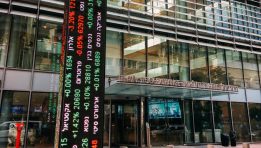
Israeli financial markets closed sharply higher on April 9, 2026, extending gains following the Passover holiday break. The rally was
- ago 13 hours
- •
- 7 Min Read
Israeli financial markets closed sharply higher on April 9, 2026, extending gains following the Passover holiday break. The rally was
- orshu
- •
- 5 Min Read
- •
- ago 16 hours
SKN | US Markets Open Mixed as Dollar Weakens and Small Caps Lag on April 09
US markets opened on April 09 with a mixed tone, as investors navigated ongoing macroeconomic uncertainty and shifting expectations
- ago 16 hours
- •
- 5 Min Read

US markets opened on April 09 with a mixed tone, as investors navigated ongoing macroeconomic uncertainty and shifting expectations

