




- Ramil
- •
- 8 Min Read
- •
- 6 hours ago


Key Points
- A Brookings analysis estimates that U.S. AI infrastructure investment could reach $10.3 trillion between 2025 and 2032, equivalent to an average of 3.63% of GDP annually.
- The research warns that financing is increasingly moving toward off-balance-sheet structures, including joint ventures, private credit, securitization, leases and special-purpose vehicles.
- Data center development is also facing power, permitting, tax and community constraints, potentially affecting the pace and economics of the AI infrastructure expansion.
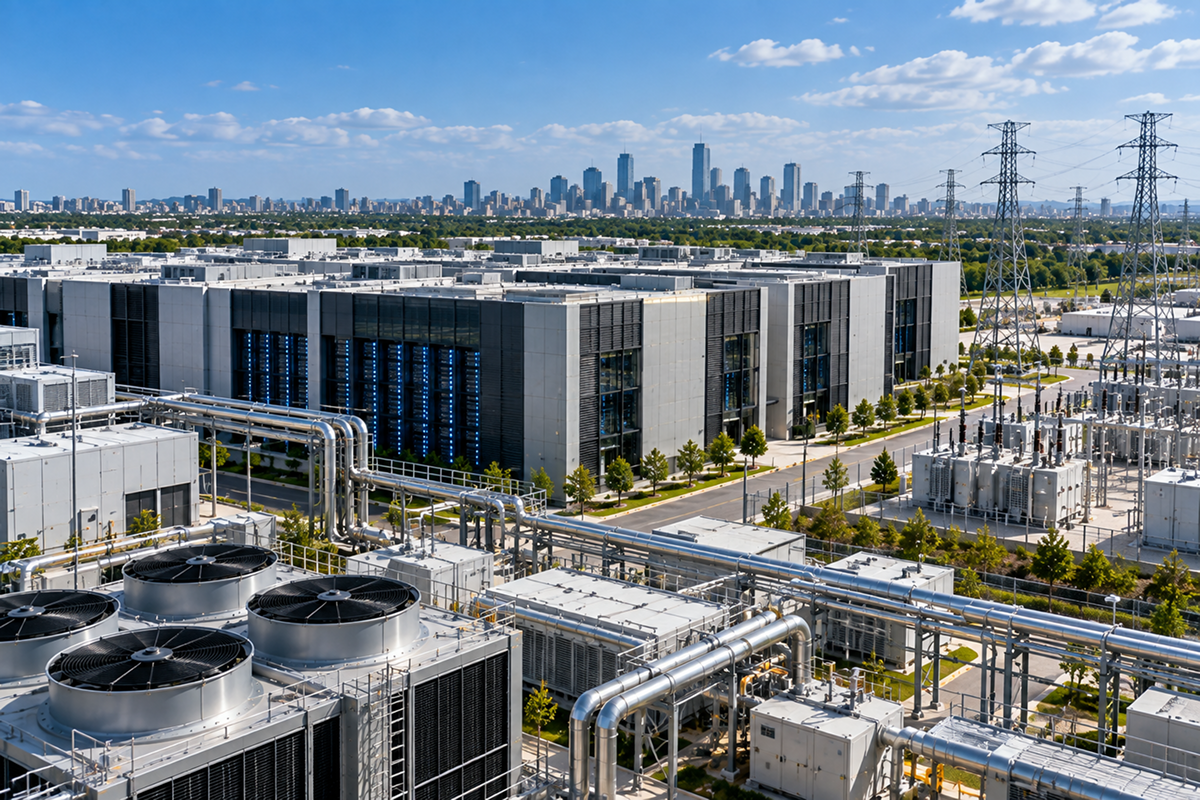
The scale of the U.S. artificial intelligence infrastructure buildout is reaching a level that could reshape capital markets, energy demand and commercial real estate. A new Brookings analysis estimates that investment in data centers, power systems, networking infrastructure, specialized chips and related equipment could total $10.3 trillion from 2025 through 2032, creating a financing and infrastructure challenge alongside the opportunities associated with AI adoption.
A $10.3 Trillion Infrastructure Cycle
The Brookings research, authored by Columbia University economist Stijn Van Nieuwerburgh, estimates that the projected AI infrastructure investment would average approximately 3.63% of U.S. GDP per year through 2032. The study says the projected buildout would be larger relative to the economy than several historic U.S. infrastructure investment periods, including electrification, railroads, highways and telecommunications.
The spending encompasses far more than the construction of data center buildings. AI infrastructure requires advanced processors, networking equipment, electricity generation and transmission, cooling systems and other specialized hardware. That creates a broad economic footprint extending beyond major technology companies into semiconductor manufacturing, utilities, construction, engineering, industrial equipment and commercial property markets.
Financing Is Becoming More Complex
The central concern identified by the Brookings paper is not simply the size of the investment, but how the expansion is being financed. The research argues that risks are increasingly moving from relatively transparent corporate balance sheets toward off-balance-sheet financing structures, including joint ventures, private credit, securitization, special-purpose vehicles, lease commitments and loan guarantees.
These structures can allow infrastructure investment to expand without all of the associated obligations appearing directly on the balance sheets of the largest technology companies. However, the underlying economics can remain linked to a relatively concentrated group of AI companies and data center tenants. The Brookings analysis identifies uncertain AI demand, rapid technological change, access to power and hardware, and tenant credit quality as factors that could influence the value of these assets and the ability to service related financing.
The research does not conclude that AI infrastructure has already created a systemic financial risk comparable to previous credit booms. Instead, it argues that increasingly complex financing structures could make correlated exposures more difficult to identify before a downturn, increasing the importance of transparency as the market develops.
Power and Local Resistance Could Limit Expansion
Financing is only one constraint. Data center developers are also confronting electricity availability, grid capacity, water use, permitting and local opposition. Reuters reported that Texas recently halted new state-issued data center permits while officials review the facilities’ impact on the electricity grid, highlighting how power availability is becoming a strategic constraint for AI infrastructure.
Local opposition is also affecting individual projects. Research tracking U.S. developments has documented projects being withdrawn, denied or delayed following concerns over electricity demand, water consumption, land use and infrastructure costs. At the same time, major technology companies continue to pursue large-scale capacity expansion, indicating that demand for AI computing infrastructure remains a major driver of capital expenditure.
Tax incentives are becoming another part of the debate. The Wall Street Journal reported that Ohio’s data center tax exemptions exceeded $1.5 billion in 2025, while other states have also begun reconsidering incentives as the financial and infrastructure costs associated with large facilities become more visible.
For global investors, including those in Israel with exposure to U.S. technology, semiconductor and infrastructure companies, the next phase of the AI cycle will therefore involve more than tracking chip demand or cloud revenue. Capital structure, electricity availability, financing transparency, project approvals and data center utilization will increasingly determine how efficiently the enormous AI investment pipeline converts into productive capacity and financial returns. The $10.3 trillion estimate is a projection rather than a guaranteed spending total, but its scale illustrates why AI infrastructure is becoming an increasingly important factor for U.S. economic growth, capital markets and the global technology supply chain.
Comparison, examination, and analysis between investment houses
Leave your details, and an expert from our team will get back to you as soon as possible
* This article, in whole or in part, does not contain any promise of investment returns, nor does it constitute professional advice to make investments in any particular field.
To read more about the full disclaimer, click here
- Lior mor
- •
- 7 Min Read
- •
- ago 7 hours
SKN | Intel Stock Surges 37% in September: Can AI-Driven CPU Demand Sustain the Rally?
Intel has emerged as one of the semiconductor market's notable performers in September, with its shares rising 37.4% between
- ago 7 hours
- •
- 7 Min Read
Intel has emerged as one of the semiconductor market's notable performers in September, with its shares rising 37.4% between

- Ronny Mor
- •
- 7 Min Read
- •
- ago 9 hours
SKN | Meta and Microsoft Lead Tech Stocks Higher as Equities Absorb Surging Bond Yields
Technology stocks extended their gains last week, with Meta Platforms and Microsoft among the companies helping the sector advance
- ago 9 hours
- •
- 7 Min Read

Technology stocks extended their gains last week, with Meta Platforms and Microsoft among the companies helping the sector advance
- Lior mor
- •
- 7 Min Read
- •
- ago 12 hours
SKN | Apple Faces Record $5.7 Billion Patent Verdict Over Haptic Technology
Apple has been ordered by a US jury to pay more than $5.7 billion to Taction in a patent
- ago 12 hours
- •
- 7 Min Read

Apple has been ordered by a US jury to pay more than $5.7 billion to Taction in a patent

- omer bar
- •
- 8 Min Read
- •
- ago 13 hours
SKN | Data Center IPO Candidates Face Tougher Market as Investors Demand Clearer AI Economics
Data center companies seeking public listings are entering a more demanding US IPO market as investors reassess the economics
- ago 13 hours
- •
- 8 Min Read
Data center companies seeking public listings are entering a more demanding US IPO market as investors reassess the economics
