





- Ronny Mor
- •
- 7 Min Read
- •
- 53 minutes ago
Key Points
- Nvidia, AMD, and Micron led a broader semiconductor sell-off as investors took profits following a powerful AI-driven rally.
- The pullback highlights growing investor focus on valuations, earnings sustainability, and capital expenditure trends across the AI ecosystem.
- Despite near-term volatility, demand for AI infrastructure remains strong, though markets appear increasingly selective about future growth expectations.

After dominating equity market performance for much of the past year, the artificial intelligence investment theme faced a notable setback this week as shares of Nvidia, Advanced Micro Devices (AMD), and Micron Technology came under pressure. The decline reflects a broader reassessment of risk appetite within the technology sector as investors weigh elevated valuations against the pace of future earnings growth.
The sell-off occurred against a backdrop of heightened market uncertainty surrounding interest-rate expectations, geopolitical developments, and the sustainability of corporate spending on AI infrastructure. While the long-term investment narrative remains intact, the latest market action suggests investors are becoming increasingly sensitive to execution risks and future growth assumptions.
Profit-Taking Emerges After an Exceptional AI Rally
The AI trade has been one of the most influential themes in global financial markets, driving significant gains across semiconductor manufacturers, cloud infrastructure providers, and data-center operators. Companies such as Nvidia, AMD, and Micron have benefited from unprecedented demand linked to generative AI applications and large-scale computing infrastructure investments.
However, after months of strong performance, investors appear to be locking in profits and reassessing valuation levels. High-growth technology stocks often experience periods of consolidation following rapid advances, particularly when expectations become increasingly difficult to exceed. The recent weakness may therefore reflect a recalibration of market expectations rather than a fundamental deterioration in AI demand.
Valuation Questions Return to the Forefront
A key factor behind the technology sector’s recent volatility is the growing debate surrounding valuation multiples. Many leading AI-related companies trade at premiums relative to historical averages, reflecting expectations for sustained revenue expansion and market-share gains.
While corporate spending on AI infrastructure remains substantial, investors are increasingly scrutinizing whether future earnings growth can justify current market valuations. Semiconductor manufacturers face additional challenges, including cyclical demand fluctuations, supply-chain dynamics, and the possibility that AI-related spending growth could moderate after an initial surge.
For institutional investors, the focus has shifted from identifying AI beneficiaries to determining which companies possess durable competitive advantages capable of supporting long-term profitability.
Broader Market Implications Extend Beyond Technology
The importance of the AI sector extends far beyond individual stocks. Technology companies have accounted for a significant portion of major U.S. equity index gains over the past year, making sector performance increasingly relevant for broader market sentiment.
A prolonged slowdown in AI-related equities could influence overall market leadership, potentially encouraging investors to rotate toward financials, industrials, healthcare, or other cyclical sectors. Conversely, continued strength in corporate AI adoption could ultimately provide renewed support for semiconductor demand and technology earnings growth.
Israeli investors are also closely monitoring these developments, given Israel’s significant exposure to semiconductor innovation, cybersecurity infrastructure, and enterprise software technologies that increasingly intersect with the global AI ecosystem.
Outlook: The outlook for the AI sector remains constructively cautious. Long-term demand drivers—including cloud computing, enterprise automation, and next-generation data-center expansion—continue to support the broader investment thesis. However, investors should also recognize meaningful downside risks, including valuation compression, slower-than-expected monetization of AI investments, geopolitical restrictions on semiconductor exports, and potential reductions in corporate technology spending if economic conditions weaken. Market leadership is unlikely to disappear overnight, but future performance may depend less on enthusiasm surrounding AI and more on demonstrable earnings growth, execution, and capital efficiency.
Comparison, examination, and analysis between investment houses
Leave your details, and an expert from our team will get back to you as soon as possible
* This article, in whole or in part, does not contain any promise of investment returns, nor does it constitute professional advice to make investments in any particular field.
To read more about the full disclaimer, click here
- sagi habasov
- •
- 7 Min Read
- •
- ago 35 minutes
SKN | Health Catalyst’s Q1 Results Highlight Opportunities and Challenges Across the Data Analytics Sector
The first-quarter earnings season provided fresh insight into the evolving landscape of data analytics companies, with Health Catalyst (NASDAQ:
- ago 35 minutes
- •
- 7 Min Read

The first-quarter earnings season provided fresh insight into the evolving landscape of data analytics companies, with Health Catalyst (NASDAQ:

- Ronny Mor
- •
- 7 Min Read
- •
- ago 40 minutes
SKN | Nvidia Expands Into Biomedical AI — Could Healthcare Become the Next Major Growth Engine?
Nvidia is deepening its presence in one of artificial intelligence’s most promising frontiers: biomedical research. The company announced the BioNeMo
- ago 40 minutes
- •
- 7 Min Read
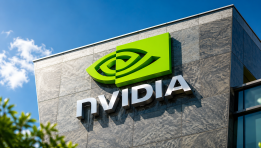
Nvidia is deepening its presence in one of artificial intelligence’s most promising frontiers: biomedical research. The company announced the BioNeMo
- sagi habasov
- •
- 7 Min Read
- •
- ago 3 hours
SKN | Oracle Cuts 21,000 Jobs as AI Spending Surges — Is the Tech Industry Entering a New Workforce Era?
Oracle’s latest workforce reduction highlights a growing transformation unfolding across the technology sector as companies redirect resources toward artificial intelligence
- ago 3 hours
- •
- 7 Min Read

Oracle’s latest workforce reduction highlights a growing transformation unfolding across the technology sector as companies redirect resources toward artificial intelligence

- Arik Arkadi Sluzki
- •
- 6 Min Read
- •
- ago 4 hours
SKN | Global Chip Selloff Sends Nasdaq Lower as AI Trade Faces First Major Test
Global equity markets faced renewed volatility this week as a broad-based semiconductor selloff triggered declines across major technology benchmarks.
- ago 4 hours
- •
- 6 Min Read

Global equity markets faced renewed volatility this week as a broad-based semiconductor selloff triggered declines across major technology benchmarks.


