


- orshu
- •
- 7 Min Read
- •
- 12 seconds ago
Key Points
- The standardization of growth engines around a single technological theme is eroding the level of structural diversity of the S&P 500 index.
- Sharp market divergence creates a gap between the momentum of the chip giants and the erosion of the profitability of the average company.
- Capital costs and geopolitical volatility weigh on the balance sheets of traditional companies, while the AI market operates in a bubble of relative immunity.

The Mechanism of Thematic Concentration
The current trajectory of the S&P 500 represents a fundamental shift in how equity benchmarks function, moving from diversified economic proxies to concentrated thematic vehicles. As of late April 2026, the weight of artificial intelligence-linked stocks—primarily within the semiconductor, cloud infrastructure, and enterprise software verticals—has reached approximately 45% of the S&P 500’s total market capitalization. This concentration is driven by a feedback loop where massive capital expenditures by hyperscalers, projected to hit $500 billion annually by the end of 2026, validate high valuations, which in turn attract further passive and active inflows. Consequently, the index’s headline performance no longer reflects the health of the average constituent but rather the momentum of a singular technological cycle.
Divergence in Corporate Earnings and Market Breadth
The disparity between AI-centric leaders and the broader market has created a “tale of two economies” within the equity space. While the top-tier AI firms maintain net profit margins near 14%, significantly above the five-year average, the remaining 400+ stocks face a distinct set of structural pressures. Since the escalation of regional tensions in the Middle East in February 2026, over 115 stocks in the S&P 500 have entered correction territory, dropping more than 10%. This underperformance is largely tied to rising input costs, particularly in energy and agriculture, as disruptions in the Strait of Hormuz have pushed urea and fertilizer prices up by nearly 46% month-on-month. The index’s record highs effectively mask a cyclical downturn in sectors sensitive to global logistics and commodity volatility.
Capital Allocation and the Capex Challenge
Investor behavior is currently governed by the “picks-and-shovels” logic, prioritizing hardware providers like Nvidia and Broadcom over the software and services firms tasked with delivering actual productivity gains. Institutional analysts are increasingly monitoring the “cash flow vs. earnings” gap; while aggregate earnings quality remains stable for now, the sheer scale of AI infrastructure build-out is beginning to stress corporate balance sheets. With interest rates held at 4.00% in regional markets and “higher-for-longer” expectations in the U.S., the cost of financing this expansion is rising. The market is currently pricing in a “Goldilocks” scenario where AI-driven efficiency offsets these capital costs, yet the lack of immediate free cash flow from end-user AI applications remains a primary structural vulnerability.
Geopolitical Friction and Input-Cost Sensitivity
The interaction between geopolitical instability and market structure has introduced a new risk layer for non-tech equities. Economic data from April 2026 indicates that global headline inflation is ticking upward, driven by a 2.7% increase in defense spending as a percentage of GDP across major economies. For the average corporation, this environment translates to tighter margins and higher cost of debt. Household balance sheets are also showing sensitivity to the housing component of the CPI, which rose to an annual rate of 4.2% in recent reports. This squeeze on discretionary spending further separates the performance of consumer-facing sectors from the capital-insulated AI giants, deepening the index divergence.
The Next Phase of Market Adjustment
The defining risk for the remainder of 2026 lies in the potential for a sentiment-driven re-rating of AI valuations. With the S&P 500 trading near 21 times forward earnings, any downward revision in AI monetization expectations could trigger a disproportionate index-level drawdown. Investors should monitor the gap between capital expenditure and realized revenue in the upcoming Q2 2026 reporting cycle, as well as the stability of the Strait of Hormuz, which remains the primary catalyst for commodity-driven inflation. As market concentration remains at historic extremes, the ability of the broader market to absorb a tech-sector correction without a systemic decline in liquidity will be the critical test for the current bull cycle.
Comparison, examination, and analysis between investment houses
Leave your details, and an expert from our team will get back to you as soon as possible
* This article, in whole or in part, does not contain any promise of investment returns, nor does it constitute professional advice to make investments in any particular field.
To read more about the full disclaimer, click here
- orshu
- •
- 10 Min Read
- •
- ago 1 hour
SKN | All-Time High in Warsaw: Is Poland’s WIG Index Heading Toward 140,000 Points?
Poland’s equity market is emerging as one of the most compelling stories in Europe in 2026. The WIG Index,
- ago 1 hour
- •
- 10 Min Read
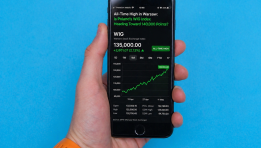
Poland’s equity market is emerging as one of the most compelling stories in Europe in 2026. The WIG Index,
- orshu
- •
- 4 Min Read
- •
- ago 1 hour
SKN | European Markets Mixed as Modest Gains in Germany Offset Broader Weakness
European markets delivered a mixed session on Monday, April 27, 2026, as modest gains in select indices were offset by
- ago 1 hour
- •
- 4 Min Read

European markets delivered a mixed session on Monday, April 27, 2026, as modest gains in select indices were offset by
- orshu
- •
- 6 Min Read
- •
- ago 4 days
SKN | The S&P 500 Just Broke the “Fear Index”: Is a 5-Year Double on the Horizon?
While global headlines remain fixated on military tensions with Iran and the closure of the Strait of Hormuz, Wall Street
- ago 4 days
- •
- 6 Min Read
While global headlines remain fixated on military tensions with Iran and the closure of the Strait of Hormuz, Wall Street
- orshu
- •
- 5 Min Read
- •
- ago 4 days
SKN | Asia Markets Close Mostly Lower on April 23, 2026 as Korea Extends Gains While Regional Weakness Broadens
Asian markets closed April 23, 2026, mostly lower, as regional weakness broadened despite continued strength in South Korea. The session
- ago 4 days
- •
- 5 Min Read
Asian markets closed April 23, 2026, mostly lower, as regional weakness broadened despite continued strength in South Korea. The session

