




- omer bar
- •
- 7 Min Read
- •
- 1 month ago


Key Points
- Fidelity counted a record 769,000 401(k) accounts with at least $1 million at the end of Q2 2026, up 19% from the previous quarter.
- Average 401(k) balances reached a record $155,800, supported by a 15.2% quarterly gain in the S&P 500 and continued retirement contributions.
- Despite stronger account balances, only 61% of workers say they are confident they will have enough money for a comfortable retirement, the lowest level since 2017.

The U.S. retirement market is producing a striking contradiction: the number of Fidelity 401(k) accounts holding at least $1 million has reached a record, even as broader worker confidence in retirement security has deteriorated. The latest figures highlight how strong equity-market performance can rapidly lift retirement balances while inflation, debt, healthcare costs and uncertainty surrounding Social Security continue to shape household financial expectations.
Market Gains Push Retirement Wealth to New Highs
Fidelity’s Q2 2026 retirement analysis found 769,000 401(k) accounts with balances of $1 million or more at the end of June, compared with 654,000 three months earlier. That represents an increase of roughly 19% in a single quarter. The number was also nearly 30% higher than a year earlier, according to reports based on Fidelity’s data.
The increase coincided with an exceptionally strong quarter for U.S. equities. The S&P 500 gained 15.2% in the second quarter, its strongest quarterly performance since 2020. Fidelity reported that the average 401(k) balance rose 10.5% during the quarter to a record $155,800, while average IRA balances increased 10% to $144,523 and average 403(b) balances climbed nearly 12% to $145,000.
The figures demonstrate the powerful interaction between long-term retirement contributions and market exposure. They also show why quarterly changes in retirement wealth can be substantially larger than changes in wages or household income when equity markets experience a major rally.
The Million-Dollar Milestone Still Represents a Minority
The headline number should not be interpreted as evidence that retirement wealth is broadly distributed across American households. Fidelity’s 401(k) analysis covers 25.8 million participants across 27,300 defined-contribution plans, meaning the 769,000 accounts with seven-figure balances represent only a minority of the overall participant base.
The profile of the typical 401(k)-generated millionaire also provides important context. Secondary reporting based on Fidelity’s Q2 data puts the average age at approximately 58 years, with roughly 25 years of saving. The average individual contribution rate among these accounts was about 17.3%, rising to approximately 25.8% when employer contributions are included.
Meanwhile, Fidelity reported that the overall 401(k) savings rate remained at a record 14.4% in Q2, consisting of a 9.6% employee contribution and a 4.8% average employer contribution. More than 81% of participants saved enough to receive their employer’s full matching contribution.
Why More Wealth Has Not Translated Into More Confidence
The apparent contradiction becomes clearer when retirement balances are considered alongside household financial pressures. The 2026 Retirement Confidence Survey from the Employee Benefit Research Institute and Greenwald Research found that only 61% of workers were very or somewhat confident they had enough money to live comfortably throughout retirement. That was down from 67% a year earlier and represented the lowest level since 2017.
At the same time, Northwestern Mutual’s 2026 Planning & Progress Study found that Americans now believe they need an average of $1.46 million to retire comfortably, $200,000 more than the previous year. The study also found that 46% did not expect to be financially prepared for retirement, while 48% considered it somewhat or very likely that they would outlive their savings.
That gap between asset accumulation and perceived financial security is important. A rising 401(k) balance does not necessarily mean a household’s future purchasing power has improved by the same amount. Housing, healthcare, insurance, taxes and everyday living costs can rise independently of financial-market returns, while retirement planning must account for potentially decades of withdrawals.
The next phase of the U.S. retirement story will therefore depend on whether strong savings behavior can continue if equity-market returns moderate. Fidelity’s record balances show the benefits of long-term participation in capital markets, but the simultaneous decline in retirement confidence demonstrates that wealth accumulation and financial security are not necessarily the same thing. Future market volatility, inflation, employment conditions, household debt and the outlook for Social Security will remain central variables for retirement preparedness.
Comparison, examination, and analysis between investment houses
Leave your details, and an expert from our team will get back to you as soon as possible
* This article, in whole or in part, does not contain any promise of investment returns, nor does it constitute professional advice to make investments in any particular field.
To read more about the full disclaimer, click here
- omer bar
- •
- 6 Min Read
- •
- ago 11 hours
SKN | Lockheed Martin Unveils PAC-3 Edge to Counter Hypersonic and Advanced Missile Threats
Lockheed Martin has unveiled a new generation of missile-defense technology as the U.S. military seeks to strengthen its ability
- ago 11 hours
- •
- 6 Min Read
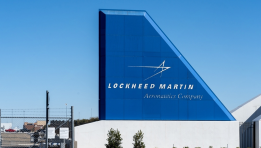
Lockheed Martin has unveiled a new generation of missile-defense technology as the U.S. military seeks to strengthen its ability

- Ronny Mor
- •
- 6 Min Read
- •
- ago 11 hours
SKN | EU Antitrust Review Puts November Deadline on UniCredit’s Commerzbank Takeover Bid
UniCredit’s proposed takeover of Commerzbank has entered a critical regulatory stage after the Italian lender sought approval from EU
- ago 11 hours
- •
- 6 Min Read

UniCredit’s proposed takeover of Commerzbank has entered a critical regulatory stage after the Italian lender sought approval from EU

- Lior mor
- •
- 6 Min Read
- •
- ago 14 hours
SKN | Avolon Places Record Order for 250 Boeing and Airbus Aircraft
Global aircraft lessor Avolon has placed its largest-ever order with either Boeing or Airbus, committing to purchase 250 new
- ago 14 hours
- •
- 6 Min Read

Global aircraft lessor Avolon has placed its largest-ever order with either Boeing or Airbus, committing to purchase 250 new
- Lior mor
- •
- 7 Min Read
- •
- ago 1 day
SKN | Apple Reshapes M&A Leadership as Steve Smith Takes Over Dealmaking Role
Apple is reshaping its senior leadership structure around mergers and acquisitions and its services business, appointing insider Steve Smith
- ago 1 day
- •
- 7 Min Read

Apple is reshaping its senior leadership structure around mergers and acquisitions and its services business, appointing insider Steve Smith
