


- Ronny Mor
- •
- 7 Min Read
- •
- 8 hours ago
Key Points
- Japan is set to channel $36 billion into US-based projects under a bilateral economic framework negotiated during the Trump administration.
- The investment package focuses on infrastructure, advanced manufacturing, and energy cooperation.
- The move reinforces US-Japan economic ties while reshaping capital flows and supply chain strategy.

Japan is preparing to invest approximately $36 billion in US projects under a bilateral economic arrangement originally structured during the administration of former President Donald Trump. The commitment underscores Tokyo’s long-term strategic alignment with Washington and reflects ongoing efforts to deepen economic integration between the world’s largest and third-largest economies. For global investors, the scale and sectoral focus of the investment carry significant implications for infrastructure, manufacturing, and geopolitical capital allocation trends.
Strategic Capital Deployment Across Key Sectors
The $36 billion investment framework is expected to target sectors deemed strategically critical, including infrastructure modernization, energy development, advanced manufacturing, and technology supply chains. While specific project allocations may evolve, past US-Japan economic cooperation agreements have prioritized industrial resilience, semiconductor production, and energy security.
Japanese institutional capital—often deployed through government-backed agencies and major conglomerates—has historically played a stabilizing role in US fixed investment cycles. Japan is already one of the largest foreign direct investors in the United States, with cumulative FDI exceeding $700 billion according to US government data in recent years. The new commitment builds on that base, signaling confidence in US growth prospects and regulatory stability.
For American policymakers, the investment aligns with broader objectives to strengthen domestic production capacity and reduce reliance on vulnerable supply chains. For Japan, the deal supports outward investment returns while reinforcing strategic ties with its key security partner.
Market and Currency Implications
Large-scale cross-border investment flows of this magnitude can influence currency dynamics and capital markets. Increased Japanese capital deployment in the US may contribute to sustained demand for dollar-denominated assets, particularly in infrastructure finance, private equity partnerships, and long-term industrial projects.
From a market perspective, sectors likely to benefit include US industrials, clean energy developers, semiconductor manufacturers, and logistics infrastructure operators. While equity markets have not yet fully priced in the longer-term economic multiplier effects, institutional investors are closely monitoring how quickly committed capital translates into project execution.
For Japanese markets, outward investment of this scale typically reflects confidence in global diversification rather than domestic weakness. However, analysts will watch whether sustained capital outflows exert incremental pressure on the yen, especially in an environment where interest rate differentials between the US Federal Reserve and the Bank of Japan remain a structural factor.
Geopolitical and Long-Term Economic Significance
Beyond immediate financial implications, the agreement carries geopolitical weight. Economic cooperation between Washington and Tokyo has become increasingly central to Indo-Pacific strategy, technology standards, and supply chain resilience. By directing capital toward US-based projects, Japan reinforces a strategic partnership that extends beyond trade into industrial policy coordination.
For Israeli institutional investors and globally diversified portfolios, the deal illustrates how geopolitical alignment increasingly shapes capital allocation decisions. Cross-border investments are no longer purely financial; they are intertwined with security, technology leadership, and energy transition considerations.
Looking ahead, market participants will monitor implementation timelines, sector-specific allocations, and any policy adjustments under current US leadership that may influence the framework’s execution. Key variables include interest rate trajectories, fiscal policy shifts, and global trade dynamics. If effectively deployed, the $36 billion commitment could generate long-term returns while deepening structural economic integration between two of the world’s most influential economies.
Comparison, examination, and analysis between investment houses
Leave your details, and an expert from our team will get back to you as soon as possible
* This article, in whole or in part, does not contain any promise of investment returns, nor does it constitute professional advice to make investments in any particular field.
To read more about the full disclaimer, click here
- sagi habasov
- •
- 8 Min Read
- •
- ago 11 seconds
SKN | Trump Administration Backs Prediction Markets: Will Kalshi and Polymarket Override State Gambling Laws?
The Trump administration has stepped into a high-stakes legal battle between federal regulators and state authorities, throwing its support behind
- ago 11 seconds
- •
- 8 Min Read
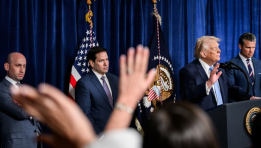
The Trump administration has stepped into a high-stakes legal battle between federal regulators and state authorities, throwing its support behind

- Lior mor
- •
- 7 Min Read
- •
- ago 2 days
SKN | Cuba Suspends Havana Cigar Festival as U.S. Oil Blockade Deepens Energy Crisis
Cuba has suspended its internationally renowned Havana cigar festival as the island grapples with a deepening economic and energy crisis
- ago 2 days
- •
- 7 Min Read

Cuba has suspended its internationally renowned Havana cigar festival as the island grapples with a deepening economic and energy crisis
- sagi habasov
- •
- 6 Min Read
- •
- ago 5 days
SKN | Potential Steel and Aluminum Tariff Rollback Signals Broader Shift Toward Affordability Agenda
Markets are assessing reports that former President Donald Trump may consider rolling back steel and aluminum tariffs if re-elected,
- ago 5 days
- •
- 6 Min Read
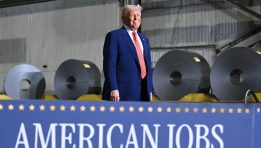
Markets are assessing reports that former President Donald Trump may consider rolling back steel and aluminum tariffs if re-elected,
- Lior mor
- •
- 9 Min Read
- •
- ago 5 days
SKN | Donald Trump Plans to Roll Back Steel and Aluminium Tariffs Amid Affordability Crisis and Midterm Election Pressure
Former President Donald Trump is preparing to ease parts of his aggressive tariff regime on steel and aluminium goods, signaling
- ago 5 days
- •
- 9 Min Read

Former President Donald Trump is preparing to ease parts of his aggressive tariff regime on steel and aluminium goods, signaling

