Tax benefit: The State of Israel has approved a tax benefit for those aged 55 and over Who have accumulated 300 thousand NIS or more

For comparison, testing and analysis, click here.

For a review, comparison, and analysis of the Amendment 190 tax benefit, click here.

What is Amendment 190?

Almost a decade has passed since Amendment 190 to the Income Tax Ordinance was approved in May 2012, and in retrospect, a small change managed to make a big revolution for the public who save in the field of investments, provident funds and liquid funds. Amendment 190 concerns issues of taxation of pensions and investments and is relevant mainly to members with available funds who are approaching the age of 60, and those who are looking for additional investment alternatives. This is a product from the field of long-term savings, and therefore the withdrawal of funds by the member is provided in two ways

  1. Tax-free monthly pension starting at age 60
  2. A one-time withdrawal by way of pension capitalization and a tax payment of approximately 15% nominal starting at age 60.

Who might Amendment 190 be particularly suitable for?

Mainly for high-income earners or those with spare funds approaching the age of 60 and wishing to deposit for their long-term savings. Repair 190 has many advantages such as

* Switching between investment tracks without a tax event
* Reduced tax payment of approximately 15% nominal instead of a real capital gains tax of 25%.
* Investment diversification – provident funds invest in tradable assets and non-tradable assets, alternative investments
* Leverage – You can take out a loan against your provident fund account.
* Intergenerational inheritance – It is possible to define beneficiaries in the provident fund to whom the funds will be transferred in the event of death. It is important to note that if the member dies before the age of 75, the funds will be available for withdrawal without paying capital gains tax, and if the member dies after the age of 75, there will be a tax payment of approximately 15% of the nominal profit only.

  1. To receive and enjoy the benefits of Amendment 190, you need to meet 4 main criteria, which are:
  2. Age 60 and over
  3. Are entitled to a minimum pension of approximately NIS 4,500
  4. Making deposits to the provident fund after 1/1/2012
  5. Signing a statement confirming that deposits have been made to the fund and that these deposits meet the deposit ceiling set by law (this is a variable deposit ceiling that depends on the saver’s age).

For review, comparison and analysis between investment houses, leave details and one of our experts will get back to you as soon as possible.

*This article, in part or in whole, does not contain any promise of achieving returns from investments, and nothing contained herein constitutes professional advice to make investments in any field.

SKN | Jobs Super-Week and Apple Earnings to Dictate Early-November Market Momentum

Global financial markets launch into the first full week of November 2026 facing a formidable intersection of corporate mega-cap results and top-tier macroeconomic employment data. Following October’s volatility, institutional investors across global financial centers and the domestic Israeli ecosystem are evaluating whether private sector resilience can endure persistent borrowing rates. The upcoming batch of earnings reports paired with pivotal labor market updates will establish whether equity valuations can maintain their premium as year-end approaches. Monetary Policy Decisions and International Liquidity Adjustments Central bank interest rate decisions anchor international attention as key monetary authorities navigate divergent inflation and growth trajectories. On Tuesday, November 3, the Reserve Bank of Australia is projected to raise its official cash rate to 4.85 percent, up


SKN | The Historic 75-Month Bond Slump: Why Fixed-Income Recovery Remains Elusive for Global Allocators

The U.S. bond market has reached an unprecedented milestone of structural pain, remaining trapped in a drawdown that has now extended to 75 consecutive months. Benchmarked against the Bloomberg U.S. Aggregate Bond Index, total returns have failed to reclaim their August 2020 peak, marking the longest period of negative real and nominal performance in recorded fixed-income history. This protracted downturn underscores the profound shift in the global interest-rate environment, where persistent inflation pressures, aggressive central bank tightening, and record sovereign debt issuance have structurally broken decades of low-yield assumptions. A Regime Shift Far Exceeding Historical Precedent The sheer duration of the current drawdown dwarfs any previous contraction in the post-Bretton Woods era. Historically, bond market pullbacks—including the aggressive rate hikes

Apple

SKN | Apple Stands Alone: Why the iPhone Giant Is the Only Magnificent Seven Stock Beating the S&P 500

Apple Inc. has decoupled from its megacap peers in 2026, establishing itself as the only member of Wall Street’s “Magnificent Seven” to outperform the benchmark S&P 500 index this year. While the broader market has advanced roughly 12% year-to-date, Apple has gained approximately 28%, pushing its market capitalization above $5 trillion and allowing it to rival Nvidia as the world’s most valuable enterprise. The divergence highlights a significant shift in market psychology, as institutional allocators increasingly penalize unconstrained artificial intelligence capital expenditure in favor of disciplined balance sheets that protect immediate shareholder returns. The AI Storm Shelter: Free Cash Flow vs. Unchecked Capex The primary catalyst behind Apple’s relative outperformance is its refusal to engage in the multi-hundred-billion-dollar infrastructure spending

SKN | Tanker Hit by Projectiles Off Saudi Coast: Will Escalating Gulf Maritime Attacks Spark an Oil Shock?

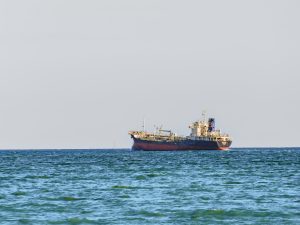
A commercial tanker traveling southeast through the Persian Gulf was struck on its port side by two unidentified projectiles late Sunday, November 1, approximately 72 nautical miles east of the Saudi Arabian coastal port of Ras Al-Khafji. The United Kingdom Maritime Trade Operations (UKMTO) agency reported that all crew members were accounted for and that no immediate environmental impact or cargo leakage had been detected following the strike, which occurred at 23:47 UTC. The incident marks the tenth maritime security event reported across the Persian Gulf, the Strait of Hormuz, and the Gulf of Oman since October 31, underscoring severe vulnerability across primary global hydrocarbon export lanes. Maritime Chokepoint Pressures and War-Risk Surcharges The strike off Ras Al-Khafji represents a

SKN | Washington Floats Resumption of Russian Gas Transit via Ukraine: Can Geopolitical Realpolitik Reshape European Energy?

U.S. diplomatic representatives have floated a contentious proposal to restore Russian natural gas transit through Ukrainian pipeline infrastructure as part of an overarching framework to facilitate an energy ceasefire and peace settlement in Eastern Europe. The initiative, raised during high-level consultations involving American envoys, Ukrainian leadership, and European policymakers, envisions restarting pipeline flows that ceased following earlier contract expirations. Coming at a time when global energy markets are navigating heightened volatility from Middle Eastern supply risks, the prospect of reintroducing Russian pipeline supply to the continent introduces significant pricing uncertainty across European natural gas hubs and global commodity networks. Diplomatic Incentives Clash with European Decoupling Targets The U.S. proposal to revive Ukrainian gas transit seeks to deploy commercial revenues and

SKN | Oil Eases as Diplomatic Overtures Offset Escalation Fears: Can Regional Talks Deflate the Crude Premium?

Crude oil futures turned lower on Monday, November 2, 2026, as international commodity desks weighed renewed diplomatic initiatives to de-escalate Middle Eastern tensions against lingering physical supply risks. International benchmark Brent crude slipped over 1% toward $114.00 per barrel, while U.S. West Texas Intermediate (WTI) declined toward $101.30, pausing after an intensive rally that lifted energy contracts to multi-month highs. The retreat reflects tactical de-risking among speculative allocators following disclosures of fresh mediation frameworks between Washington, regional Arab intermediaries, and Tehran, providing temporary respite to global inflation gauges. Backchannel Overtures Trigger Tactical Unwinding of War Premiums The downward move in benchmark contracts gathered momentum after regional reports confirmed renewed communication channels aimed at establishing a de-escalation framework prior to the

Facebook Email Phone WhatsApp X
[spotiframe]

Get a free, expert-backed investment comparison today

Skip to content