


- Ronny Mor
- •
- 7 Min Read
- •
- 6 months ago
Key Points
- Ray Dalio likens today’s economic landscape to the inflationary 1970s, calling for higher gold allocations.
- The Bridgewater Associates founder recommends investors hold up to 15% of their portfolios in gold.
- Gold prices have surged past $4,000 an ounce as investors seek protection from monetary debasement and geopolitical risks.
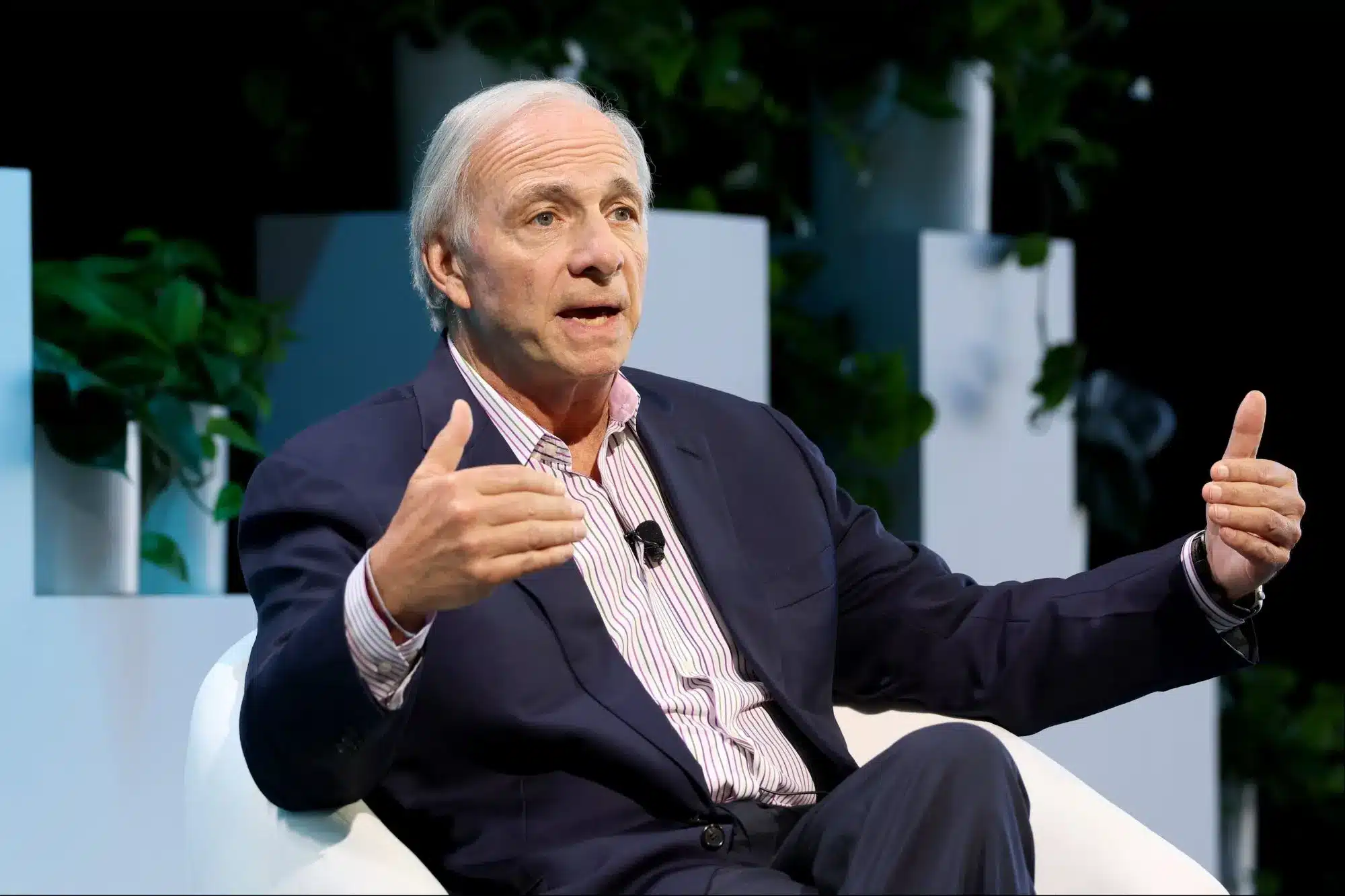
As gold prices break through record highs above $4,000 an ounce, billionaire investor Ray Dalio is warning that global markets may be entering a period reminiscent of the early 1970s — marked by inflation, rising government debt, and waning confidence in fiat currencies. The Bridgewater Associates founder believes investors should significantly increase their exposure to gold, which he calls one of the few assets capable of maintaining value when traditional investments falter.
Gold futures were last trading near $4,005.80 per ounce, up more than 50% since the start of the year. The rally comes amid intensifying fears over fiscal deficits, central bank easing, and geopolitical instability — conditions Dalio argues have created a “perfect storm” for monetary debasement.
Echoes of the 1970s: Inflation, Debt, and Eroding Confidence
Dalio’s comparison to the early 1970s is not accidental. That decade began with loose monetary policy, heavy fiscal spending, and the end of the U.S. dollar’s convertibility to gold — all of which drove inflation sharply higher. Today’s environment, he contends, carries similar hallmarks: surging global debt, persistent fiscal deficits, and central banks struggling to balance inflation control with economic growth.
“It’s very much like the early ’70s — where do you put your money?” Dalio asked at the Greenwich Economic Forum. “When there’s such a supply of debt and debt instruments, they are not an effective storehold of wealth.”
His warning comes as U.S. Treasury yields remain volatile and the Federal Reserve faces growing pressure to ease policy following its first rate cut of the year in September. The shift has weighed heavily on the U.S. dollar, adding further momentum to gold’s historic rally.
Challenging Conventional Portfolio Strategy
Dalio’s call for a 15% allocation to gold diverges sharply from the traditional “60-40” portfolio model that prioritizes equities and bonds. Historically, advisors have recommended only a small percentage of alternative assets such as gold due to their lack of yield. However, in a world where inflation-adjusted returns on bonds remain subdued and geopolitical risks are mounting, that calculus is changing.
Other prominent investors share Dalio’s conviction. Jeffrey Gundlach, CEO of DoubleLine Capital, recently advised investors to allocate as much as 25% to gold, citing similar concerns over inflationary pressures and the weakening dollar. Both investors view gold as not just a hedge, but a strategic counterweight to financial assets dependent on debt-based growth.
“Gold is the only asset that you can hold and not rely on someone else to pay you,” Dalio emphasized. The statement underscores his broader skepticism toward the sustainability of paper assets in an era of fiscal strain and currency debasement.
A Safe Haven in an Uncertain Future
The resurgence of gold’s appeal is as much psychological as it is financial. As investors confront political unpredictability, global trade realignments, and escalating conflicts, gold’s simplicity and independence from counterparty risk stand out. Central banks continue to expand their gold reserves, signaling a structural shift in how nations view monetary security.
Looking forward, the question is whether gold’s rise marks the beginning of a longer secular trend or a short-term reaction to policy turbulence. If inflation remains elevated and debt burdens grow, Dalio’s thesis could gain further traction, reinforcing gold’s role as the anchor asset of a more volatile global economy.
Comparison, examination, and analysis between investment houses
Leave your details, and an expert from our team will get back to you as soon as possible
* This article, in whole or in part, does not contain any promise of investment returns, nor does it constitute professional advice to make investments in any particular field.
To read more about the full disclaimer, click here
- sagi habasov
- •
- 9 Min Read
- •
- ago 19 hours
SKN | Natural Colors, New Strategy: Can General Mills Reinvent Iconic Cereals Without Losing Consumers?
General Mills is accelerating its transition toward cleaner ingredient profiles, unveiling new versions of its iconic Trix and Lucky Charms
- ago 19 hours
- •
- 9 Min Read

General Mills is accelerating its transition toward cleaner ingredient profiles, unveiling new versions of its iconic Trix and Lucky Charms

- omer bar
- •
- 7 Min Read
- •
- ago 6 days
SKN | Are Europe’s Gas Prices Signaling an Imminent Energy Crunch Amid Middle East Disruptions?
European natural gas prices continued their upward trajectory, with TTF futures rising to €56.6 per MWh as markets react to
- ago 6 days
- •
- 7 Min Read

European natural gas prices continued their upward trajectory, with TTF futures rising to €56.6 per MWh as markets react to

- Ronny Mor
- •
- 7 Min Read
- •
- ago 6 days
SKN | Regulatory Wake-Up Call? Binance Australia Hit with $6.9M Fine Over Client Misclassification
Australia’s Federal Court has imposed a A$10 million ($6.9 million) penalty on Binance Australia’s derivatives business, marking one of the
- ago 6 days
- •
- 7 Min Read

Australia’s Federal Court has imposed a A$10 million ($6.9 million) penalty on Binance Australia’s derivatives business, marking one of the
- Ronny Mor
- •
- 6 Min Read
- •
- ago 1 week
SKN | Why Private Capital Is Rotating From Software to “Hard Assets” in the AI Era
Private capital is undergoing a major strategic pivot as the rise of artificial intelligence forces investors to reassess risk, durability,
- ago 1 week
- •
- 6 Min Read

Private capital is undergoing a major strategic pivot as the rise of artificial intelligence forces investors to reassess risk, durability,

