


- orshu
- •
- 6 Min Read
- •
- 3 hours ago
Key Points
- European equities closed higher, led by gains in major indices including Germany’s DAX and France’s CAC 40.
- Broad-based strength signals investor confidence despite ongoing global geopolitical uncertainty.
- Currency weakness in the euro and pound reflects shifting macro expectations and external pressures.
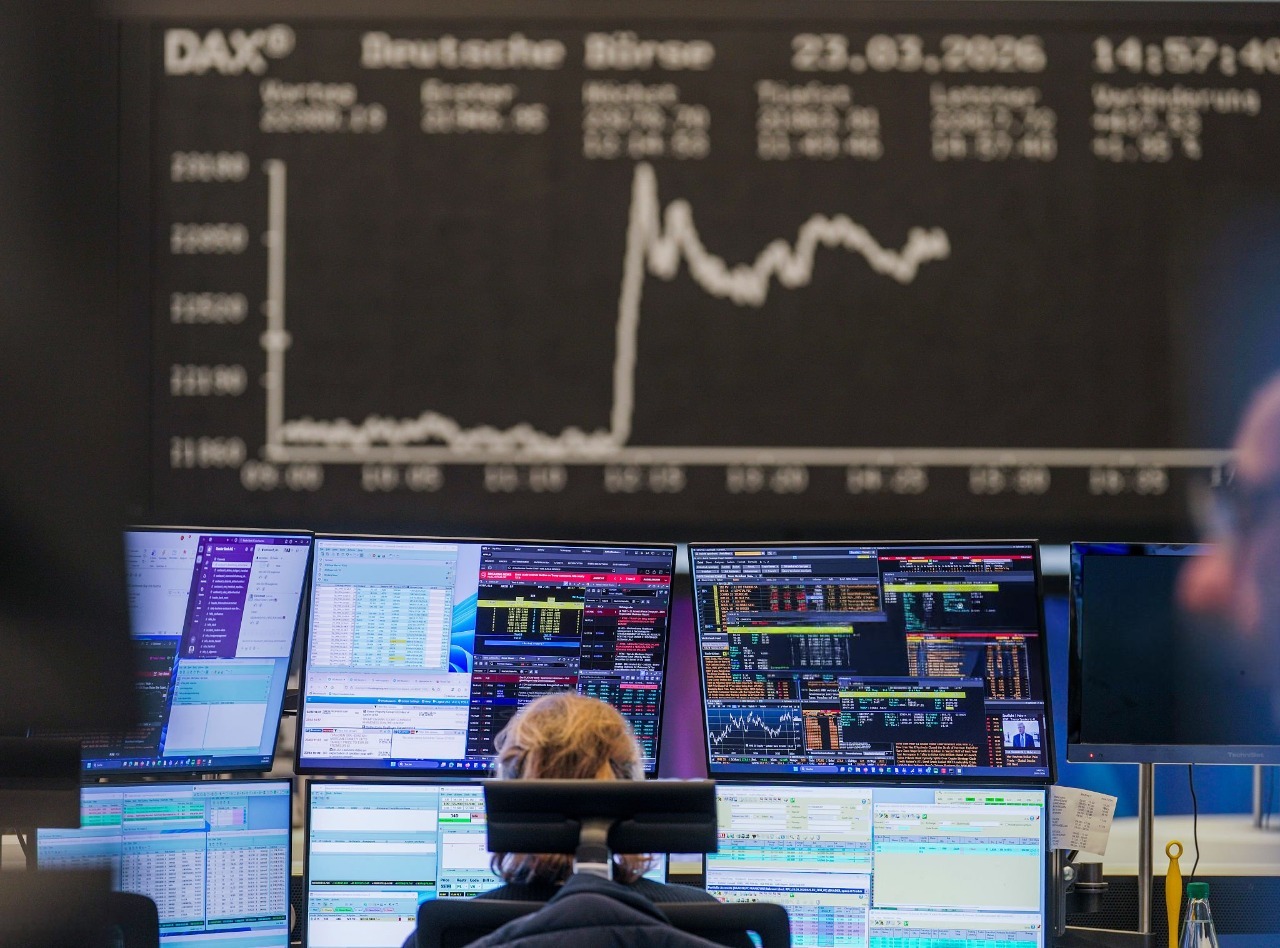
European markets ended the session on a positive note on March 25, with major indices across the region posting gains as investors navigated a complex macroeconomic backdrop. Despite persistent geopolitical risks and global uncertainty, equity markets demonstrated resilience, supported by sector strength and improving sentiment.
Broad-Based Gains Across Major European Indices
Equity markets across Europe closed higher, reflecting a coordinated upward movement among key benchmarks. Germany’s DAX rose by 1.34 percent, while France’s CAC 40 advanced by 1.10 percent. The MSCI Europe Index, a broad gauge of regional performance, increased by 1.33 percent, indicating widespread participation across sectors.
The EURO STOXX 50, which tracks leading blue-chip companies in the eurozone, climbed by 1.02 percent, while the UK’s FTSE 100 gained 1.16 percent. Similarly, the Euronext 100 Index moved higher by 1.13 percent, reinforcing the overall strength of the session.
This synchronized performance suggests that investors are maintaining a constructive outlook on European equities, even as global risks remain elevated. Strong corporate positioning and expectations of stable economic conditions appear to be supporting market sentiment in the region.
Currency Weakness Signals Diverging Market Forces
While equities posted gains, currency markets reflected a more cautious tone. The British Pound Index fell by 0.21 percent, and the Euro Index declined by 0.28 percent, highlighting pressure on European currencies.
This divergence between equity and currency performance suggests that investors may be hedging against macroeconomic risks, including potential shifts in monetary policy and external economic pressures. A weaker currency can provide a tailwind for exporters by improving competitiveness, which may partially explain the strength in equity markets.
However, sustained currency weakness can also signal concerns about economic growth or capital outflows, particularly if global investors shift toward stronger currencies such as the U.S. dollar. This dynamic remains a key factor influencing cross-asset performance.
Resilience Amid Global Uncertainty
European markets are currently balancing multiple external pressures, including geopolitical tensions, fluctuating energy prices, and evolving central bank policies. Despite these challenges, the latest session indicates that investors are focusing on fundamental stability and earnings potential.
Sectors such as financials, industrials, and energy have contributed to the upward momentum, supported by expectations of steady demand and operational resilience. Additionally, market participants appear to be pricing in a relatively stable interest rate environment in the near term.
For global investors, including those in Israel, the performance of European equities provides insight into broader market trends. The region’s ability to sustain gains amid uncertainty may influence allocation decisions and risk appetite across international portfolios.
Looking ahead, investors will monitor key developments including European Central Bank policy signals, inflation data, and currency movements. The trajectory of the euro and pound will remain critical, particularly in relation to global capital flows and trade dynamics. While the current momentum in equities is encouraging, the interplay between currency weakness and macroeconomic risks could shape market direction in the coming sessions.
Comparison, examination, and analysis between investment houses
Leave your details, and an expert from our team will get back to you as soon as possible
* This article, in whole or in part, does not contain any promise of investment returns, nor does it constitute professional advice to make investments in any particular field.
To read more about the full disclaimer, click here
- orshu
- •
- 6 Min Read
- •
- ago 2 hours
SKN | Nasdaq Holds Firm Above 22,000: Can Tech Momentum Sustain the Market Rally?
The Nasdaq Composite moved higher on March 25, rising by 1.11 percent to trade at 22,003.28, as technology stocks
- ago 2 hours
- •
- 6 Min Read

The Nasdaq Composite moved higher on March 25, rising by 1.11 percent to trade at 22,003.28, as technology stocks
- orshu
- •
- 6 Min Read
- •
- ago 6 hours
SKN | US Equities Advance as Risk Appetite Strengthens While Volatility Retreats
The US equity market opened March 25 on a constructive note, with broad-based gains across key indices signaling renewed
- ago 6 hours
- •
- 6 Min Read

The US equity market opened March 25 on a constructive note, with broad-based gains across key indices signaling renewed
- orshu
- •
- 5 Min Read
- •
- ago 9 hours
SKN | Asia Markets Extend Rally on March 25, 2026 as Japan Surges Nearly 3% and Regional Sentiment Strengthens
Asian markets closed March 25, 2026, with strong gains across the board, extending the rebound seen in the previous session.
- ago 9 hours
- •
- 5 Min Read

Asian markets closed March 25, 2026, with strong gains across the board, extending the rebound seen in the previous session.
- orshu
- •
- 5 Min Read
- •
- ago 12 hours
SKN | European Markets Edge Higher as Regional Benchmark Strengthens Amid Flat Core Indices
European markets delivered a mixed but slightly positive performance on Wednesday, March 25, 2026, as the broader regional benchmark advanced
- ago 12 hours
- •
- 5 Min Read

European markets delivered a mixed but slightly positive performance on Wednesday, March 25, 2026, as the broader regional benchmark advanced

