


- orshu
- •
- 7 Min Read
- •
- 17 minutes ago
Key Points
- Israeli equities declined sharply across all major indices, with widespread selling pressure.
- Mid-cap and large-cap stocks both weakened, signaling broader market risk-off sentiment.
- Bond markets showed mixed resilience, with selective demand for inflation-linked assets.
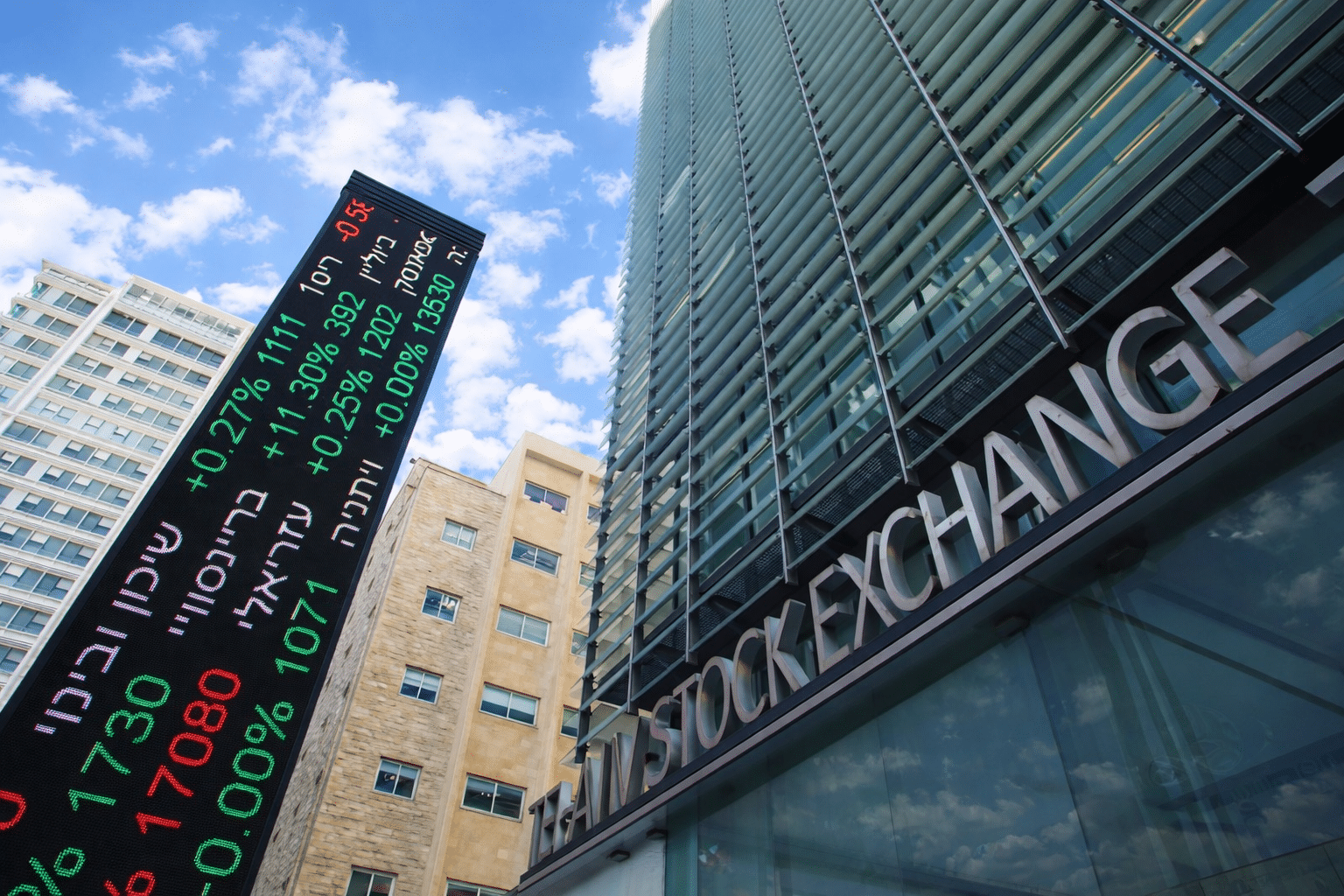
Israeli markets closed on March 24, 2026 with notable losses, extending the weakness seen in the previous session. Selling pressure intensified across both large-cap and mid-cap segments, reflecting a clear shift toward caution as investors reassessed risk exposure.
Broad-Based Decline Across Major Indices
The Tel Aviv-35 index dropped 1.17 percent to 4,267.51 points, with only seven stocks advancing compared to twenty-five decliners. This imbalance highlights the depth of the selloff, even among large-cap stocks that typically provide stability.
The broader Tel Aviv-125 index fell 1.23 percent to 4,170.43 points, confirming that the weakness was not isolated but widespread across the market. Declining stocks significantly outnumbered advancing ones, with ninety-two stocks falling compared to just twenty-six rising.
Trading activity remained elevated, with equity turnover reaching approximately 5.38 billion shekels, indicating active repositioning as investors reacted to the deteriorating market conditions.
Mid-Cap Weakness Signals Declining Risk Appetite
Mid-cap stocks continued to lead the downside. The Tel Aviv-90 index declined 1.34 percent to 3,836.20 points, with heavy selling pressure across the segment. This marks a continuation of the sharp pullback seen in recent sessions and suggests a sustained reduction in risk appetite.
The combined Tel Aviv 90 and banking index fell 1.28 percent, indicating that financial stocks also contributed to the decline. This broad participation in the selloff reinforces the shift toward a more defensive stance among investors.
Value stocks were also impacted, with the Tel Aviv-125 value index dropping 1.26 percent. The decline across value and growth segments suggests that the market is experiencing a generalized pullback rather than a sector-specific rotation.
The sector-balance index fell 1.43 percent, further confirming that weakness was spread across multiple industries.
Bond Market Shows Mixed Signals Amid Equity Selloff
Fixed income markets provided a mixed picture. The general bond index declined 0.08 percent, indicating mild pressure in the broader bond market.
However, inflation-linked bonds showed some resilience. The Tel Bond-Adjoined A index rose 0.14 percent, suggesting selective demand for instruments that offer protection against inflation. Meanwhile, the Tel Bond 60 index declined 0.12 percent, reflecting uneven performance within the bond space.
Short-term bonds gained 0.04 percent, highlighting a shift toward lower-risk assets as investors seek stability amid equity volatility.
Bond market turnover reached approximately 6.94 billion shekels, surpassing equity turnover and indicating increased activity in fixed income markets as investors rebalance portfolios.
Forward Outlook: Market Faces Critical Test as Selling Pressure Intensifies
With two consecutive sessions of significant declines, the market is approaching a critical juncture. Investors will be closely watching whether selling pressure begins to stabilize or accelerates further in the coming sessions.
Market breadth will remain a key indicator. A recovery in advancing stocks could signal the start of a stabilization phase, while continued imbalance would suggest further downside risk.
The performance of mid-cap stocks will be particularly important. Persistent weakness in this segment may indicate deeper risk aversion and could limit any near-term recovery in broader indices.
Bond market trends will also play a crucial role. Continued demand for safer assets, particularly short-term and inflation-linked bonds, may signal a more defensive positioning among investors.
As the market moves forward, the ability of large-cap stocks to regain stability and the return of broader participation will determine whether Israeli equities can recover or enter a more extended corrective phase.
Comparison, examination, and analysis between investment houses
Leave your details, and an expert from our team will get back to you as soon as possible
* This article, in whole or in part, does not contain any promise of investment returns, nor does it constitute professional advice to make investments in any particular field.
To read more about the full disclaimer, click here
- orshu
- •
- 6 Min Read
- •
- ago 30 minutes
SKN | European Markets Close Mixed as Broad Weakness Offsets UK Gains
European markets closed with a mixed performance on March 24, as declines across key continental indices offset modest gains
- ago 30 minutes
- •
- 6 Min Read

European markets closed with a mixed performance on March 24, as declines across key continental indices offset modest gains
- orshu
- •
- 6 Min Read
- •
- ago 3 hours
SKN | U.S. Stocks Slide as Volatility Rises and Dollar Strength Weighs on Risk Sentiment
U.S. equities traded lower on March 24, as investors navigated a combination of rising market volatility and strengthening currency
- ago 3 hours
- •
- 6 Min Read

U.S. equities traded lower on March 24, as investors navigated a combination of rising market volatility and strengthening currency
- orshu
- •
- 5 Min Read
- •
- ago 7 hours
SKN | Asia Markets Rebound on March 24, 2026 as Regional Equities Rally Led by Hong Kong and South Korea
Asian markets closed March 24, 2026, with a strong rebound as investors returned to equities following the previous session’s heavy
- ago 7 hours
- •
- 5 Min Read

Asian markets closed March 24, 2026, with a strong rebound as investors returned to equities following the previous session’s heavy
- orshu
- •
- 5 Min Read
- •
- ago 9 hours
SKN | European Markets Rebound as Broad Gains Signal Stabilization After Sell-Off
European markets rebounded on Tuesday, March 24, 2026, as investors stepped back into equities following the sharp sell-off seen in
- ago 9 hours
- •
- 5 Min Read

European markets rebounded on Tuesday, March 24, 2026, as investors stepped back into equities following the sharp sell-off seen in

