


- omer bar
- •
- 7 Min Read
- •
- 2 hours ago
Key Points
- OpenAI’s reliance on Microsoft creates significant concentration risk ahead of a potential IPO.
- Massive compute spending and chip supply dependencies add pressure to its long-term scalability.
- Growing competition and legal challenges could shape investor sentiment in the public markets.
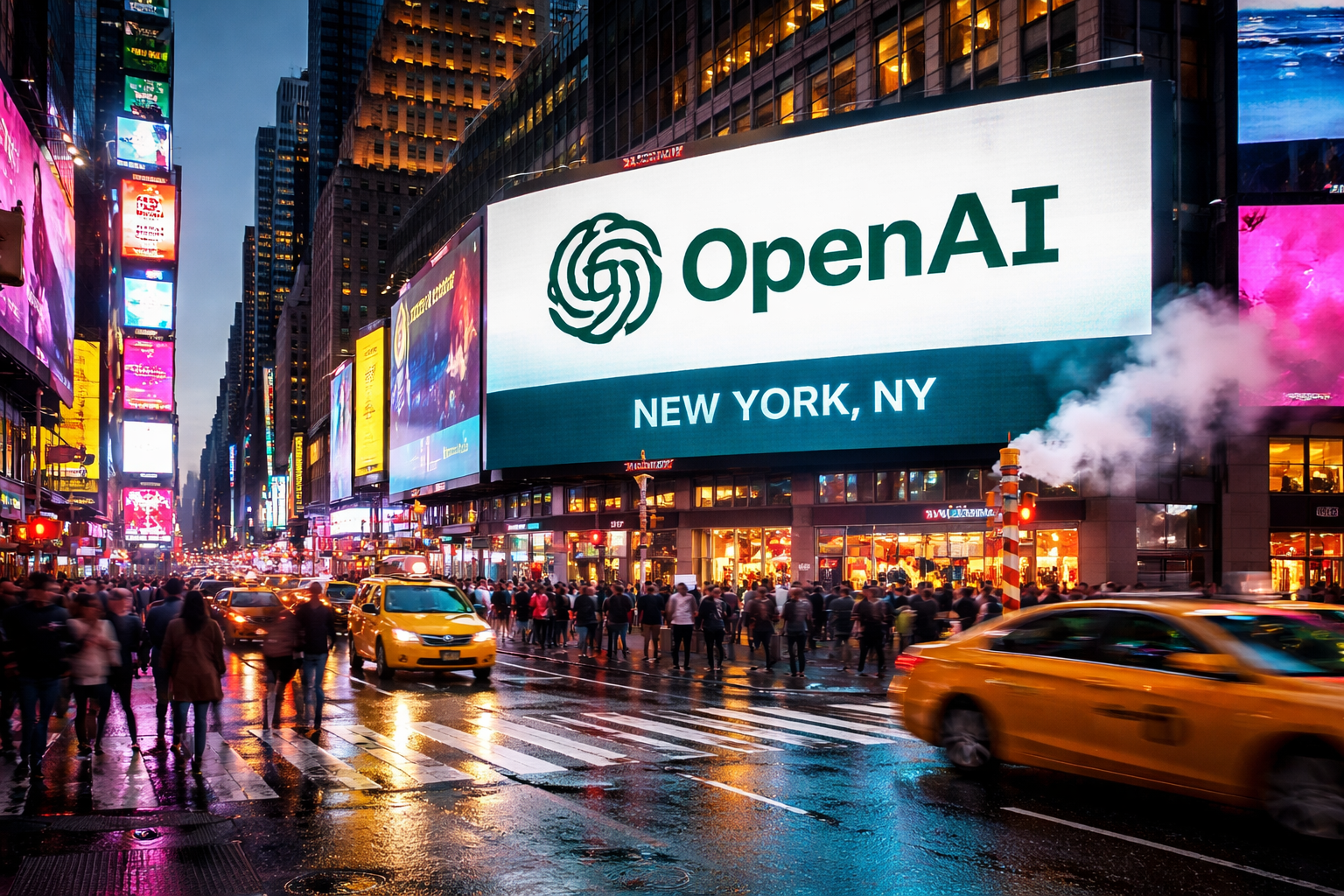
OpenAI is signaling a critical vulnerability as it prepares for a potential public market debut: its deep reliance on Microsoft. In a document shared with investors that mirrors IPO-style disclosures, the company warned that its financial performance, infrastructure, and future growth remain closely tied to its long-standing partner. As OpenAI scales rapidly—reaching $13.1 billion in revenue and a $730 billion valuation—the question is no longer just about growth, but about structural risk and independence in an increasingly competitive AI landscape.
Strategic Dependence Raises Investor Concerns
OpenAI’s disclosure highlights that Microsoft accounts for a “substantial portion” of both its financing and computing capacity. Since 2019, Microsoft has invested approximately $13 billion into OpenAI and secured early agreements to host its services on Azure, effectively anchoring OpenAI’s infrastructure to a single provider.
While this partnership has been instrumental in scaling products like ChatGPT—now used by roughly 900 million weekly users—it also introduces concentration risk. OpenAI explicitly acknowledged that any change or termination of the relationship could materially impact its business, financial condition, and long-term prospects. For investors, this creates a paradox: the same partnership that enabled OpenAI’s rise could also limit its strategic flexibility.
Massive Capital Demands and Supply Chain Exposure
Beyond its reliance on Microsoft, OpenAI faces another structural challenge: the sheer scale of its compute requirements. The company disclosed an estimated $665 billion in compute-related commitments through 2030, underscoring the capital-intensive nature of modern AI development.
This dependency extends to global semiconductor supply chains. OpenAI identified Taiwan Semiconductor Manufacturing Company as a critical supplier, warning that geopolitical tensions—particularly involving Taiwan—could severely disrupt operations. In an environment already strained by chip shortages, this adds another layer of uncertainty for investors evaluating long-term scalability.
To mitigate these risks, OpenAI has begun diversifying its partnerships, working with providers such as Google and Oracle. However, the transition away from a single dominant partner remains complex and potentially costly.
Competition, Legal Risks, and Structural Complexity
The relationship between OpenAI and Microsoft is also evolving into a competitive one. Microsoft has formally listed OpenAI as a competitor, placing it alongside major tech players such as Amazon and Meta. This dual dynamic—partner and rival—adds strategic tension that could shape future product development and market positioning.
At the same time, OpenAI faces mounting legal challenges. The company disclosed multiple lawsuits, including cases involving intellectual property, privacy concerns, and product-related harm. Notably, ongoing disputes with Elon Musk and his AI venture xAI further complicate the landscape, introducing reputational and financial risks.
Compounding these issues is OpenAI’s unique corporate structure as a public benefit entity governed by a nonprofit parent. While designed to balance profit with mission, this framework may raise governance questions among public market investors accustomed to more conventional models.
Looking ahead
OpenAI’s path to an IPO will depend not only on its growth trajectory but on its ability to address these structural risks. Diversifying infrastructure, managing legal exposure, and navigating its complex relationship with Microsoft will be critical factors in shaping investor confidence. In a market increasingly focused on resilience as much as innovation, the company’s next phase will test whether it can evolve from a breakthrough AI leader into a sustainable public enterprise.
Comparison, examination, and analysis between investment houses
Leave your details, and an expert from our team will get back to you as soon as possible
* This article, in whole or in part, does not contain any promise of investment returns, nor does it constitute professional advice to make investments in any particular field.
To read more about the full disclaimer, click here
- Lior mor
- •
- 7 Min Read
- •
- ago 3 hours
SKN | Is Meta’s AI Talent Grab the Start of an Agent Wars Arms Race?
Meta is doubling down on its artificial intelligence ambitions with a strategic acqui-hire of top-tier talent from startup Dreamer, signaling
- ago 3 hours
- •
- 7 Min Read

Meta is doubling down on its artificial intelligence ambitions with a strategic acqui-hire of top-tier talent from startup Dreamer, signaling

- Ronny Mor
- •
- 5 Min Read
- •
- ago 15 hours
SKN | Trustpilot Hit With €4M Fine—Are Online Reviews Losing Consumer Trust?
Italy’s competition regulator has fined Trustpilot €4 million ($4.6 million), raising fresh concerns about the reliability of online review systems.
- ago 15 hours
- •
- 5 Min Read

Italy’s competition regulator has fined Trustpilot €4 million ($4.6 million), raising fresh concerns about the reliability of online review systems.

- omer bar
- •
- 6 Min Read
- •
- ago 15 hours
SKN | Why Is Korea’s AI Startup Upstage Turning to AMD in the Race for AI Independence?
South Korea’s push to become a global AI powerhouse is accelerating, and a key battleground is emerging in semiconductor sourcing.
- ago 15 hours
- •
- 6 Min Read
South Korea’s push to become a global AI powerhouse is accelerating, and a key battleground is emerging in semiconductor sourcing.
- Lior mor
- •
- 6 Min Read
- •
- ago 16 hours
SKN | Is STMicro’s China Production Move a Strategic Shift in the Global Chip Supply Chain?
STMicroelectronics has begun delivering STM32 microcontrollers produced entirely in China, marking a notable step in the evolving global semiconductor landscape.
- ago 16 hours
- •
- 6 Min Read
STMicroelectronics has begun delivering STM32 microcontrollers produced entirely in China, marking a notable step in the evolving global semiconductor landscape.

