


- Lior mor
- •
- 6 Min Read
- •
- 8 hours ago
Key Points
- Gas prices nearing $4 per gallon are adding billions in consumer costs.
- Higher fuel prices are squeezing spending and acting like a “tax” on households.
- The Federal Reserve faces a growing dilemma between inflation pressure and slowing demand.

Rising gasoline prices are rapidly emerging as a hidden tax on American households, with fuel costs surging nearly $1 per gallon in just a month. As oil prices climb and inflation risks resurface, economists warn that this “energy tax” is beginning to weigh on consumer spending and could complicate the Federal Reserve’s path on interest rates. The broader question now is whether this shock will primarily fuel inflation—or instead weaken economic growth.
Fuel Costs Surge and Hit Consumers Directly
Gasoline prices have climbed to nearly $3.92 per gallon, with expectations of breaching the $4 threshold within days. This sharp increase has translated into roughly $370 million in additional daily spending on fuel compared to just one month ago.
Unlike other expenses, fuel costs are largely unavoidable, making them particularly impactful. Economists describe this as an “energy tax,” where higher prices effectively reduce disposable income, forcing households to cut back on discretionary spending such as dining, travel, and retail purchases.
Inflation Pressures Spread Through the Economy
The impact extends well beyond the gas pump. Oil prices near $100 per barrel are pushing up diesel and transportation costs, which feed directly into the price of goods and services. With approximately 70% of U.S. goods transported by truck, higher diesel prices quickly ripple through supply chains.
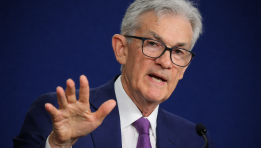
Jerome Powell has acknowledged that energy prices will lift headline inflation in the near term, though the duration and intensity remain uncertain. The key concern is whether these pressures become embedded in core inflation or fade as demand weakens.
The Federal Reserve’s Policy Dilemma Deepens
The Federal Reserve now faces a complex balancing act. On one hand, rising energy prices push inflation higher, arguing for maintaining restrictive monetary policy. On the other, the same price increases reduce consumer spending power, potentially slowing economic growth.
Some economists argue that if consumer demand weakens significantly, the Fed may still need to cut rates despite elevated inflation. Others believe persistent energy-driven inflation could delay any easing cycle, keeping rates higher for longer.
Market expectations reflect this uncertainty, with investors increasingly pricing in fewer rate cuts than previously anticipated.
Corporate Earnings and Markets Begin to React
Financial markets are already showing signs of strain. The S&P 500 has fallen roughly 5% since geopolitical tensions escalated, reflecting concerns about both rising costs and slowing growth.
Companies are expected to begin factoring higher fuel and transportation expenses into earnings guidance. While the full impact has yet to materialize, analysts warn that rising input costs will likely compress margins in the coming quarters.
Forward Outlook: Inflation Shock or Demand Slowdown?
The path forward depends largely on energy prices. If oil continues climbing toward the $140–$150 range, the burden on consumers could significantly slow economic activity and outweigh fiscal support measures. Conversely, if prices stabilize, the current shock may prove temporary. For now, the “energy tax” is becoming a defining force in the economic landscape—one that could shape inflation trends, consumer behavior, and Federal Reserve policy in the months ahead.
Comparison, examination, and analysis between investment houses
Leave your details, and an expert from our team will get back to you as soon as possible
* This article, in whole or in part, does not contain any promise of investment returns, nor does it constitute professional advice to make investments in any particular field.
To read more about the full disclaimer, click here
- sagi habasov
- •
- 6 Min Read
- •
- ago 5 hours
SKN | Can Japan’s 5% Wage Growth Finally Break Its Low-Inflation Cycle?
Japan’s corporate sector is delivering another year of strong wage increases, with average pay hikes exceeding 5% for the third
- ago 5 hours
- •
- 6 Min Read

Japan’s corporate sector is delivering another year of strong wage increases, with average pay hikes exceeding 5% for the third

- Lior mor
- •
- 6 Min Read
- •
- ago 23 hours
SKN | Is the ‘Energy Tax’ About to Derail Consumer Spending and Delay Fed Rate Cuts?
Surging gasoline prices are increasingly acting as an invisible tax on American consumers, raising fresh concerns about inflation, spending power,
- ago 23 hours
- •
- 6 Min Read
Surging gasoline prices are increasingly acting as an invisible tax on American consumers, raising fresh concerns about inflation, spending power,
- sagi habasov
- •
- 7 Min Read
- •
- ago 3 days
SKN | Fed Policy Outlook in Focus: Why the Path to Rate Cuts Is Becoming Increasingly Complex
The Federal Reserve is facing an increasingly complex policy environment as investors and strategists reassess the trajectory of interest
- ago 3 days
- •
- 7 Min Read
The Federal Reserve is facing an increasingly complex policy environment as investors and strategists reassess the trajectory of interest
- Lior mor
- •
- 7 Min Read
- •
- ago 4 days
SKN | Will Lower Bank Capital Requirements Boost Lending or Increase Financial Risk?
The Federal Reserve’s latest proposal to ease bank capital requirements marks a significant shift in post-crisis financial regulation, aiming to
- ago 4 days
- •
- 7 Min Read
The Federal Reserve’s latest proposal to ease bank capital requirements marks a significant shift in post-crisis financial regulation, aiming to

