


- sagi habasov
- •
- 7 Min Read
- •
- 31 minutes ago
Key Points
- Federal Reserve policy expectations are shifting as persistent inflation and resilient economic data complicate the timing of rate cuts.
- Wall Street strategists are reassessing forecasts, with fewer and later rate cuts now priced into markets.
- Uncertainty around monetary policy is influencing equity valuations, bond yields, and global capital flows.

The Federal Reserve is facing an increasingly complex policy environment as investors and strategists reassess the trajectory of interest rate cuts. Stronger-than-expected economic data and persistent inflation pressures have forced markets to reconsider earlier assumptions of rapid monetary easing, creating volatility across global financial assets.
Persistent Inflation Complicates Policy Decisions
Recent economic data has reinforced concerns that inflation remains sticky, particularly in core services sectors such as housing and labor-intensive industries. While headline inflation has moderated from previous peaks, it has not declined consistently enough to provide the Federal Reserve with full confidence to begin aggressive rate cuts.
This has placed policymakers in a difficult position. On one hand, maintaining higher interest rates for longer helps anchor inflation expectations. On the other, prolonged tightening risks slowing economic growth more sharply than anticipated. The result is a delicate balancing act between controlling inflation and sustaining economic momentum.
For global markets, including Israel, this dynamic is particularly significant. U.S. monetary policy influences global liquidity conditions, currency movements, and capital allocation decisions. A delayed rate-cut cycle could maintain upward pressure on borrowing costs worldwide.
Market Repricing and Bond Yield Volatility
As expectations shift, financial markets have begun to reprice the outlook for interest rates. U.S. Treasury yields have remained elevated relative to earlier projections, reflecting reduced expectations for near-term easing. This has led to tighter financial conditions, even without additional rate hikes.
Equity markets have responded with increased volatility, particularly in growth-oriented sectors such as technology, which are more sensitive to interest rate changes. Higher yields tend to compress valuation multiples, especially for companies with long-duration cash flows.
Currency markets have also reacted. A relatively stronger U.S. dollar has emerged as a consequence of higher-for-longer rate expectations, affecting emerging markets and export-driven economies. For Israel, fluctuations in the shekel-dollar exchange rate remain a key variable influencing inflation and trade competitiveness.
Strategic Implications for Investors and Global Markets
The evolving policy outlook has broader implications beyond short-term market movements. Investors are increasingly focusing on data dependency, recognizing that each economic release—whether inflation, employment, or consumer spending—could materially shift expectations.
Sector rotation has also become more pronounced. Defensive sectors, including utilities and consumer staples, have attracted interest during periods of uncertainty, while cyclical and high-growth sectors face more scrutiny. Financial institutions, meanwhile, may benefit from sustained higher interest rates, though credit conditions remain a key risk.
For institutional investors, the current environment underscores the importance of diversification across asset classes and geographies. Fixed income markets, once expected to benefit significantly from rate cuts, now present a more complex risk-reward profile as yield curves adjust.
In Israel and across Europe, central banks are also navigating similar challenges, though with different economic conditions. Divergence in monetary policy paths could create additional volatility in global capital flows and foreign exchange markets.
Looking ahead, market participants will closely monitor upcoming inflation reports, labor market data, and Federal Reserve communications for clearer signals on policy direction. The timing and pace of rate cuts remain uncertain, with risks tilted toward a more gradual easing cycle than previously anticipated. While resilient economic growth provides some support to markets, prolonged higher interest rates could continue to pressure valuations and financial conditions. The evolving balance between inflation control and economic stability will remain a central driver of global market performance in the months ahead.
Comparison, examination, and analysis between investment houses
Leave your details, and an expert from our team will get back to you as soon as possible
* This article, in whole or in part, does not contain any promise of investment returns, nor does it constitute professional advice to make investments in any particular field.
To read more about the full disclaimer, click here
- orshu
- •
- 7 Min Read
- •
- ago 45 seconds
SKN | Oil Surges to Multi-Year High as Middle East Supply Risks Intensify: What It Means for Global Markets
Global oil markets have surged to their highest levels since July 2022, reflecting mounting concerns over supply disruptions in
- ago 45 seconds
- •
- 7 Min Read

Global oil markets have surged to their highest levels since July 2022, reflecting mounting concerns over supply disruptions in

- Ronny Mor
- •
- 7 Min Read
- •
- ago 51 minutes
SKN | Energy Market Warning: Qatar Signals Geopolitical Risks as Iran Tensions Threaten Global Supply Stability
Global energy markets are increasingly focused on geopolitical developments after a senior Qatar energy executive warned of the risks
- ago 51 minutes
- •
- 7 Min Read

Global energy markets are increasingly focused on geopolitical developments after a senior Qatar energy executive warned of the risks

- Arik Arkadi Sluzki
- •
- 7 Min Read
- •
- ago 1 hour
SKN | SoftBank’s Ohio AI Data Center Bet: Strategic Expansion or Energy Trade-Off?
SoftBank’s reported plan to develop a major AI-focused data center in Ohio highlights the accelerating global race to build
- ago 1 hour
- •
- 7 Min Read
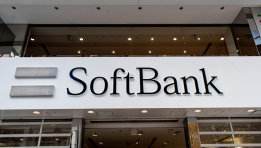
SoftBank’s reported plan to develop a major AI-focused data center in Ohio highlights the accelerating global race to build
- orshu
- •
- 6 Min Read
- •
- ago 4 hours
SKN | European Markets Close Lower as Broad Sell-Off Signals Rising Risk Aversion
European equity markets closed lower on March 20, with widespread declines across major indices as investor sentiment weakened amid
- ago 4 hours
- •
- 6 Min Read

European equity markets closed lower on March 20, with widespread declines across major indices as investor sentiment weakened amid

