


- sagi habasov
- •
- 7 Min Read
- •
- 2 hours ago
Key Points
- Super Micro co-founder charged over alleged $2.5 billion AI export scheme to China.
- Case raises compliance risks across the global AI hardware supply chain.
- Shares dropped over 9% as investors reassess regulatory exposure.
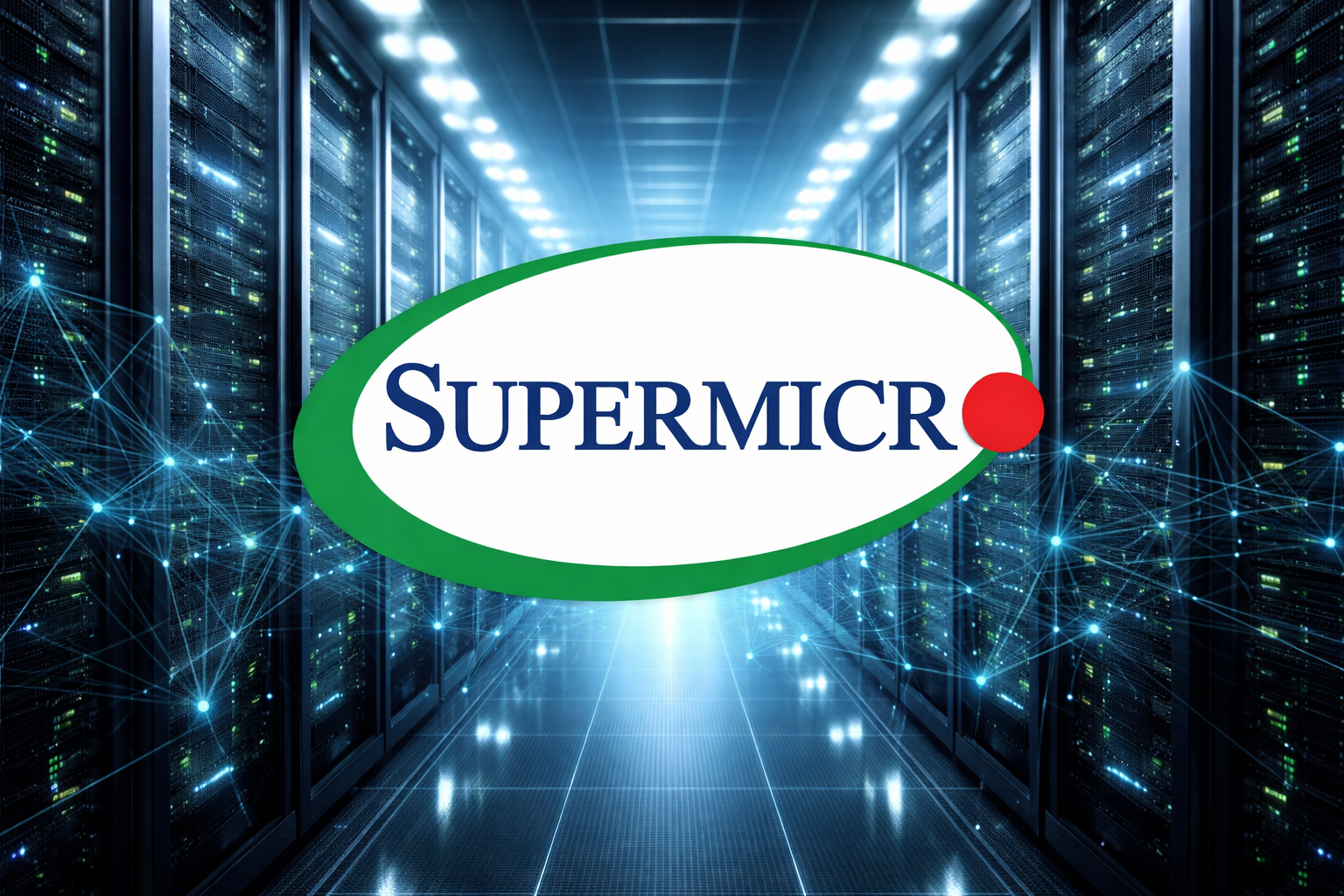
A major legal case involving Super Micro Computer has sent shockwaves through the artificial intelligence supply chain, after U.S. prosecutors charged a company co-founder with orchestrating a multi-billion-dollar scheme to bypass export controls and funnel advanced AI servers to China. The case underscores rising geopolitical tensions around semiconductor technology and highlights growing regulatory risks for companies operating at the center of the AI boom.
Allegations Point to Systematic Export Control Evasion
U.S. authorities have charged Yih-Shyan “Wally” Liaw, co-founder of Super Micro, along with other individuals, for allegedly conspiring to divert high-performance AI servers to China in violation of export restrictions. According to prosecutors, the scheme involved routing shipments through a Southeast Asian intermediary—referred to as “Company-1”—with full knowledge that the end destination would be Chinese customers.
The scale of the alleged operation is significant, with approximately $2.5 billion worth of servers reportedly involved since 2024. These systems included advanced hardware powered by Nvidia GPUs, which are subject to strict U.S. export controls due to national security concerns.
Authorities further allege that internal compliance mechanisms were deliberately bypassed through falsified documentation and staged “dummy” server installations designed to mislead oversight teams.
Market Reaction Reflects Rising Regulatory Risk
Investor sentiment turned sharply negative following the announcement, with Super Micro shares falling more than 9% in late trading. The decline reflects broader concerns about regulatory exposure in the AI hardware sector, particularly for companies deeply integrated into global supply chains.
Super Micro plays a critical role as a server manufacturer utilizing Nvidia’s chips, reportedly accounting for roughly 9% of Nvidia’s revenue. This interconnectedness means that legal or operational disruptions at one node can ripple across the broader ecosystem.
The case also reinforces a key market theme: geopolitical risk is no longer abstract for tech investors—it is increasingly material and capable of triggering rapid repricing in equities.
AI Supply Chain Faces Intensifying Scrutiny
This is not an isolated incident. U.S. authorities have ramped up enforcement actions targeting the unauthorized transfer of advanced semiconductor technologies to China. Recent cases involving smuggling networks and shell companies highlight the growing sophistication of attempts to circumvent export rules.
For regulators, AI chips represent a strategic asset with military and economic implications. As a result, enforcement is becoming more aggressive, and compliance expectations for companies are rising accordingly.
For corporations, this environment introduces a new layer of operational complexity. Firms must now navigate not only technological and market challenges, but also evolving regulatory frameworks that can impact everything from sales channels to customer relationships.
Strategic Implications for Nvidia and Industry Peers
While Nvidia is not accused of wrongdoing, the case highlights the indirect risks faced by upstream suppliers. Nvidia has emphasized its commitment to compliance, noting that it does not support products that are illegally exported.
However, the reliance on third-party manufacturers and distributors creates vulnerabilities. As demand for AI infrastructure surges globally, ensuring end-use compliance becomes increasingly difficult—especially in regions where enforcement mechanisms vary.
This dynamic could lead to tighter controls, increased auditing requirements, and potentially slower deal cycles as companies prioritize regulatory certainty over speed.
Forward Outlook: Compliance Becomes a Core Investment Risk
Looking ahead, the Super Micro case may mark a turning point in how investors evaluate AI-related companies. Beyond growth metrics and technological leadership, regulatory compliance is emerging as a critical factor in valuation. Companies that can demonstrate robust governance and transparent supply chains are likely to command a premium, while those exposed to geopolitical risks may face persistent volatility. As the U.S.-China technology divide deepens, market participants should closely monitor enforcement trends, policy shifts, and corporate responses, all of which will shape the next phase of the global AI race.
Comparison, examination, and analysis between investment houses
Leave your details, and an expert from our team will get back to you as soon as possible
* This article, in whole or in part, does not contain any promise of investment returns, nor does it constitute professional advice to make investments in any particular field.
To read more about the full disclaimer, click here
- Ronny Mor
- •
- 7 Min Read
- •
- ago 3 hours
SKN | Can Netflix Turn Live Events Into Its Next Growth Engine with BTS and K-Pop?
Netflix is making a strategic push into live entertainment, betting that globally streamed events—starting with a major BTS concert in
- ago 3 hours
- •
- 7 Min Read
Netflix is making a strategic push into live entertainment, betting that globally streamed events—starting with a major BTS concert in

- omer bar
- •
- 7 Min Read
- •
- ago 4 hours
SKN | Is OpenAI Building the Ultimate AI Super App to Dominate Chat, Coding and Browsing?
OpenAI is reportedly developing a unified desktop application that combines chat, coding, and web browsing into a single AI-powered environment—an
- ago 4 hours
- •
- 7 Min Read

OpenAI is reportedly developing a unified desktop application that combines chat, coding, and web browsing into a single AI-powered environment—an

- Lior mor
- •
- 7 Min Read
- •
- ago 4 hours
SKN | Are Investors Losing Faith in China’s AI Giants After $66 Billion Selloff?
Alibaba and Tencent have suffered a combined $66 billion wipeout in market value within just 24 hours, underscoring growing investor
- ago 4 hours
- •
- 7 Min Read
Alibaba and Tencent have suffered a combined $66 billion wipeout in market value within just 24 hours, underscoring growing investor
- Ronny Mor
- •
- 7 Min Read
- •
- ago 8 hours
SKN | Nvidia-Amazon AI Deal: Will 1 Million Chips Redefine the Cloud Infrastructure Race?
Nvidia is set to deliver up to 1 million advanced AI chips to Amazon by the end of 2027, marking
- ago 8 hours
- •
- 7 Min Read

Nvidia is set to deliver up to 1 million advanced AI chips to Amazon by the end of 2027, marking

