


- Lior mor
- •
- 7 Min Read
- •
- 1 hour ago
Key Points
- Alibaba and Tencent lost $66 billion in market value amid AI monetization concerns.
- Investors question returns on massive AI spending without clear revenue visibility.
- Macro pressures and geopolitical risks are amplifying market caution toward tech stocks.
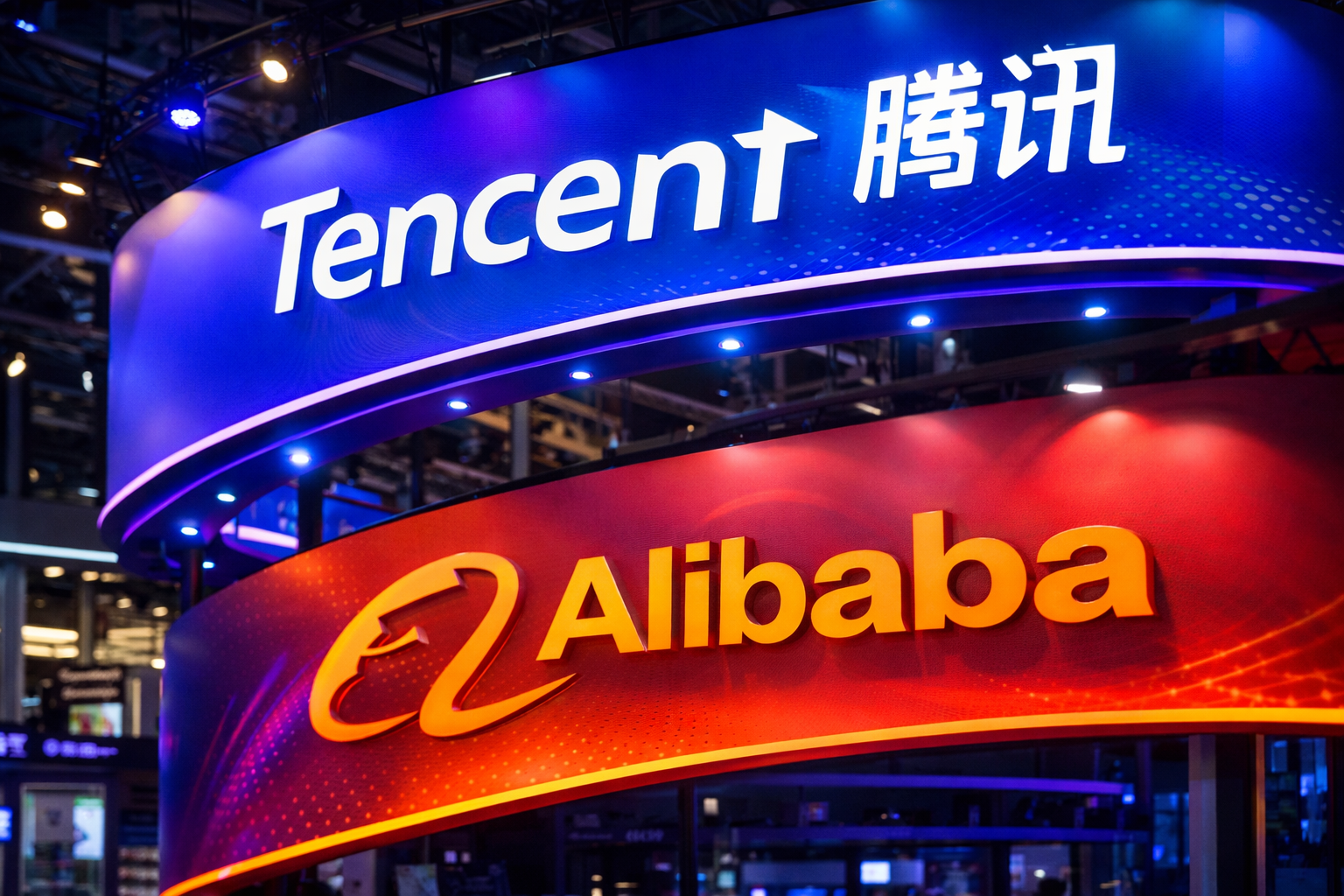
Alibaba and Tencent have suffered a combined $66 billion wipeout in market value within just 24 hours, underscoring growing investor skepticism toward the near-term profitability of artificial intelligence. Despite aggressive spending and ambitious AI narratives, markets are increasingly demanding tangible returns—especially as macro pressures, including geopolitical tensions and slowing consumer demand, weigh on sentiment across global equities.
AI Hype Meets Market Reality
Alibaba and Tencent have long been seen as frontrunners in China’s artificial intelligence race, leveraging vast ecosystems and user data to build next-generation platforms. However, recent earnings and investor communications have failed to deliver a clear roadmap for monetization.
The sharp market reaction reflects a broader shift in investor behavior. While enthusiasm around agentic AI platforms—such as those inspired by OpenClaw—initially fueled rallies, that optimism quickly reversed when companies could not articulate how these technologies would translate into revenue growth.
This dynamic mirrors a familiar pattern in tech cycles: early excitement driven by innovation, followed by a recalibration phase where capital markets demand execution, not just vision.
Heavy Investment, Limited Visibility
Both companies are investing heavily in infrastructure, talent, and AI model development. Alibaba alone has committed tens of billions of dollars toward AI and cloud expansion, targeting $100 billion in revenue from these segments within five years.
Yet, the timing mismatch between investment and returns is becoming a key concern. Analysts note that while U.S. tech giants like Amazon and Meta are also spending aggressively, they operate in markets with stronger monetization frameworks and higher-margin ecosystems.
In contrast, Chinese tech firms face a more challenging backdrop. Domestic consumption remains weak, competition is intensifying, and pricing pressures are limiting the ability to quickly translate AI adoption into profits. As a result, front-loaded investments are expected to compress margins in the near term.
Macro Pressures Amplify Investor Caution
The selloff cannot be viewed in isolation from the broader macro environment. Rising geopolitical tensions in the Middle East, coupled with inflation concerns and shifting global capital flows, are pushing investors toward safer assets.
In such an environment, high-growth, high-investment sectors like AI become more vulnerable to valuation resets. Companies that cannot demonstrate clear earnings visibility are often the first to face capital outflows.
Additionally, China’s domestic economic challenges—including a prolonged property downturn and cautious consumer spending—are adding another layer of uncertainty. For companies like Alibaba, which are simultaneously managing core business slowdowns, the pressure to deliver on AI becomes even more acute.
Strategic Crossroads for China’s Tech Leaders
Despite the current skepticism, both Alibaba and Tencent retain structural advantages. Their ecosystems—spanning e-commerce, payments, social media, and cloud infrastructure—position them uniquely to integrate AI into daily consumer and enterprise use cases.
However, the market is signaling that potential alone is no longer sufficient. Investors are looking for concrete evidence that AI can drive measurable improvements in revenue, margins, or user engagement.
The rollout of enterprise tools, pricing adjustments in cloud services, and integration of AI into consumer platforms will be closely monitored as indicators of progress.
Forward Outlook: Execution Will Define the Next Phase
Looking ahead, the trajectory of China’s AI sector will depend less on technological breakthroughs and more on commercial execution. If companies can demonstrate that AI investments translate into scalable revenue streams, sentiment could shift quickly. However, failure to deliver in the near term may prolong volatility and keep valuations under pressure. Investors should watch for clearer monetization strategies, margin stabilization, and macroeconomic improvements, all of which will be critical in determining whether this selloff marks a temporary reset—or a deeper reassessment of the AI investment cycle.
Comparison, examination, and analysis between investment houses
Leave your details, and an expert from our team will get back to you as soon as possible
* This article, in whole or in part, does not contain any promise of investment returns, nor does it constitute professional advice to make investments in any particular field.
To read more about the full disclaimer, click here
- omer bar
- •
- 7 Min Read
- •
- ago 43 minutes
SKN | Is OpenAI Building the Ultimate AI Super App to Dominate Chat, Coding and Browsing?
OpenAI is reportedly developing a unified desktop application that combines chat, coding, and web browsing into a single AI-powered environment—an
- ago 43 minutes
- •
- 7 Min Read
OpenAI is reportedly developing a unified desktop application that combines chat, coding, and web browsing into a single AI-powered environment—an

- Ronny Mor
- •
- 7 Min Read
- •
- ago 5 hours
SKN | Nvidia-Amazon AI Deal: Will 1 Million Chips Redefine the Cloud Infrastructure Race?
Nvidia is set to deliver up to 1 million advanced AI chips to Amazon by the end of 2027, marking
- ago 5 hours
- •
- 7 Min Read

Nvidia is set to deliver up to 1 million advanced AI chips to Amazon by the end of 2027, marking

- Lior mor
- •
- 6 Min Read
- •
- ago 8 hours
SKN | Firefly Aerospace Q4 Highlights Signal Expansion in Launch Services and Lunar Missions
Firefly Aerospace outlined its strategic progress and operational priorities during its fourth-quarter earnings call, highlighting expansion across launch services
- ago 8 hours
- •
- 6 Min Read
Firefly Aerospace outlined its strategic progress and operational priorities during its fourth-quarter earnings call, highlighting expansion across launch services
- omer bar
- •
- 6 Min Read
- •
- ago 8 hours
SKN | Gemini Space Station Narrows Losses as Revenue Growth Signals Progress in Commercial Space Economy
Gemini Space Station reported fourth-quarter results showing a reduction in net losses alongside rising revenue, signaling incremental progress in
- ago 8 hours
- •
- 6 Min Read

Gemini Space Station reported fourth-quarter results showing a reduction in net losses alongside rising revenue, signaling incremental progress in

