


- sagi habasov
- •
- 7 Min Read
- •
- 2 hours ago
Key Points
- Samsung plans to invest over $73 billion to strengthen AI semiconductor leadership.
- The company is expanding into robotics, medical tech, and automotive electronics via M&A.
- Rising AI demand is fueling a global race among chipmakers for dominance.
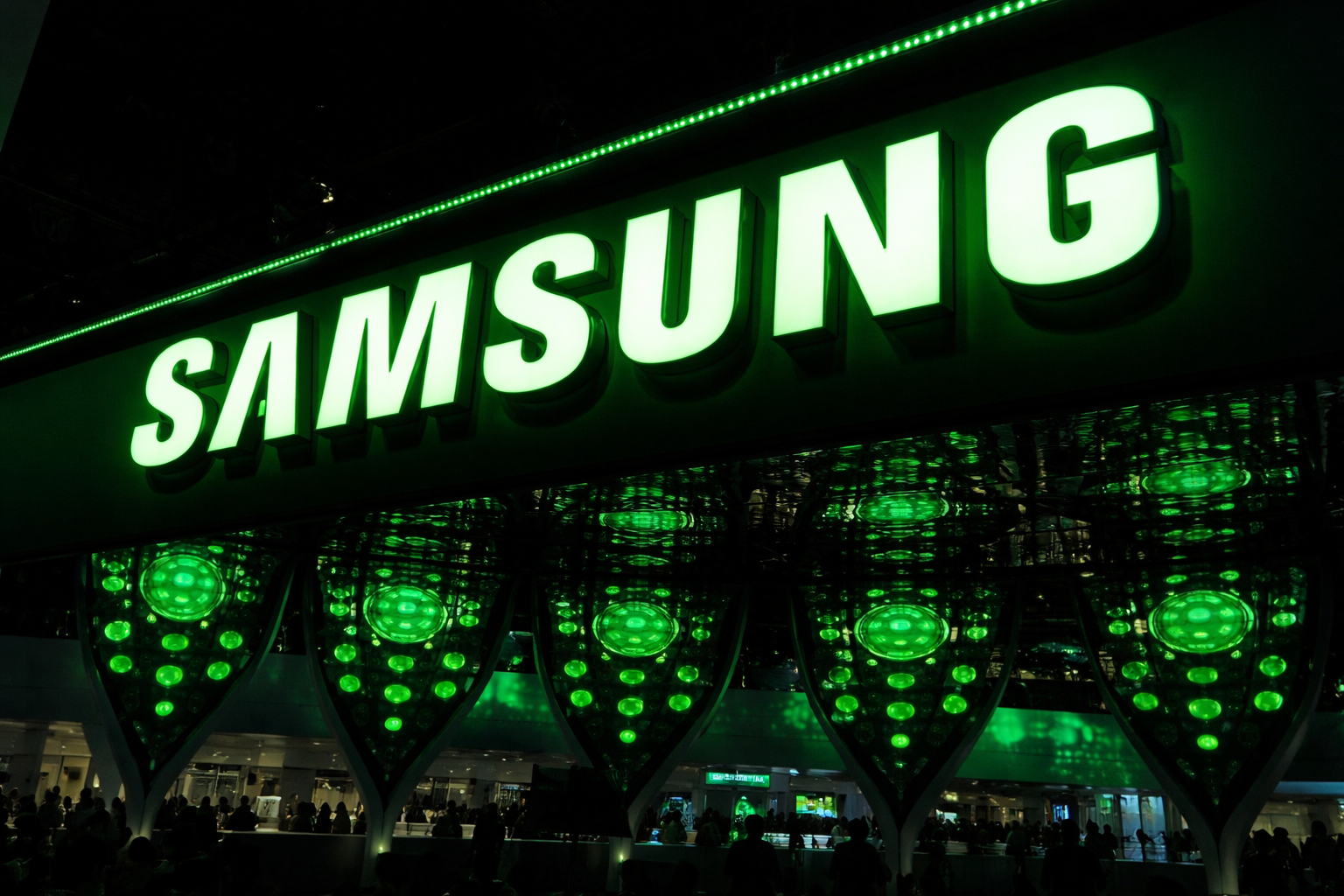
Samsung Electronics is making one of its boldest strategic moves in years, announcing plans to invest more than $73 billion into semiconductors and adjacent technologies as it races to secure leadership in the artificial intelligence chip market. The масштаб of this investment underscores intensifying global competition in AI infrastructure, where demand for advanced chips continues to surge amid data center expansion and next-generation computing needs. For investors, the key question is whether this aggressive capital deployment will translate into sustainable leadership—or amplify risks in an already cyclical industry.
Massive Investment Signals Strategic Urgency
Samsung Electronics revealed in a corporate filing that it intends to invest more than 110 trillion won in 2026, marking one of the largest annual capital expenditures in the company’s history. The scale of this investment highlights the urgency with which Samsung is approaching the AI semiconductor race, where competitors are rapidly scaling production and innovation.
The move comes amid a structural shift in the semiconductor industry, driven by explosive demand for AI-related computing power. From hyperscale data centers to advanced consumer applications, memory and logic chips are increasingly central to technological infrastructure, pushing companies like Samsung to expand both capacity and technological capabilities.
Beyond Chips: Diversification Through Strategic Acquisitions
In addition to its semiconductor focus, Samsung signaled a broader strategic pivot by pursuing mergers and acquisitions across high-growth sectors, including robotics, medical technology, automotive electronics, and air-conditioning solutions.
This diversification reflects a calculated effort to build an integrated ecosystem around AI, where hardware, software, and intelligent systems converge. By investing in adjacent industries, Samsung aims to reduce reliance on the traditionally cyclical semiconductor business while capturing new revenue streams tied to automation and smart technologies.
Such a strategy mirrors a growing trend among global tech giants, where vertical integration and cross-sector expansion are becoming essential to maintaining competitive advantage in the AI era.
AI Chip Competition Intensifies Globally
Samsung’s announcement comes at a time when the global semiconductor landscape is becoming increasingly competitive. Companies across the United States, China, and Europe are pouring billions into AI chip development, seeking to capitalize on a market expected to grow exponentially over the next decade.
While Samsung remains a dominant player in memory chips, it faces mounting pressure in advanced logic chips and AI accelerators, areas where competitors have gained significant traction. The company’s aggressive investment plan suggests a recognition that maintaining leadership will require not only scale but also rapid innovation and execution.
At the same time, geopolitical tensions and supply chain uncertainties continue to complicate the industry outlook, adding another layer of risk to long-term investment decisions.
Forward Outlook: High Stakes in a Capital-Intensive Race
Looking ahead, Samsung’s multi-billion-dollar investment represents both a significant opportunity and a substantial risk. If executed effectively, the strategy could solidify its position at the center of the global AI ecosystem and drive long-term growth across multiple sectors. However, the capital-intensive nature of semiconductors means that timing, demand cycles, and pricing dynamics will play a critical role in determining returns. Investors should closely monitor execution on capacity expansion, progress in high-margin AI chips, and the success of diversification efforts, as these factors will ultimately determine whether Samsung’s ambitious bet delivers sustainable competitive advantage or exposes the company to heightened cyclical volatility.
Comparison, examination, and analysis between investment houses
Leave your details, and an expert from our team will get back to you as soon as possible
* This article, in whole or in part, does not contain any promise of investment returns, nor does it constitute professional advice to make investments in any particular field.
To read more about the full disclaimer, click here
- Ronny Mor
- •
- 6 Min Read
- •
- ago 3 hours
SKN | Can Deezer’s Shift to Ads and AI Detection Revive Growth in a Saturated Streaming Market?
Deezer is reworking its business model as it looks to unlock new revenue streams beyond traditional subscriptions, a move that
- ago 3 hours
- •
- 6 Min Read

Deezer is reworking its business model as it looks to unlock new revenue streams beyond traditional subscriptions, a move that

- omer bar
- •
- 7 Min Read
- •
- ago 4 hours
SKN | Is Alibaba Cloud Emerging as Asia’s Dominant Force in the Agentic AI Boom?
Alibaba Cloud’s latest recognition as a market leader in Omdia’s 2026 Agentic AI report signals a pivotal moment in the
- ago 4 hours
- •
- 7 Min Read
Alibaba Cloud’s latest recognition as a market leader in Omdia’s 2026 Agentic AI report signals a pivotal moment in the

- sagi habasov
- •
- 7 Min Read
- •
- ago 10 hours
SKN | Nvidia Doubles Down on AI: Strategic Pivot Toward Inferencing and Intelligent Agents
Nvidia is signaling a strategic pivot in its AI business, emphasizing inferencing and intelligent agents as the core growth drivers.
- ago 10 hours
- •
- 7 Min Read
Nvidia is signaling a strategic pivot in its AI business, emphasizing inferencing and intelligent agents as the core growth drivers.
- Ronny Mor
- •
- 7 Min Read
- •
- ago 11 hours
SKN | Musk Signals Continued Nvidia Chip Demand as SpaceX AI and Tesla Scale Compute Ambitions
Elon Musk has signaled that both SpaceX and Tesla will continue procuring Nvidia chips at large scale, underscoring the accelerating
- ago 11 hours
- •
- 7 Min Read
Elon Musk has signaled that both SpaceX and Tesla will continue procuring Nvidia chips at large scale, underscoring the accelerating

