


- sagi habasov
- •
- 7 Min Read
- •
- 2 hours ago
Key Points
- Asian equities show a mixed-to-negative tone, with Japan, South Korea, and Australia leading declines.
- Chinese and Hong Kong markets post modest gains, supported by regional inflows and policy optimism.
- Currency weakness across the yen and Australian dollar reflects broader risk-off sentiment in early trading.
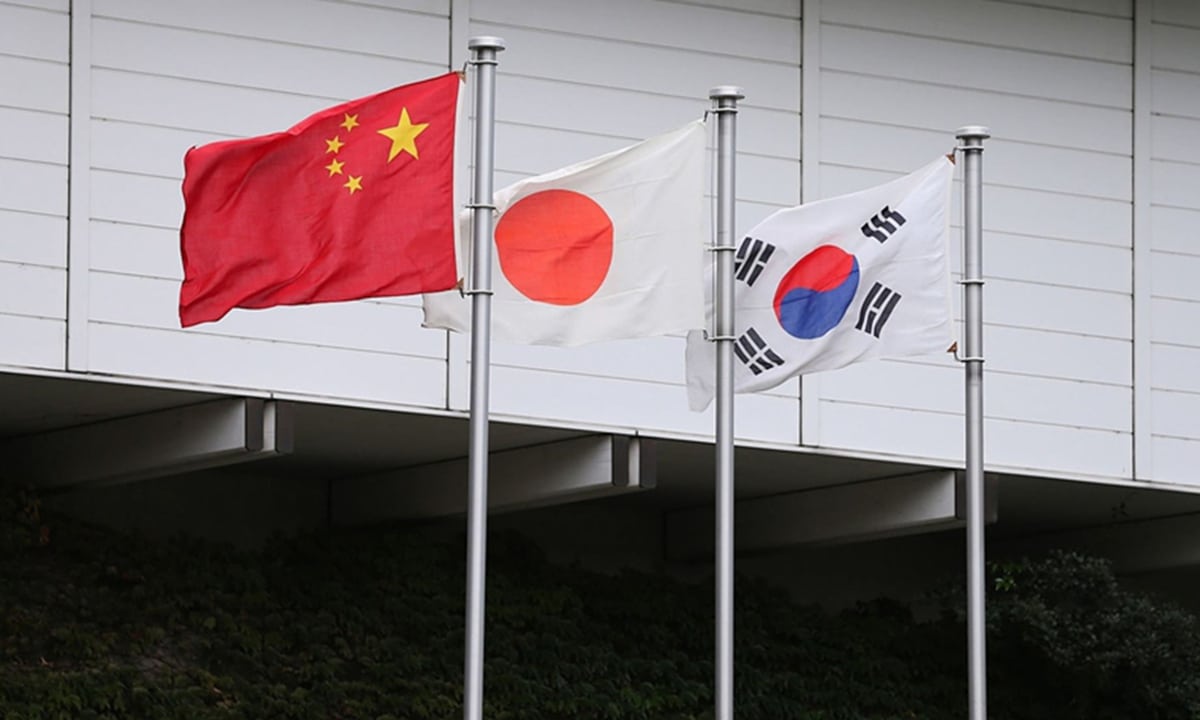
Asian markets opened Thursday, March 19, on a divergent footing as investors navigated a cautious risk environment during the morning session. While select Chinese benchmarks edged higher, broader regional indices came under pressure, reflecting renewed concerns over global growth, currency volatility, and shifting capital flows.
Equity Markets Under Pressure Across Developed Asia
Losses were most pronounced in developed Asia, where risk-sensitive markets faced heavy selling pressure. Japan’s Nikkei 225 dropped sharply by 2.79 percent, signaling a pullback after recent strong gains and reflecting investor caution amid currency weakness. The decline was accompanied by a 0.47 percent fall in the Japanese Yen Index, suggesting continued depreciation pressures that may complicate monetary policy expectations.
In South Korea, the KOSPI Composite Index led regional losses with a 3.09 percent decline, as technology and export-oriented stocks reacted to weaker global demand signals. Similarly, Australia’s S&P/ASX 200 fell 1.60 percent, weighed down by declines in mining and financial stocks. The Australian Dollar Index dropped 1.10 percent, reinforcing concerns over commodity-linked currencies and external demand softness.
These synchronized declines highlight a broader recalibration of risk exposure among institutional investors, particularly in markets heavily tied to global trade cycles.
China and Hong Kong Show Relative Resilience
In contrast, mainland Chinese equities and Hong Kong markets managed to post modest gains during the session. The SSE Composite Index rose 0.32 percent, while the Hang Seng Index advanced 0.61 percent, supported by selective buying in financials and technology sectors.
The relative strength in these markets reflects ongoing optimism around targeted policy support from Chinese authorities, as well as expectations of further stimulus measures aimed at stabilizing growth. Investors appear to be selectively rotating into Chinese assets amid more attractive valuations and a perceived policy backstop.
India’s S&P BSE SENSEX also recorded gains of 0.83 percent, standing out as one of the stronger performers in the region. The move suggests continued confidence in domestic growth fundamentals and resilience in local investor participation, even as broader regional sentiment remains cautious.
Holiday Closures and Reduced Liquidity Across Regions
Market activity is also being shaped by a series of global holiday closures, which are impacting liquidity conditions across multiple regions. In Africa, the Egypt Stock Exchange and the Stock Exchange of Mauritius are closed in observance of Eid al-Fitr and Durmuthi Nama Ugaadi, respectively.
Across Asia and the Middle East, several major exchanges including the Oman Stock Exchange, the Ramallah Stock Exchange in the Palestinian Territory, the Doha Stock Exchange in Qatar, and the Saudi Arabia Stock Exchange are closed for Eid al-Fitr. In Indonesia, the Jakarta Stock Exchange remains shut for the Hindu Saka New Year.
In Europe, the Malta Stock Exchange is closed for the Feast of St. Joseph, while Türkiye’s Istanbul Stock Exchange is operating on an early close schedule at 13:00 due to Eid al-Fitr. These closures are contributing to thinner trading volumes and may be amplifying price movements in active markets.
Outlook: Monitoring Volatility, Policy Signals, and Currency Moves
Looking ahead, investors are likely to remain focused on currency dynamics, central bank signaling, and the trajectory of global growth indicators. Continued weakness in the Japanese yen and Australian dollar could influence capital allocation decisions, particularly if volatility persists.
At the same time, any confirmation of additional policy support from China may provide a stabilizing force for regional equities. However, risks remain elevated, including external demand uncertainty, geopolitical developments, and the potential for further corrections in overextended markets.
As liquidity conditions normalize following global holidays, market participants will be closely watching whether the current divergence evolves into a broader trend or signals a transitional phase in Asia’s equity landscape.
Comparison, examination, and analysis between investment houses
Leave your details, and an expert from our team will get back to you as soon as possible
* This article, in whole or in part, does not contain any promise of investment returns, nor does it constitute professional advice to make investments in any particular field.
To read more about the full disclaimer, click here
- orshu
- •
- 7 Min Read
- •
- ago 14 seconds
SKN | Global Markets Recap: March 18, 2026 Performance and Outlook Ahead of March 19, 2026 Trading
Global equity markets faced a turbulent session on March 18, 2026, as geopolitical uncertainty, elevated oil prices, and concerns over
- ago 14 seconds
- •
- 7 Min Read

Global equity markets faced a turbulent session on March 18, 2026, as geopolitical uncertainty, elevated oil prices, and concerns over

- omer bar
- •
- 7 Min Read
- •
- ago 4 hours
SKN | Is FedEx’s Network Overhaul a Strategic Win or a Warning Sign for U.S. Logistics?
FedEx is accelerating a sweeping restructuring of its U.S. operations, announcing the closure of multiple parcel facilities as part of
- ago 4 hours
- •
- 7 Min Read

FedEx is accelerating a sweeping restructuring of its U.S. operations, announcing the closure of multiple parcel facilities as part of

- sagi habasov
- •
- 7 Min Read
- •
- ago 4 hours
SKN | Why Are Stocks Falling as Oil Surges Above $100 and Inflation Fears Return?
U.S. stock futures moved lower following a sharp market selloff, as rising oil prices and renewed inflation concerns rattled investor
- ago 4 hours
- •
- 7 Min Read

U.S. stock futures moved lower following a sharp market selloff, as rising oil prices and renewed inflation concerns rattled investor
- orshu
- •
- 6 Min Read
- •
- ago 11 hours
SKN | Israel Market Close – March 18, 2026: Tel Aviv Stocks Extend Rally as Broad Gains Signal Strengthening Momentum
Israeli financial markets closed higher on March 18, 2026, extending the rebound seen in the previous session. Gains were broad-based
- ago 11 hours
- •
- 6 Min Read

Israeli financial markets closed higher on March 18, 2026, extending the rebound seen in the previous session. Gains were broad-based

